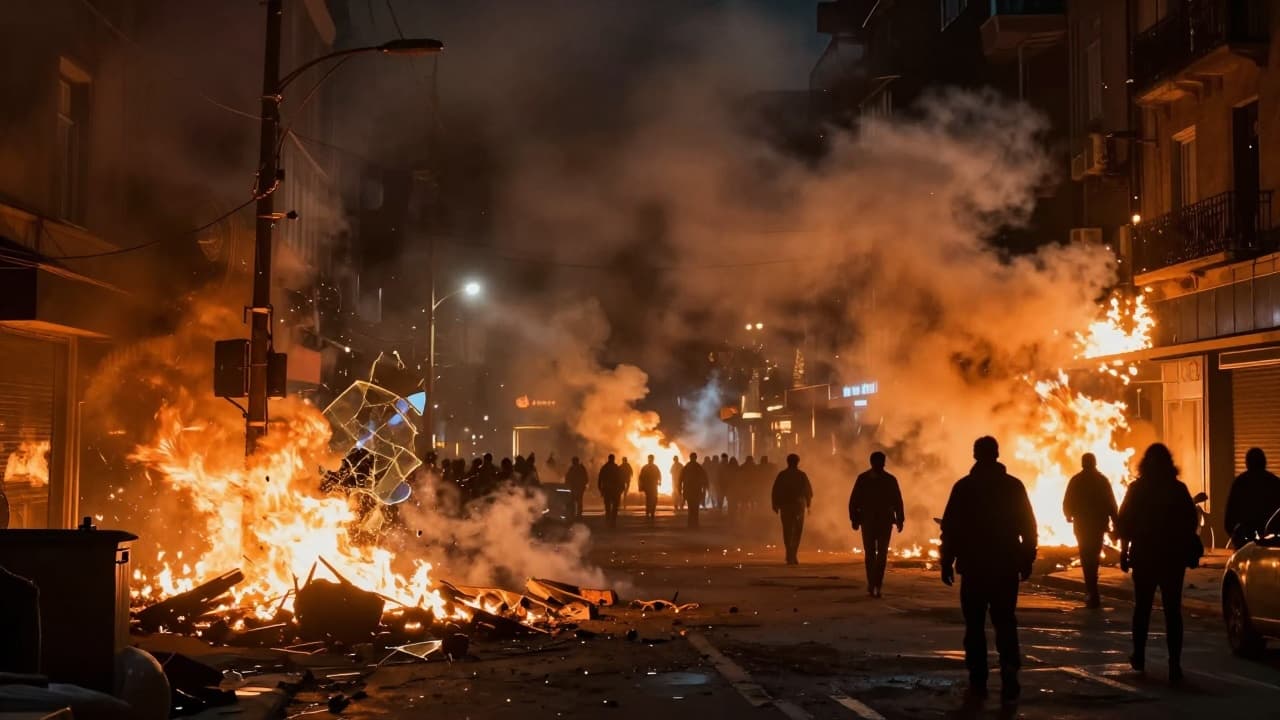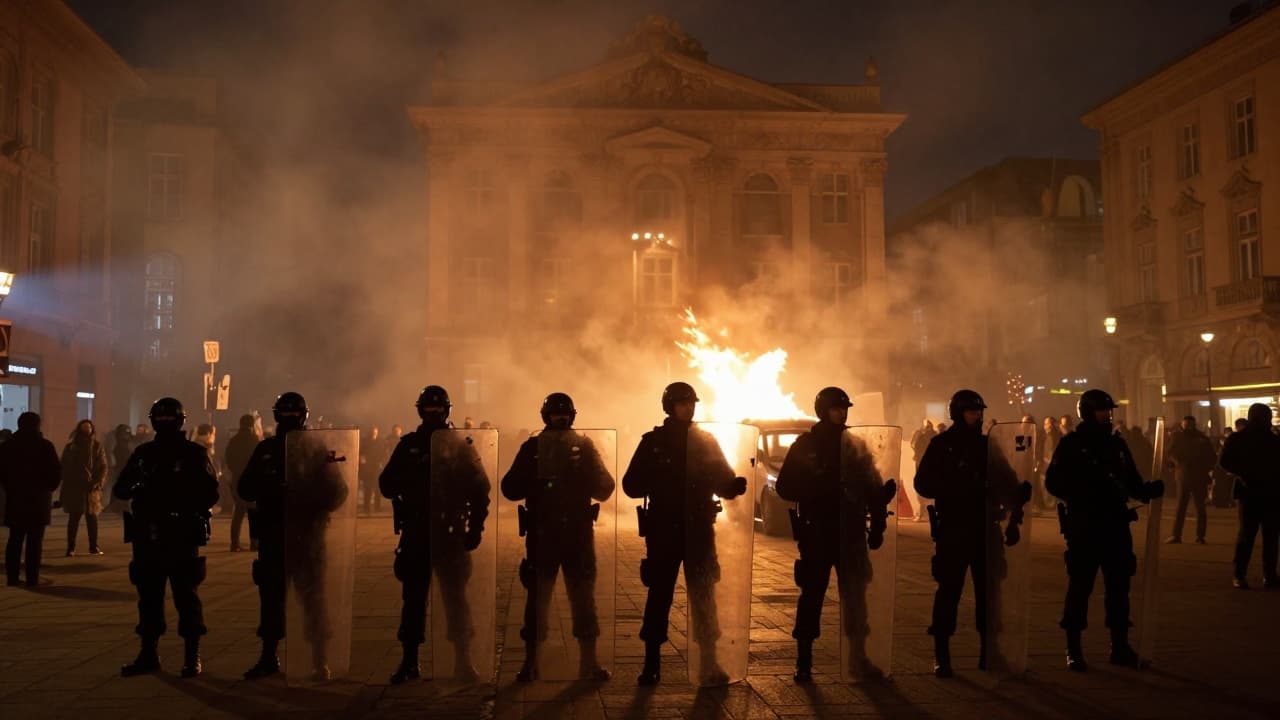
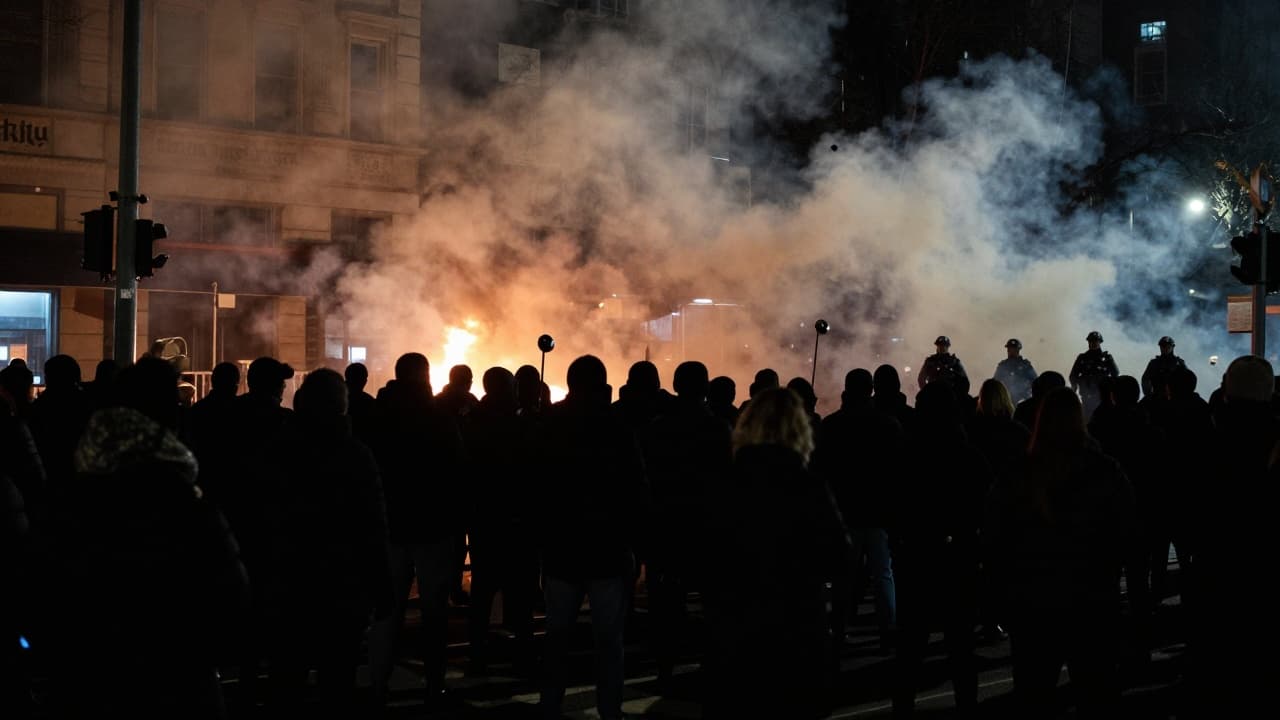
Student protests in Albania have escalated into violence, with 152 people arrested following three days of clashes, while investigations are underway against 324 individuals. Containers, business premises, buildings, and banks were set alight, with some completely destroyed by the flames. The air was filled with tear gas, and both protesters and police officers were injured. Police stated that 71 officers were injured in the clashes.
The protests began in late May as part of a pro-government movement known as the 'Flamingo revolution', named after a multi-million euro project linked to Jared Kushner, son-in-law of US President Donald Trump, in the protected coastal area of Zvërnec. The movement has evolved into a broader challenge to the government of Prime Minister Edi Rama, who has been in power since 2013. Students are calling for his resignation, as lecture halls at the University of Tirana stand empty while they boycott classes. They are protesting against the conditions at the universities, the cost of tuition, and the poor employment prospects after graduation.
Senta, a 22-year-old student, wears a mask to protect herself from tear gas. 'How could I ever afford to rent a flat in one of those towers on a salary of 540 euros?', she asks, as the luxury skyscrapers change the skyline of Tirana. 'I share a flat with people I don't even know, because my family moved away. We are exhausted', she said. She added: 'You have not listened to us for four months while we protested peacefully. Now you will listen to us as the city burns.' Students stated that they are not willing to negotiate with the prime minister on other issues.
For the first two days, the prime minister remained silent. On Thursday, he appeared in a video message recorded in the building of the College of Europe, which had been damaged by fire, just a few metres from his office in Tirana. Rama stated: 'These are the acts of the opposition, which are hiding behind masked people, seeking to return Albania to a place where it will never return.' In a statement to Reuters, he rejected the possibility of stepping down. The following day, he accused 'foreign forces' of trying to prevent Albania's entry into the European Union. Brussels called for calm and restraint, urging all sides to avoid further escalation and to engage in dialogue.
Sali Berisha, the 82-year-old leader of the opposition Democratic Alliance and former prime minister, dismissed Rama's accusations that foreign powers and the opposition were inciting violence. 'We have no idea if it is Greece, Iran, Serbia, or someone else', he said. 'The Democratic Alliance fully supports this protest and will stand by it to the end. Resign and leave immediately!', he declared.
Ri Xhemollari from the civil society organisation Qendresa Qytetare (Citizen Resistance) believes that the prime minister's resignation is the only way to end the unrest. 'The main reason is that the prime minister has not responded to the citizens' demands over the past four months, and has mocked the protesters. There is also the economic situation, corruption cases, and a series of scandals', he said, adding that there are numerous corruption investigations involving high-ranking state officials. 'The protest has only one political demand, and it is calling for a political solution: the prime minister's resignation.' In his view, the president should bring together political parties to form a transitional government led by a non-partisan prime minister, which would prepare for the local and parliamentary elections scheduled for May 2027.
Skënder Topalli, a 20-year-old student, stated: 'We want to remove the political class that has been in power for the last 35 years. We want a new Albania with new leaders.' Mark Marku, a political analyst and dean of the Faculty of History and Philology at the University of Tirana, believes that the protests represent a turning point. 'This is a reaction from one generation. In a society that has not reacted, they have awakened people and forced us to think about change', he said. However, he warned that neither the prime minister's resignation nor new elections would in themselves bring about a new political elite. 'Opposing the government is not the goal in itself. The protest must deliver results', he said. 'There must be a platform, a political alternative. You cannot vote for a protest.'