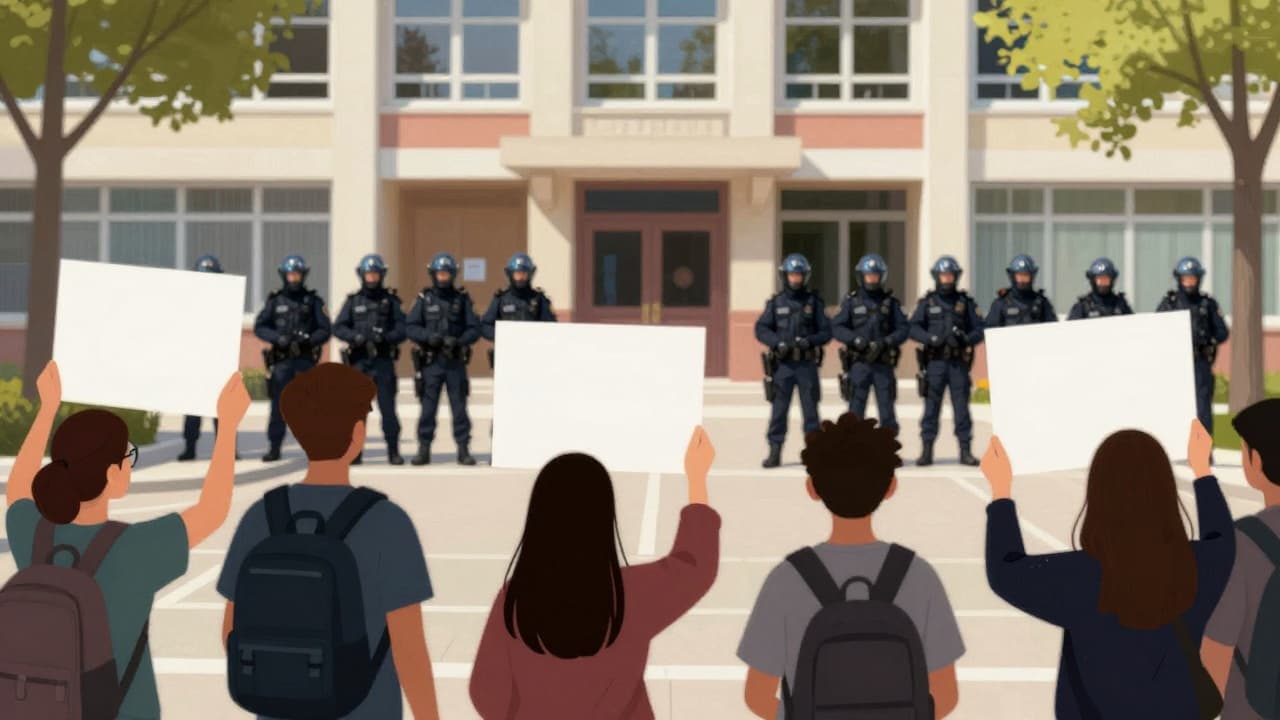
At least 190 students were injured in the protests in France, the French Minister for Education, Édouard Geffray, announced. According to him, the injuries resulted from accidents or were caused by rioters, with injuries from fireworks included, as reported by Le Figaro.
On Monday, a 15-year-old boy lost his hand in a protest at a secondary school in the northern town of Lens, local authorities confirmed. The Prefect of Pas-de-Calais, François-Xavier Lauch, stated that the boy was protesting against dilapidated schools with insufficient staff. Lauch did not comment on the exact circumstances of the incident, but noted that between 150 and 200 protesters threw objects at the police, and that the intervention forces had intervened. It was not clear if a police tear gas canister was involved, nor exactly how the injury occurred. Lauch stated that an investigation had been launched. A source from a police union told AFP that the boy, it seems, had picked up a tear gas canister fired by the intervention forces, which exploded in his hand, although this is yet to be officially confirmed by the investigation.
The injuries to students are not an isolated case. The family of a 16-year-old student in Tours filed a complaint following police violence after the student lost sight in his right eye last week. The public prosecutor stated that the boy's injuries were consistent with being hit by a rubber bullet. A police investigation into the incident is ongoing.
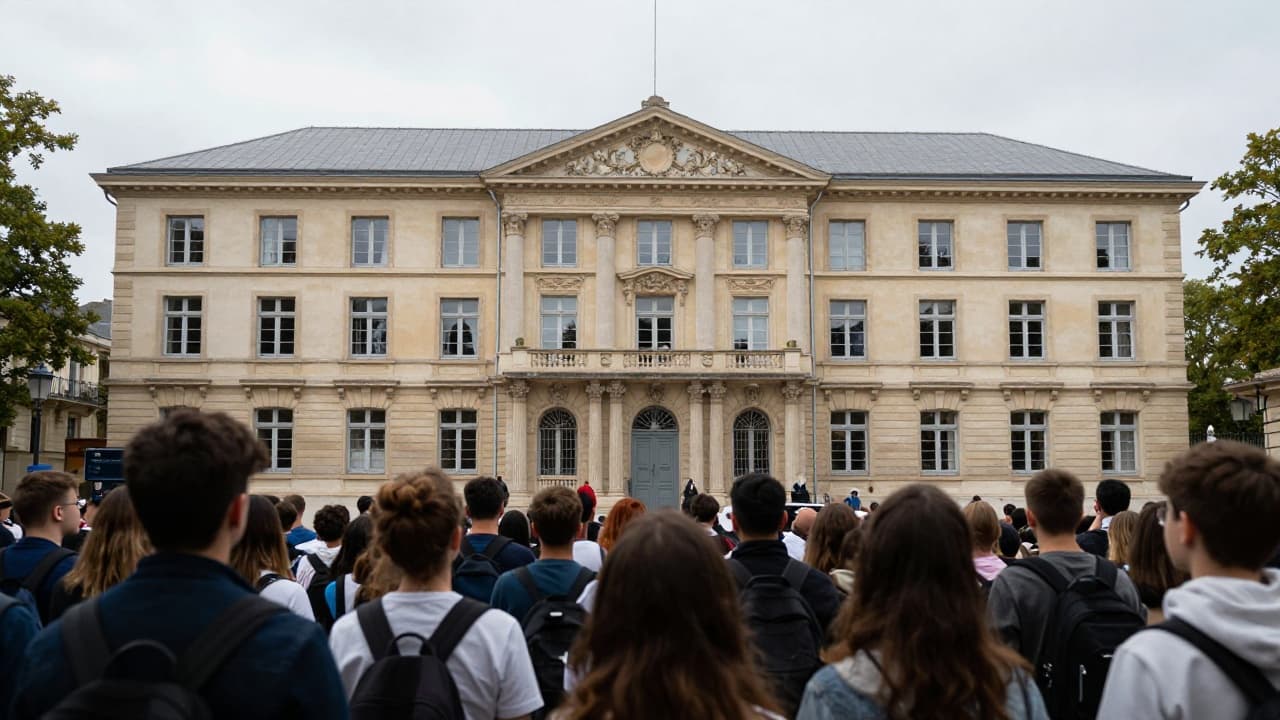
Since the start of the protests, at least 5,000 people have been arrested, of whom 85 per cent are teenagers. The protests began in late September at a secondary school in a Paris suburb following a shortage of teachers, and the authorities were surprised by the spread of the protests across the country, fueled by anger over social inequality and a lack of investment in the education system. Since last Monday, around 5,000 people have been arrested across France, mostly teenagers, with dozens injured. Teachers have also been injured. Damage to property is estimated at tens of millions of euros.
The French Prime Minister, Sébastien Lecornu, had previously sought to calm the protests by accepting the students' complaints as 'legitimate' and stating that the government must listen. Lecornu ordered ministers to address the five main demands of the students. The demands include the organization of cover for absent teachers, acknowledging that students in some areas miss months of lessons due to staff absences, even in key exam years. Lecornu also called for a review of the school day in France, one of the longest in Europe. The government will also consider repairs to dilapidated school buildings. Lecornu stated that ministers must propose solutions by the end of the month.
Sophie Binet, head of the CGT union, stated that the government was late in offering a solution to the students' demands. Binet noted that the number of absent teachers not replaced had doubled over the past 10 years, and that class sizes were at record levels. She called on the government to halt all budget cuts and reductions in teaching staff.
Student unions called for a national day of protest on Tuesday, with expectations that more schools would be closed by barricades. Tens of thousands of trade unionists, teachers, public sector workers, and parent groups are expected to join marches across France. Bin stated that the unions would march to ensure that on Tuesday there is no violence on the margins of the protest. University students continued to support the school protests on Monday, with up to 40 university buildings blocked across France.
Philippe Bas, the Minister for Higher Education, told French radio that the student and secondary school protests could intensify with the national protests scheduled for Tuesday. Between 400 and 500 secondary schools out of a total of 3,700 are expected to be completely or partially closed on Monday, the minister said. Government spokesperson Maëlys Breton said on Monday on CNews television: 'Our priority is to restore order.'
In Spain, Prime Minister Pedro Sánchez has called for an election on 29 November, just days after right-wing parties blocked the emergency measures of his minority government on housing amid widespread protests. The election will take place on Sunday, 29 November, the earliest possible procedural date. Sánchez presented the election as a choice between 'regression' under a 'far-right coalition' or 'continuing progress' with his progressive administration. He stated that the election would determine who leads Spain through a period of disruption amid high political tensions, global instability, the climate crisis, and the uncertainty brought by the rise of artificial intelligence. The opposition leader, Alberto Núñez Feijóo, welcomed the move, stating that Spaniards would 'finally' have the chance to replace the prime minister. In Spain, tens of thousands of people took to the streets in 50 cities over growing anger at the housing crisis in the country.