Darijana Filipović took up the post of Croatian member of the Presidency of Bosnia and Herzegovina in Sarajevo on Monday, becoming the first woman to hold the position. At the constitutive session, Željka Cvijanović and Denis Bećirović also took up their new four-year mandates, with Filipović being the only new member of the three-member state leadership.
Filipović succeeded Željko Komšić following his final eight-year period in the role. Komšić served a total of four mandates as the Croatian member of the Presidency, handing over the post to Filipović after his last eight years in the state leadership. Filipović is a candidate of the HDZ BiH, and in the general elections held on 4 October, she won 120,701 votes, or 47.28 per cent of the vote in the election for the Croatian member of the BiH Presidency. Slaven Kovačević, the candidate supported by Željko Komšić’s Democratic Front, finished behind her.
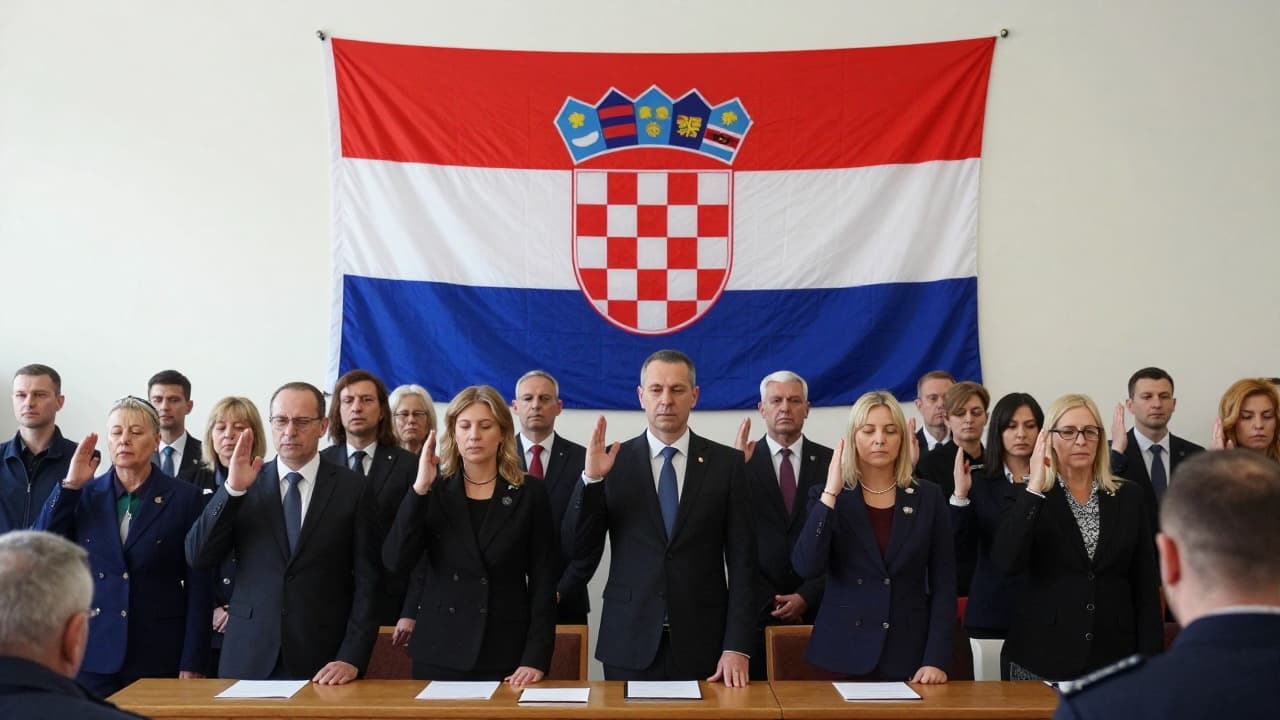
Following the handover of certificates from the Central Election Commission and the swearing-in of solemn declarations, Željka Cvijanović, a member of the SNSD, took up the role of chair of the Presidency. Cvijanović will chair the body for eight months, after which she is expected to be succeeded by Filipović in accordance with the rotation order. In her address, Cvijanović emphasised the importance of dialogue, compromise and internal agreements in Bosnia and Herzegovina, while also criticising foreign interventionism, which she attributes to some of the country’s political problems.
Filipović thanked voters for their trust and stressed that the equality of Croats must be achieved without jeopardising the rights of other nations. She rejected the approach whereby the political gain of one nation necessarily means a loss for another. “I believe that Croatian equality can make Bosnia and Herzegovina more stable, and that the security of one nation can increase the security of all others,” Filipović said. She also highlighted that the responsibility she has taken on does not end with an electoral victory, and that she wants to contribute to building a more functional state and leave Bosnia and Herzegovina in a better state than she found it at the end of her mandate. She announced efforts to resolve political disagreements through dialogue, without triggering new state crises, and particularly emphasised the importance of preserving peace and security.
Denis Bećirović, a member of the SDP BiH, included the protection of human rights, sovereignty and territorial integrity of the state, as well as the continuation of the approach to the European Union and NATO, among the priorities of the new mandate. Croatian Prime Minister Andrej Plenković congratulated the newly elected members of the Presidency, specifically highlighting the election of Darijana Filipović as important for the representation of the Croatian nation and its constitutional equality, while announcing the continuation of Croatian support for the European path of Bosnia and Herzegovina.
The constitution of the Presidency marked the beginning of the formation of state authority following the October elections. The three-member Presidency is responsible for foreign policy, the appointment of ambassadors, the proposal of the state budget and the command of the Armed Forces of Bosnia and Herzegovina. The next important step is expected at the beginning of December, when the House of Representatives of the Parliamentary Assembly of Bosnia and Herzegovina is due to be constituted, followed by the process of appointing a new Council of Ministers.