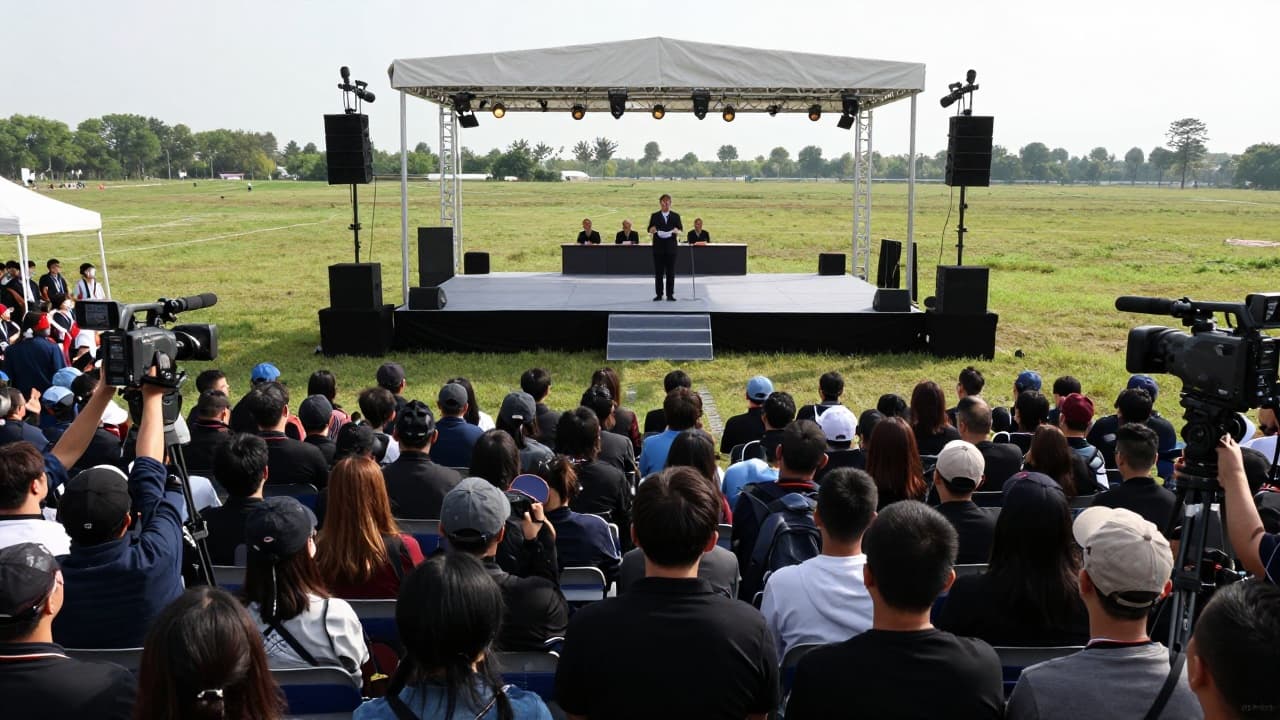
Milorad Dodik, president of the Alliance of Independent Social Democrats (SNSD), and Dragan Čović, president of the Croatian Democratic Union of Bosnia and Herzegovina, announced on Monday that they would continue their partnership following the recent elections. At a press conference in Banja Luka, they stated that their parties were convincing winners among Serbian and Croatian voters, and that they were indispensable in the formation of the government.
"We have said today that we are continuing together, that we are working, that we are remaining here, that we are indispensable in the formation of the government," Dodik said. He added that they wanted the formation of a government at the level of Bosnia and Herzegovina, in accordance with the Constitution and the constitutional status of the peoples. He highlighted that he was not against the European path, but rather against what he described as the abuse of the European path.
Dodik criticised the reforms being pursued by Brussels, which could alter the Dayton Peace Agreement and weaken the role of the constituent peoples. He also announced that he would insist on a review of the decisions made by the High Representative, which in his view had not been confirmed by the Parliamentary Assembly of Bosnia and Herzegovina. He reiterated that the winners of the election must be respected by all three constituent peoples, and that the SNSD did not wish to choose the political representatives of the Bosniaks.
Čović identified the changes to the election law as one of the key issues in the upcoming negotiations. "We are extremely concerned about the election law and we will never again find ourselves in a situation where one people, being the majority, can choose representatives of another people for the Presidency and the House of Peoples," he stated. The HDZ and other Croatian parties are advocating for changes to the electoral legislation to prevent the possibility of the Bosniaks, who are four times more numerous, electing the political representatives of the Croats.
In the last elections, Darja Filipović was elected as the Croatian member of the Presidency of Bosnia and Herzegovina. Željko Komšić had won his mandate in the previous four election cycles with the support of the Bosniak electorate, but in the last election, the Bosniak voters split their votes among four candidates, which increased the chances of victory for the HDZ candidate.
Prior to the meeting with Dodik, Čović had spoken with the leaders of the SDP, the SDA, and the SDP BiH about the formation of the government following the elections. Following these meetings, it was stated that the government at all levels would be formed in the shortest possible time, with the expectation of progress towards European integration.