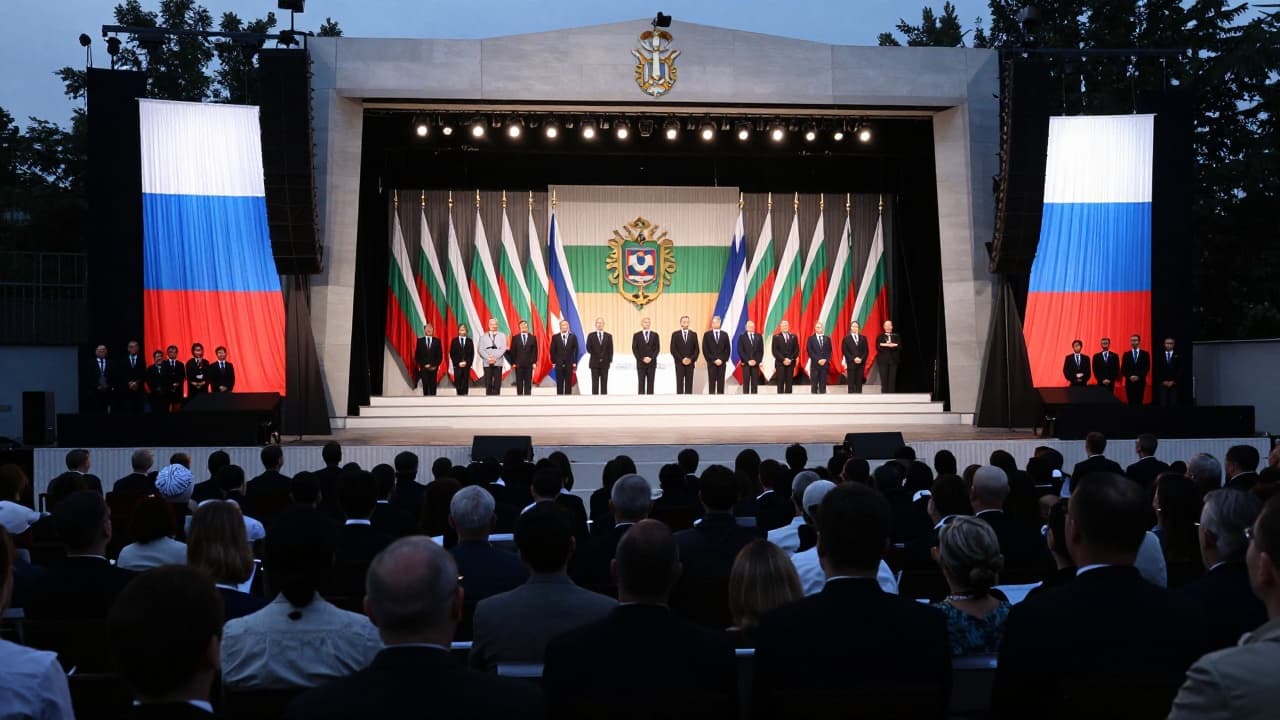
Iliana Yotova won the second round of the presidential election in Bulgaria, becoming the first woman to hold the office of president in the country. Near-final results from the Central Election Commission, published on Monday, confirmed her victory.
Based on 99.95 per cent of processed ballots, Yotova secured 57.58 per cent of the vote in Sunday’s second round, equating to approximately 1.1 million votes. Her rival, Andrey Gurov, received 39.47 per cent, or about 749,500 votes, while around 2.95 per cent of voters did not support either candidate.
In the first round, held on 25 October, no candidate secured the majority required for victory. Yotova led with 34.6 per cent of the vote, with Gurov close behind on 32 per cent.
Yotova is a former vice-president who assumed the role of acting president after Rumen Radev resigned in January. Radev subsequently ran in the parliamentary elections and won with a programme that many political analysts consider pro-Kremlin. Radev supports Yotova, and both have called for a diplomatic resolution to the war in Ukraine.
Yotova is a 62-year-old former journalist and former member of the European Parliament, having served as vice-president alongside Rumen Radev for the past nine years. Following his party, 'Progressive Bulgaria', convincing victory, Radev formed the country’s first stable government in years.
In the final days of the campaign, Yotova stated that 'everyone should call President Putin', describing herself as a 'president of peace'. She opposes sending military aid to Ukraine. During a televised debate between the two presidential candidates, she advocated for an agreement involving both Ukraine and Russia, stating that 'peace can only be achieved through negotiations'. She also proposed a security meeting of all six Black Sea countries to sign a moratorium on hostilities.
The role of the Bulgarian president is largely ceremonial. The head of state has no executive powers, and all significant political decisions must be approved by parliament, although direct election grants the president greater political authority. The president is the supreme commander of the armed forces, can veto laws, signs international treaties and appoints ambassadors. Bulgarian presidents are elected for a five-year term and may serve a maximum of two terms.
Bulgaria has been a NATO member since 2004 and joined the European Union in 2007.