Iran executed Ghaem Hosseini, also known by the nickname Arian, on Thursday for his participation in protests in the central city of Isfahan in January. This marks the fifth execution in the case stemming from the Ali-Khani Square protests, the Judicial Media Centre announced.
According to a statement by the Judicial Media Centre, Hosseini was executed on Thursday morning after the Supreme Court confirmed the death sentence. He was found guilty of “waging war against God”, corruption on earth, destruction of property, and collaboration in acts against national security. The Iranian judiciary described him as a foreign national but did not specify his country of origin. According to a source familiar with the case, Hosseini was a relative of Golmohammad Mohammadi, an Afghan national who was previously executed in the same case, leading to the assumption that he may also have been Afghan.
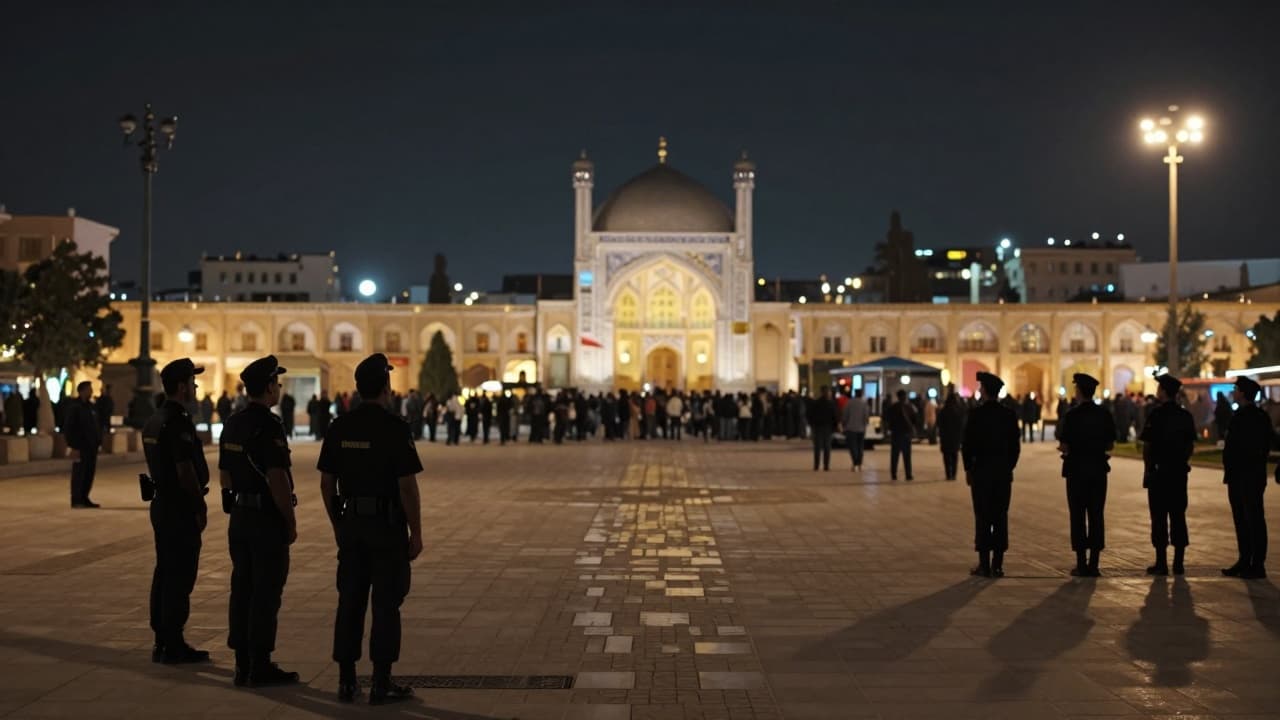
In the case arising from the Ali-Khani Square protests on 8 January, a total of 12 people have been sentenced to death. Mohammad and Erfan Esfandiari were executed on 19 July, while Amirhossein Safari and Abolfazl Sepahi were hanged on 28 July. Safari and Sepahi were executed after authorities erected an execution structure on Ali-Khani Square itself. During the night, a large number of people gathered around the square, while numerous security forces secured the area, and fears grew among residents that further executions would follow. Hosseini’s execution increased the number of executions in this case to five.
Iranian authorities accused the convicts of participating in the deaths of four security force members, as well as setting fires and vandalism during the protests. According to the prosecution, Hosseini was present at the unrest on Ali-Khani Square on 8 January, carried a sharp weapon, and allegedly wore a jacket, cap and mask, and turned off his mobile phone to avoid identification and tracking. Authorities linked him to the burning of the Amir al-Momenin mosque in the Malekshahr district of Isfahan. He was charged with drawing a weapon, “spreading fear and terror”, causing general insecurity, acting against national security, and destroying public property.
Ahead of the 28 July executions, United Nations experts called on Iran to halt the execution of the remaining defendants in the Ali-Khani Square case. They warned that all 12 individuals were sentenced to death during a single hearing, behind closed doors and without clear reasoning regarding the individual responsibility of each defendant. The experts, led by Mai Sato, the UN special rapporteur on the situation of human rights in Iran, stated that the defendants, mostly in their late teens or early twenties, were allegedly subjected to arbitrary detention, enforced disappearances and, in some cases, ill-treatment. Further concern was raised by the fact that the verdicts were largely based on confessions broadcast on Iranian state television. Proceedings before the Revolutionary Court were held behind closed doors, and the verdicts were not publicly released, while human rights organisations warned of limited access to independent lawyers and court files.
Hosseini’s execution is part of a broader increase in the application of the death penalty for acts related to national security following Iranian protests. UN High Commissioner for Human Rights Volker Türk stated on 5 August that Iran had executed at least 56 people since 19 March on charges related to national security, of whom 27 were linked to protests earlier this year. Türk warned that more than 100 other people face similar charges and the possibility of the death penalty, and called on Iranian authorities to stop executions and move towards the abolition of the death penalty.