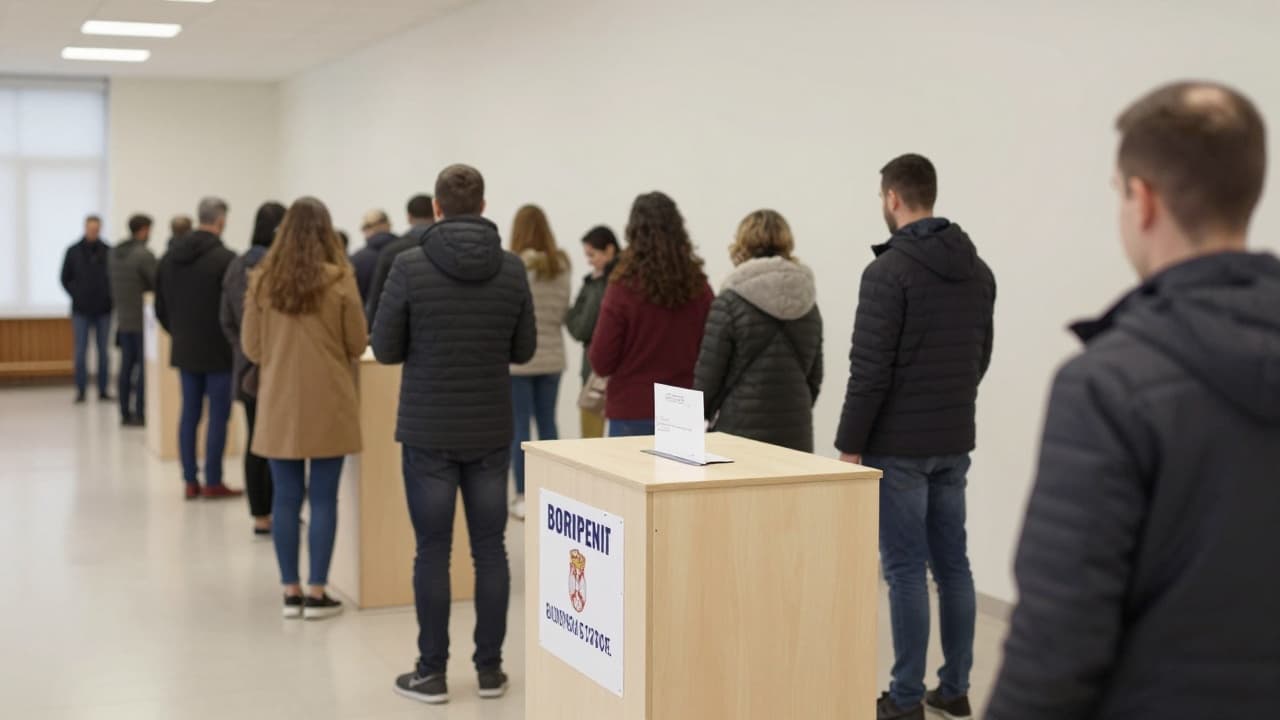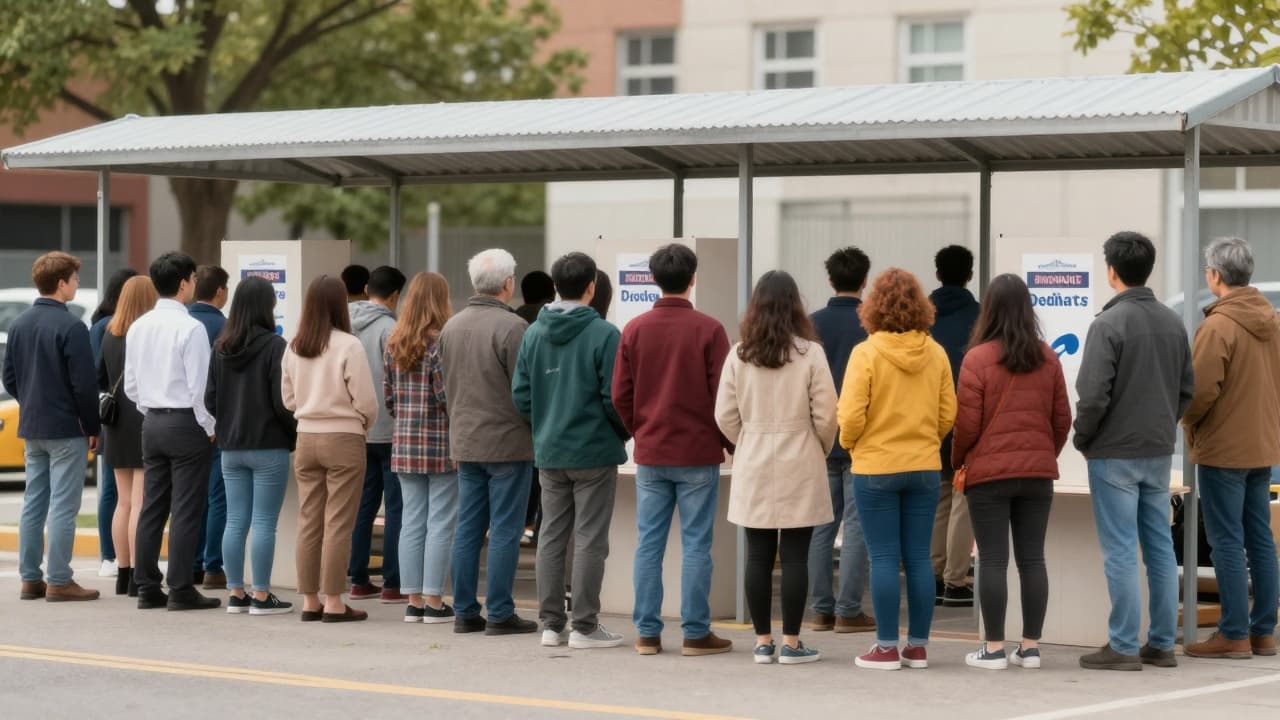
Voting centres closed on Sunday following the first round of presidential elections in Brazil, where President Luiz Inácio Lula da Silva is competing against far-right senator Flávio Bolsonaro, the son of former president Jair Bolsonaro. Lula voted on Sunday morning in São Bernardo do Campo, an industrial city where he began his political career almost half a century ago.
Lula said people would have to choose between strengthening democracy and barbarism. He downplayed the significance of polls published on Saturday that showed the race was wide open, saying the real poll was the one taking place that day. Flávio Bolsonaro, who voted in the north zone of Rio de Janeiro, called on supporters of other right-wing candidates to vote for him as a protest. He said his internal polls showed that people who would otherwise vote for other candidates, but who were also against Lula, were already voting for him, expressing hope that this would be enough to win in the first round.
The two candidates were trading the lead in the polls, making the outcome unpredictable. Both focused on convincing undecided voters, hoping to reach 50 percent plus one vote. If neither candidate crosses that threshold, a second round will be held on 25 October.
Lula, who is 80 years old, positioned himself as one of the last regional leaders to stand up to Donald Trump. He recently accused the US president of trying to interfere in Brazilian elections in Bolsonaro’s favour. Flávio Bolsonaro, 45, often praises the US president and has pledged to join a coalition against drug cartels led by the US, which has killed dozens of people in the region through air strikes and military operations.
Jair Bolsonaro is serving a 27-year prison sentence for attempted coup after a failed re-election bid in 2022. Due to frequent health issues, he is currently under house arrest, with social media posts and public statements prohibited. There is no doubt that Flávio has his father’s support. At the start of the year, polls suggested that voters would prefer to support the candidacy of São Paulo governor Tarcísio de Freitas or former first lady Michelle Bolsonaro, but the former president chose his eldest son.
Brazil is one of the few Latin American countries still with a left-wing government, following a wave of right-wing and far-right electoral victories in the region and the takeover of Venezuela by the US after the capture of Nicolás Maduro. A victory for Bolsonaro would extend the wave of right-wing candidates aligned with US President Donald Trump, while Lula’s re-election would pose problems for Washington, which has been clashing with his administration over trade and security.
The campaign was marked by a scandal in which a senator was recorded asking for $26.8 million for a film about his father. There were also speculations that Bolsonaro might revoke the status of a widely respected Brazilian institution. The campaign of the incumbent president was hit by corruption allegations, still under investigation, which involve his son and former aide. There was also a scandal involving supreme court judges, which, although unrelated to Lula, was seen as a stimulus for an anti-system vote, and thus a vote against the current government.
Claudinei Ferreira Viana, 45, a workshop manager in Pinhais, Paraná, is one of the senator’s supporters. He said his first choice was Jair Bolsonaro, but as he is under house arrest and there is no other strong right-wing candidate to challenge the incumbent, he is voting for Flávio. AM, a 40-year-old woman who asked to be identified only by her initials for fear of retribution from the local conservative government in the interior of the state of Amazonas, will vote for Lula “due to the many programs he has created to support the most vulnerable groups”. She said Jair Bolsonaro had weakened the protection of indigenous peoples, and that what Lula had done in the last four years to strengthen and preserve the Amazon would be seriously threatened if his son came to power.
According to the Supreme Electoral Court (TSE), more than 158.7 million Brazilians, including a million people abroad, are eligible to vote in the elections. Lula is facing 11 opponents, but the BBC Brazil poll aggregator shows that candidates other than Lula and Bolsonaro will receive only about 10 percent of the vote. The TSE has not set a specific time for the release of the official results, but they are expected within a few hours as voting is electronic, and past experience shows that results usually arrive quickly.
Countries where Brazilians abroad can vote have already published preliminary data on the votes counted. In China, Lula won 56.63 percent of the vote, while Bolsonaro came second with 31.33 percent. Lula also won in South Korea, New Zealand and Saudi Arabia. In Israel, Bolsonaro won 74.40 percent of the valid votes, and in Japan 71.59 percent.
The result today will also determine the composition of the Senate from February 2027, as 54 of the 81 Senate seats are up for election, which is two-thirds of the chamber. Currently, the largest block in the Senate is Bolsonaro’s Liberal Party (PL), followed by the Social Democratic Party (PSD), which participated in the coalition government under Lula. Brazilians will also elect 27 state governors, members of state legislative assemblies, all 513 members of the federal congress, and 54 of the 81 senators. In the previous election four years ago, Lula narrowly defeated Bolsonaro’s father, Jair, who was later convicted of planning a coup after thousands of his supporters invaded the Brazilian Congress, and he was barred from running.