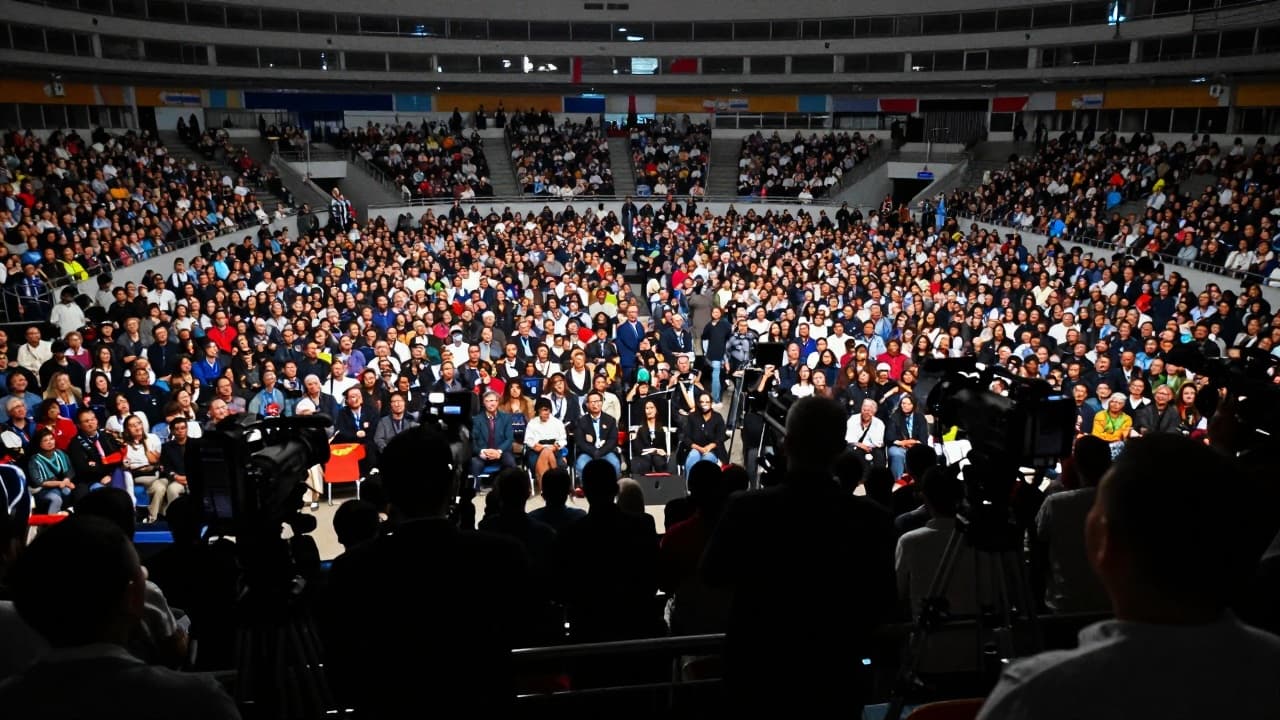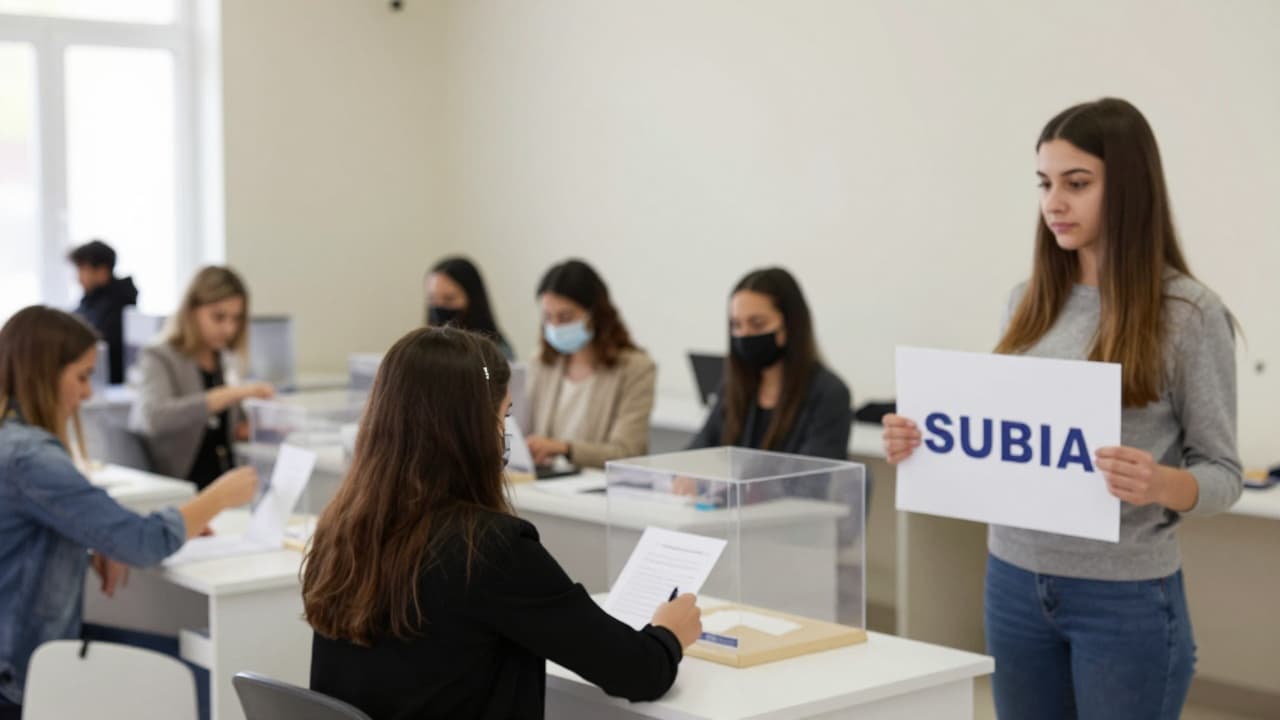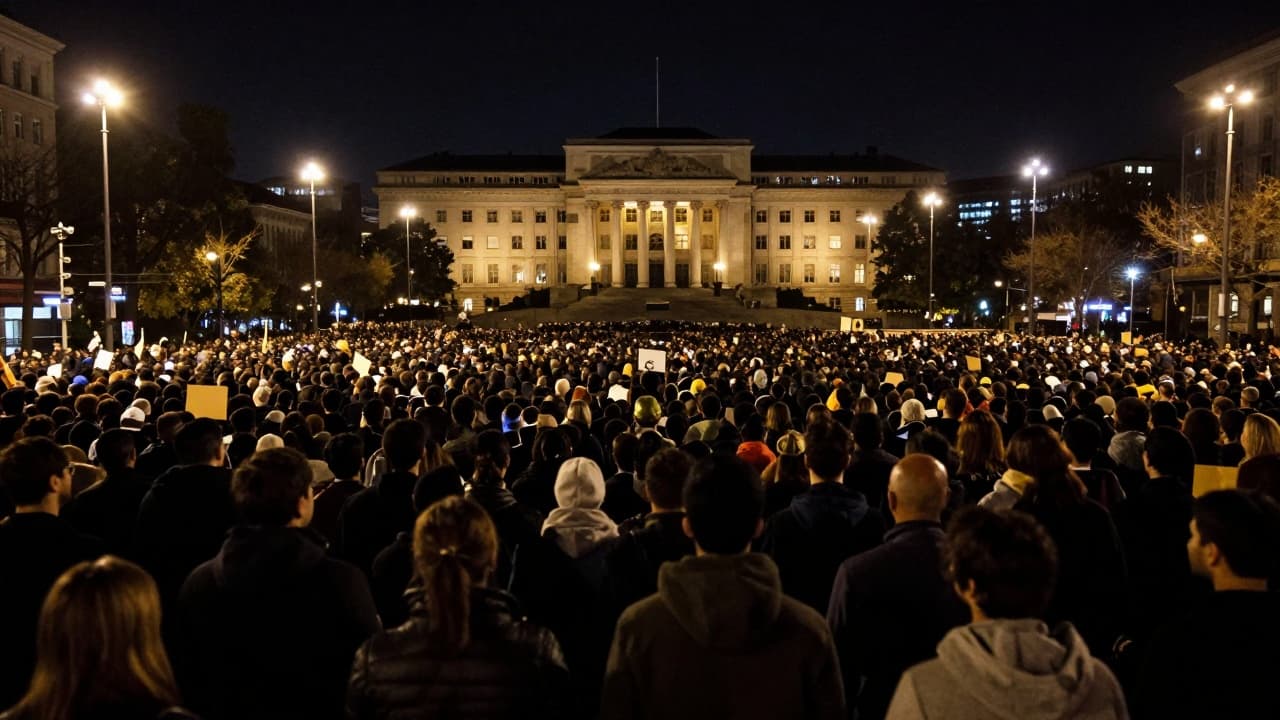
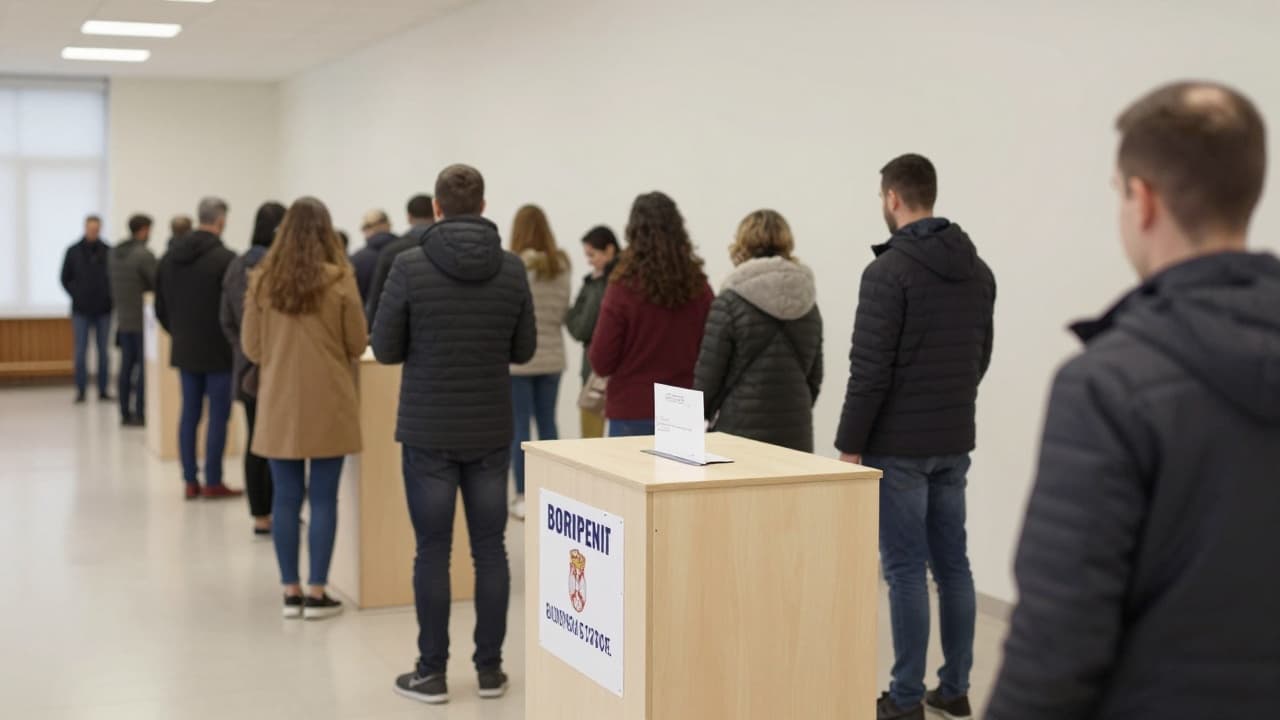
Early parliamentary elections in Serbia are being held on Sunday, 25 October, against a backdrop of deep political crisis and societal division. Polling stations open at 07:00 and close at 20:00, while more than 100,000 Serbian citizens in the diaspora will vote on local time at 93 polling places in 37 countries.
The election silence is marked by heightened tensions, with social media platforms seeing intense mobilisation of voters and calls for high turnout. Supporters of the Student List – Students Win are leading this effort. The elections were called following public pressure and months of anti-government protests, and are assessed as potentially the most significant test for Aleksandar Vučić’s government in the past 14 years.
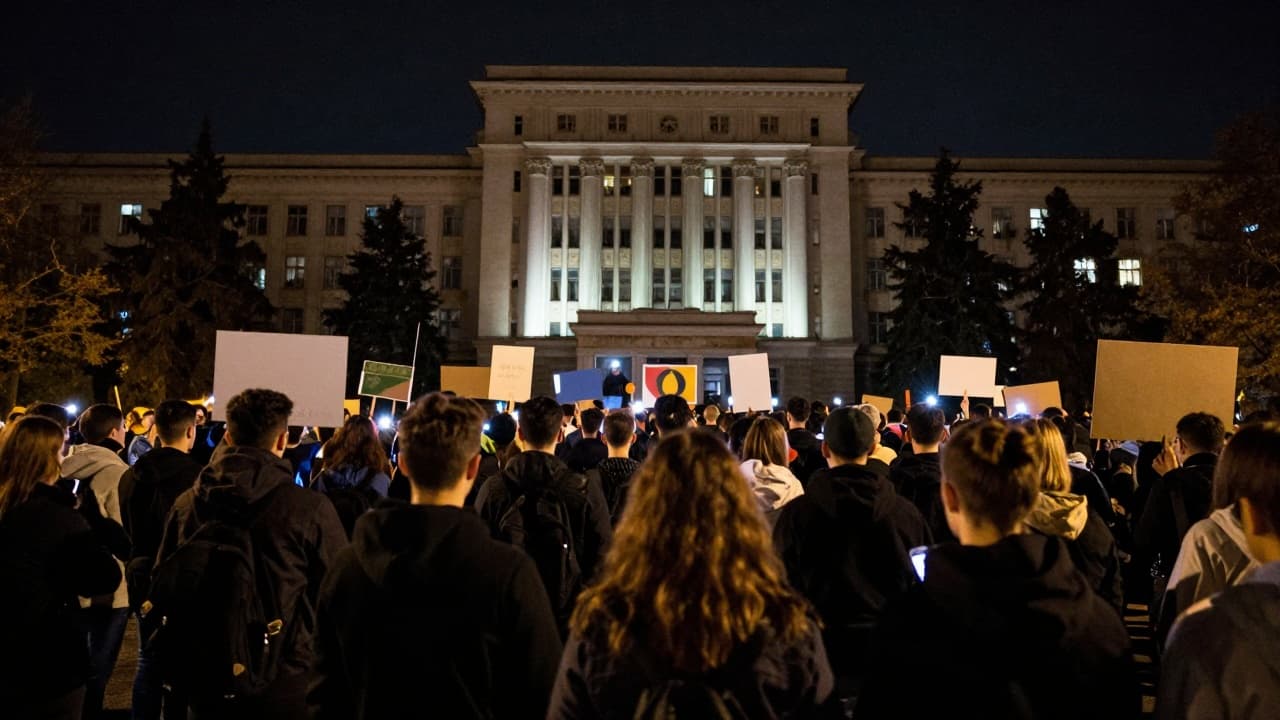
Public opinion polls indicate that the contest will be fought between the list of the Serbian Progressive Party (SNS), led by former Serbian President Aleksandar Vučić, and the Student List – Students Win, which emerged from nearly two years of anti-government protests. The protests were triggered by the death of 16 people in the collapse of a canopy at the newly renovated railway station in Novi Sad on 1 November 2024, and were led by students. Protesters view the current government as the main culprit behind the Novi Sad tragedy, citing corrupt business dealings, the usurpation of institutions and the undermining of democratic standards in the country.
Eighteen lists are competing for 250 seats in the National Assembly, nine of which have minority status. Slightly more than 6.45 million voters are eligible to vote, and the electoral threshold for entry into parliament is three per cent, except for minority lists. The most important list of the ruling bloc is "Aleksandar Vučić – United Serbia", led by the SNS. Vučić resigned as President of Serbia in September to lead the list and attempt to return to the role of Prime Minister. The SNS and its partners have dominated Serbia since 2012, with Vučić serving first as Prime Minister from 2014 and then as President of the state. Vučić’s opponents accuse the government of controlling institutions and media, misusing state resources and corruption, allegations which Vučić and the SNS reject.
The second major list of the traditional ruling coalition is led by Ivica Dačić, and his "Stability Factor" coalition brings together the Socialist Party of Serbia and several smaller partners. The SPS has cooperated with the SNS in government for years. Vučić’s main opponent is not one of the traditional opposition parties, but the Student List – Students Win. The top candidate is Ilija Srdanović, a doctor from Novi Sad, and among the 250 candidates are doctors, professors, cultural workers and other individuals mostly without prior experience in party politics. The student movement arose after the tragedy in Novi Sad, and protests over responsibility for the canopy collapse gradually grew into a broader movement against corruption and the way state institutions function. The students base their campaign on the rule of law, the fight against corruption and the restoration of institutions, while issues such as Kosovo, relations with Russia and EU membership have largely been left in the background. Some opposition parties have decided not to compete in the elections and have supported the student list.
The pro-European coalition "European Serbia", led by Marinika Tepić and Zdravko Ponoš, is also entering the election, comprising the Party of Freedom and Justice, Serbia Centre and the Civic Movement Solidarity. On the right, the coalition "Authentic Right", led by Miloš Jovanović and his New Democratic Party of Serbia, along with the monarchist POKS, is among the key competitors. Due to the D'Hondt system, votes for lists that remain below the threshold indirectly increase the share of mandates for parties that enter parliament.
Pre-election polls yield very different results depending on the agency conducting them. Surveys close to the government give a more convincing advantage to Vučić’s bloc, while some independent surveys have shown a nearly tied race or a slight advantage for the student list. A survey by the New Serbian Political Thought conducted at the end of September and beginning of October among decided voters gave the Student List 44.5 per cent and Vučić’s list 42.7 per cent. Other poll aggregates give the advantage to Vučić’s bloc, but without a guaranteed standalone majority. The SNS has a very disciplined voter base, while the success of the student list largely depends on the mobilisation of young people, undecided voters and citizens who otherwise do not go to the polls.
Tensions were further heightened by the arrest of political analyst Dejan Lučić, who is suspected of inciting panic and disorder. The Belgrade Higher Public Prosecutor’s Office states that Lučić published a video on TikTok claiming that there would be fraud in the elections, after which a large number of dissatisfied citizens would take to the streets, while the army and police would withdraw before the crowd. The tabloid and cable television Informer published the arrest of Lučić as a headline story on Saturday.
Pro-government and Vučić-friendly media launched a barrage of accusations on Friday and Saturday against the few cable television stations and portals not under the control of the ruling Progressives, accusing these media of "dehumanising" Vučić and his family. The portal Nova.rs reported on Saturday that it had become the target of mass bot attacks – its number of followers increased by around 15,000 in just half an hour and continues to grow at an "unusual rate". They state this is a pattern of attacks to which many independent media and organisations in Serbia have been exposed in the previous period, which potentially could lead to the suspension of accounts on social media. The new wave of attacks, they highlight, "is happening exactly one day before the parliamentary elections in Serbia".
The Union of Free Trade Unions of Serbia called on the relevant institutions on Saturday to "ensure the protection of citizens, political impartiality of services and lawful conduct during the electoral process, including election day 25 October, and the night in between", as well as during the determination of results and the decision on objections. The Academic Crisis Centre, an informal support network and call centre established by lecturers, researchers and associates gathered around the "Rebel University" initiative, called on professors, students, high school graduates and other members of the academic community in Serbia to contact them if they experience repression, police brutality or arrests. Their phone line, they noted, will be available 24 hours.
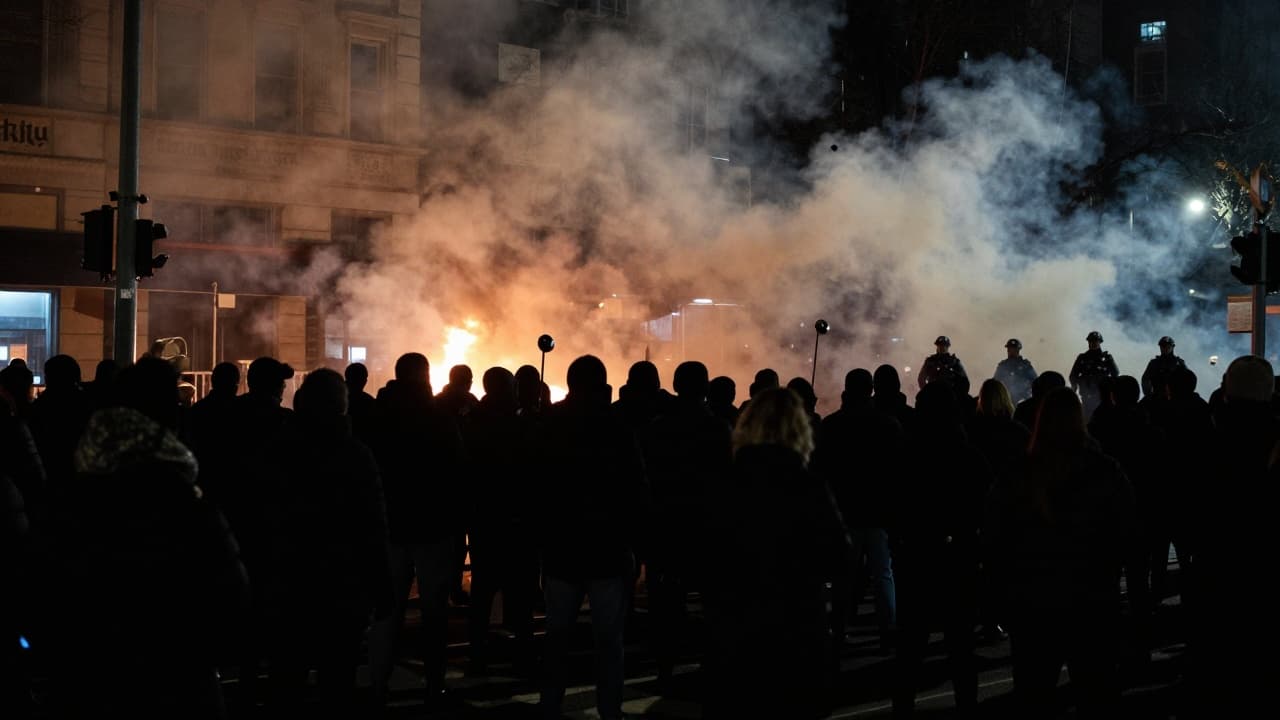
Nemanja Šarović, a former radical, today President of the Movement Love Faith Hope and a reporter for Zrenjanin KTV, called for peaceful resistance before the final rally of the Student List if Vučić declares victory and citizens doubt the regularity of the elections. "If it comes to Vučić declaring victory, if there are some protests, do not fight with the police. If Vučić sends the police at us, I appeal: there are more of us. Do you think the police will go after 50 – 100 thousand people? They won't. There is no police. Most of those police officers, it seems to me, think the same as we do. So, let's go for peaceful resistance, Gandhian resistance. Let's all sit on the ground," said Šarović. He added that in the case of election fraud and a declared victory, Serbia should be blocked.