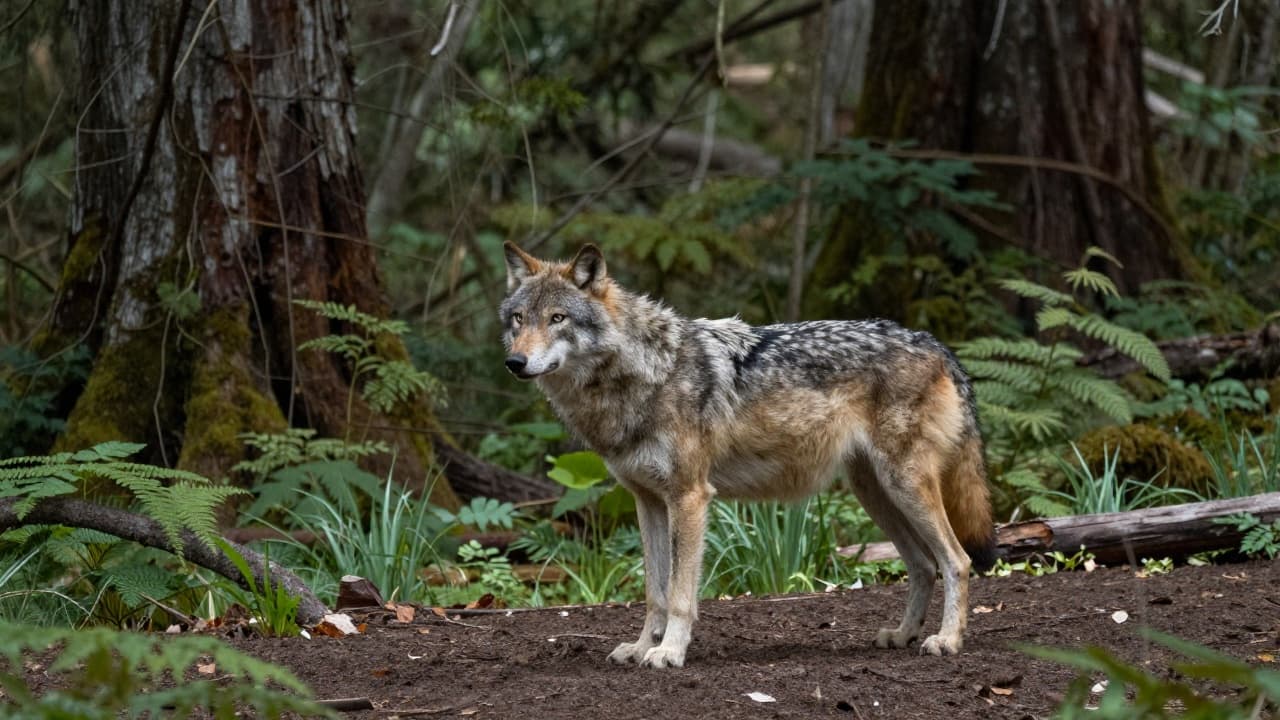
California wildlife officials have confirmed a recent sighting of a grey wolf in Mendocino National Forest. This is the first recorded appearance of the animal in that forest since the species re-established itself in the state fifteen years ago. Reports of the sighting arrived in late August, and officials confirmed the presence of wolves in the northernmost part of Lake County, located approximately two hours north of San Francisco.
The California Department of Fish and Wildlife (CDFW) received two separate reports from the area where Mendocino, Glenn, and Lake counties meet. The agency received photographs and sent personnel to the field the following day to verify the animal's presence. Alicia de la Garza, deputy director of public affairs for the CDFW, stated that the sighting had been verified by a wolf biologist. He confirmed the validity of the photographs, conducted field surveys, and found wolf tracks at the location where one of the sightings was reported.
County Supervisor Brad Rasmussen issued a statement on social media confirming the facts. Axel Hunnicutt, the state coordinator for grey wolves at the CDFW, said this was the only confirmed sighting west of the Sacramento Valley. He noted that the appearance in Mendocino National Forest is a sign that the species is expanding its range, a development first reported by MendoLocal.News last week.
Wolves were extirpated in California approximately a century ago, but reappeared in 2011. Over the past decade, they have significantly expanded their presence, primarily in the rural and remote parts of the state's northeast. There are currently at least 50 documented wolves in California. The species is protected in California and under the federal Endangered Species Act.
Farmers have expressed frustration over livestock losses, stating they can do little when wolves kill their property. Last week, Donald Trump signed an executive order titled "Support for American Farmers." The order directs the Department of the Interior to consider removing grey wolves from the Endangered Species Act list and mandates easing restrictions on lethal removal.
The US Fish and Wildlife Service has already attempted to remove the grey wolf from the endangered species list, but the matter remains in court. The law protects wolves in most of the lower 48 states under a federal court order from 2022. Environmental groups have condemned Trump's order. Leia Barnett, conservation director for WildEarth Guardians in New Mexico, stated that the administration is attempting to bypass the checks and balances provided by foundational environmental laws such as the Endangered Species Act.