Governor Gavin Newsom declared a state of emergency on Monday across the state following the arrival of the El Niño climate phenomenon on the US West Coast. Projections indicate that the region could be hit by violent and devastating storms, accompanied by the risk of high tides that could trigger flooding.
Newsom stated that the measure aims "to provide communities with the necessary support, to equip authorities to carry out their duties, and to reassure families that their state is ready." He added that they are preparing early for this El Niño because every resident of California deserves to feel safe in their home, connected to their community, and protected when weather disasters strike.
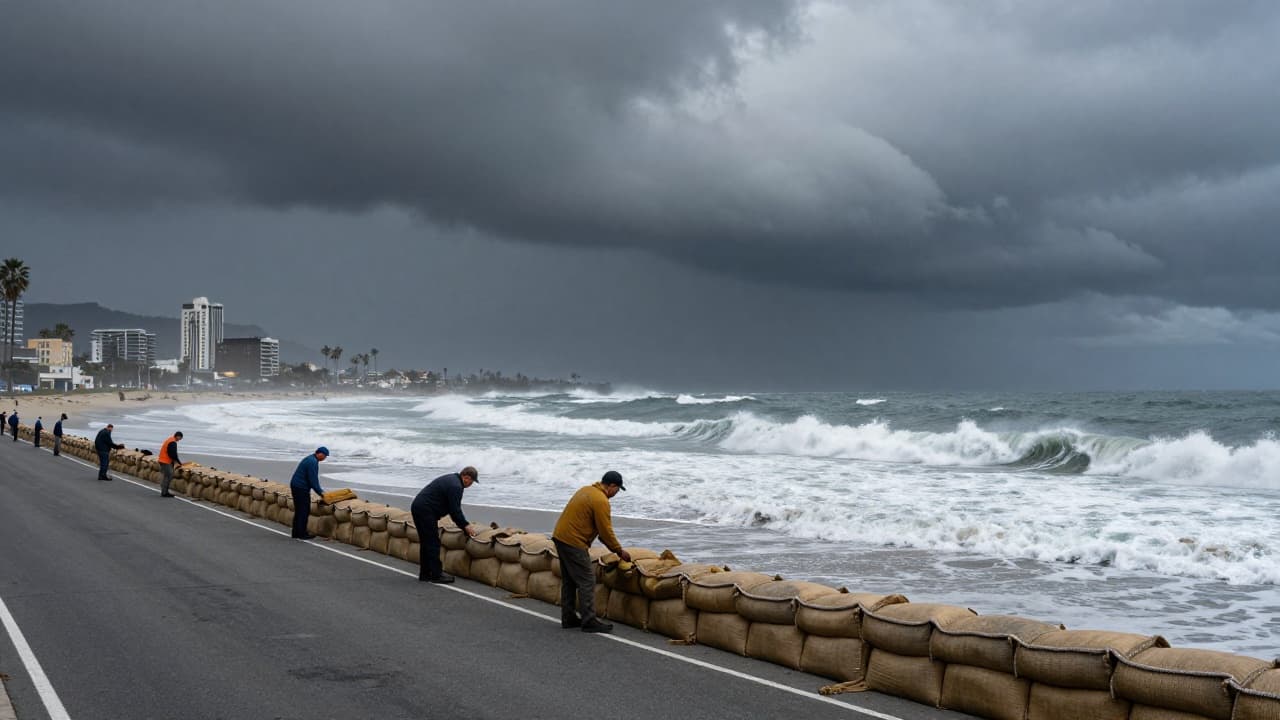
The declaration of a state of emergency allows state agencies to act more swiftly, from deploying equipment and supplies to protecting critical infrastructure. The measure ensures equipment for flood fighting, such as sandbags and pumps, is available, with the Department of Water Resources responsible for its preparation. The California National Guard has been placed on standby for potential search, rescue, engineering, and logistics operations, while state agencies have been tasked with securing roadways. Machinery for clearing snow and managing traffic on the most vulnerable highways is also being prepared, with the decision accelerating the permitting process for storm protection works as forecasters monitor the development of El Niño in the Pacific.
El Niño is a natural climate variation that occurs every two to seven years. In August, it continued to strengthen, with a 75 per cent chance of becoming the strongest El Niño on record, according to data from the National Oceanic and Atmospheric Administration (NOAA). According to the latest data, El Niño has recently broken the record for the highest temperature ever recorded, months before the expected peak. NOAA estimates that there is a greater than 90 per cent chance that El Niño will be very strong this winter, while the probability of it reaching historical strength is 75 per cent. The global phenomenon known as 'super El Niño' is already breaking temperature records.
Seasonal models point to a wetter-than-average winter, which could bring heavy rain, flooding, landslides, and damage to infrastructure, as well as cause widespread disruptions to the electricity supply. Experts predict an exceptionally rainy winter in California, where El Niño typically brings stronger storms and a higher risk of flooding. Several coastal cities have already faced high waves and erosion. Kelvin waves, large pulses of warmer water that can raise sea levels along the coast, are already affecting southern California and further increasing the risk of flooding and erosion from an incoming wave, with another such wave expected later this autumn, which could worsen the situation during storms or high tides.
In the past, El Niño has caused or exacerbated droughts and fire risks in certain areas of the Amazon, Central America, Indonesia, and Australia, as well as monsoon disruptions in India and heavy rains in East Africa. This phenomenon is superimposed on the effects of human-induced climate change, which further amplifies extreme weather events. In the year following an El Niño, heat stored in the ocean is released into the atmosphere, which primarily contributes to a rise in global temperatures, with many climatologists predicting that 2027 will be the hottest year on record.
Wade Crowfoot, California's secretary for natural resources, stated that California is already taking steps to protect communities from a potentially historic El Niño, as they are aware of how severe these climate-driven extreme weather events can be. The governor also approved separate emergency declarations for Glenn, Humboldt, Kern, Mendocino, Santa Barbara, and Lake counties, but these do not relate to recovery from previous weather disasters and are not directly linked to preparations for El Niño.