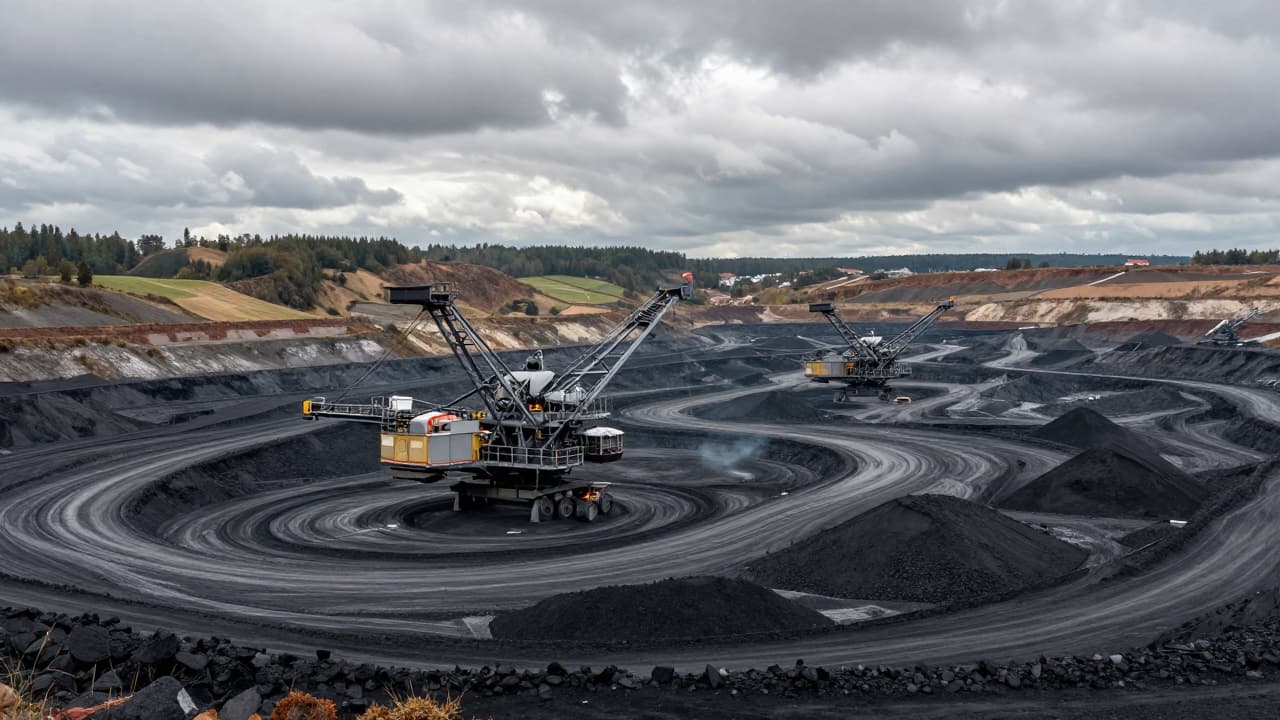
The High Court ruled that the approval for the expansion of the Mount Pleasant mine by Mutch Energy in Muswellbrook is invalid, marking the first time the highest court in the country has considered a case on climate grounds. The ruling, delivered by a 3-2 majority, saw the court dismiss the mining company's appeal.
The majority found that the state planning authority had failed to consider how to mitigate the greenhouse gas emissions that would result from the coal being sold and burned overseas. It was also determined that the Independent Planning Commission had not considered imposing conditions aimed at reducing emissions from scope 3 as far as possible.
The expansion of the Mount Pleasant mine was set to double coal production to 21 million tons by 2048. It is estimated that 98 per cent of the projected emissions are from scope 3. The High Court found that the approval was invalid on a different basis to the earlier decision by the New South Wales Court of Appeal.
The lawsuit was brought by the local group Denman Aberdeen Muswellbrook Healthy Environment Group (Dams Heg), whose president is Wendy Welsh, a retired science professor. Along with her partner Tony Lonergan and the Dams Heg group, Welsh has led the case through the courts for over four years. In the initial proceedings, the Land and Environment Court ruled in favour of Mutch Energy. The Dams Heg group was represented by the law firm Johnson Legal.
A spokesperson for Mutch Energy stated that the company was disappointed by the outcome but accepted the court's decision. They added that they would carefully review the judgment to understand its implications for future project assessments and environmental approvals. The company would, he said, continue to pursue all available options to ensure the long-term continuity of the Mount Pleasant mine. He highlighted that thousands of people in the Hunter region, who rely on the Mount Pleasant mine for employment and income, had long lived in fear and uncertainty, and that the state government's approval for a separate mine modification in August would extend its operational life by six years.
Sue Higginson, a representative of the NSW Greens and climate change spokesperson, stated that the High Court's decision could lead to significant legal challenges for the expansion of the Hunter Valley Operations, the largest in the state, which had been approved by the Independent Planning Commission just a week earlier. Tania Constable, the chief executive of the Minerals Council of Australia, described the High Court's decision as an additional blow to Australia's ability to meet the growing demand for high-quality coal.