Around 800,000 bees have been stolen from various properties in the far north of the Australian state of Queensland, with the value of the stolen insects estimated in the tens of thousands of dollars. The thefts occurred at multiple locations, and beekeepers suspect they were committed by individuals within the industry.
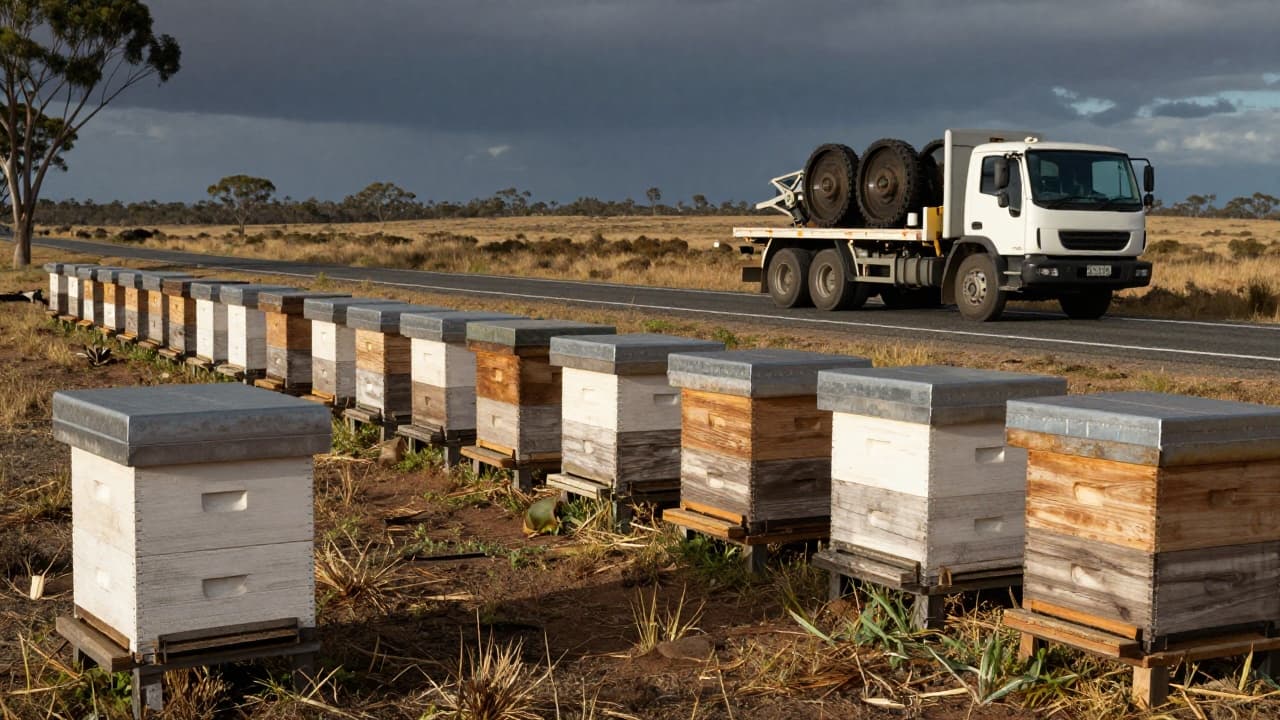
Tom Bidner, a beekeeper from the Atherton Tablelands west of Cairns, stated that 44 hives were stolen from three different beekeepers. He estimates that each hive contained at least 20,000 bees, bringing the total to more than 800,000 stolen insects. According to him, the thefts required a sophisticated operation and specialist equipment.
Rather than taking the entire box, the thieves removed what is known as a brood box, making the hive appear unchanged from a distance. Bidner described how the thieves arrived with a truck full of equipment, transferred the frames into their own boxes, and reassembled the hives. The honey was not taken — it remained on the hive. Bidner believes the perpetrators are likely people from the industry.
Beekeepers will lose not only the stolen insects but also the value of pollination contracts, which can reach several thousand dollars. Additionally, growers will suffer losses due to poorer quality pollination. Bidner said this is the biggest theft in living memory, although it is not the first. It is now the peak of the avocado season in the far north of Queensland, and hives are spread across properties in the area under contract for pollination services for local growers. Others were simply left by the side of the highway. Bidner said that in the past, bees did most of the work, and occasionally people would tamper with the hives. Such tampering usually involved individuals who would give up after about thirty seconds.
Detective Sergeant Ben Cross from the Mareeba Rural and Stock Crime Squad told ABC that he also believes the perpetrator is a "commercial farmer" rather than a hobbyist.
The region recorded its first appearance of the varroa parasite south of Cairns just a week ago. Megan O'Mara, a professor at the University of Queensland, stated that more than $100 million has been spent preventing the spread of the parasite since it appeared in Newcastle in 2022. Available treatments have limited effectiveness, and the cost of uncontrolled spread to the industry is estimated at up to $1 billion over 30 years. Australia officially abandoned efforts to eradicate the parasite in 2023. O'Mara is involved in an international effort to develop more effective treatments, with one leading candidate using mRNA technology originally developed during the covid-19 pandemic. She said that a more effective treatment is still several years away, but progress is being made.
Bidner described the thefts and the parasite as a "double blow". He highlighted that the far north of Queensland is unusually exposed because hot weather means bees breed year-round, and the parasite multiplies in the brood. He said that mites have not yet been detected in their colonies, but that they should be investing time and energy into that — instead, they are facing this wave of thefts.