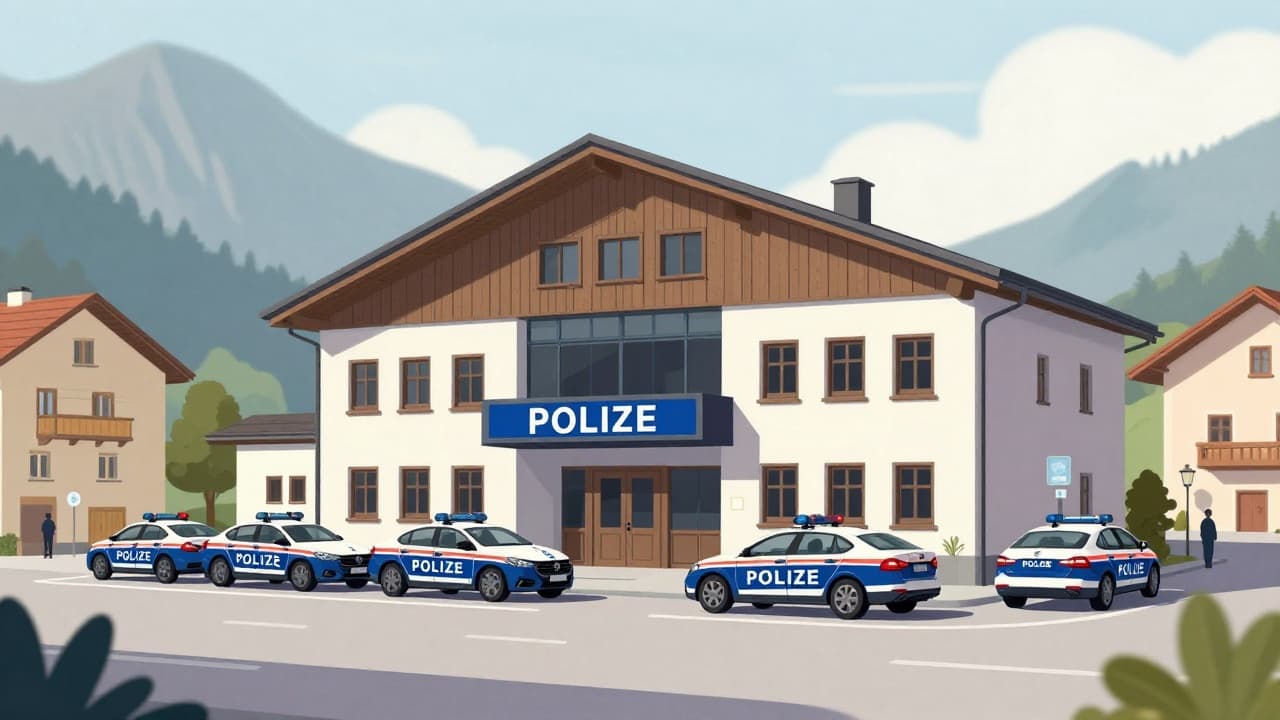
In the Austrian town of Braunau am Inn, on the border with the German state of Bavaria, a new police station was officially opened on Wednesday. The opening of the building marks the culmination of a long process that began with the expropriation of the property in 2017, after the building had long been in private ownership and the subject of complex legal disputes.
The renovation, which cost around €20 million, encompasses the main building, auxiliary structures, and the inner courtyard. Staff from the district police command and the local police station are located within the complex. According to information provided by the dpa news agency, the space has been adapted to the needs of security services, transforming the building from a symbol of the past into an active instrument of public safety.
A specialist committee during the planning phase rejected two more radical options: demolishing the building or turning the building into a museum. Instead, they recommended a renovation that would make the building as unrecognisable as possible as a historical monument. Authorities consider the decision to place the police in the building a strategic advantage, as it ensures the possibility of an immediate check on suspicious individuals entering the site.
The decision was made in the context of the fact that the house had previously been a destination for far-right extremists and neo-Nazis. The opening of the police centre aims to prevent the building from continuing to attract such groups, particularly given that it is located on the border with Germany. The police will thus have direct control over access to the location and will be able to respond to attempts to organise gatherings.
Adolf Hitler was born in this house on 20 April 1889. His dictatorship led to the outbreak of the Second World War, in which at least 60 million people died, and the Holocaust in which six million Jews were killed. The transformation of the house into a police station is part of Austria's broader effort to deal with the dark legacy of that period in a way that prevents it from being instrumentalised by extremist groups.