
Within a few weeks, Croatia will fully implement the obligation to issue e-invoices across all business segments. This requirement began as an administrative novelty, first in the public procurement and large systems segment more than a decade ago.
At the start of this year, issuing e-invoices became a legal obligation for all B2B transactions, and by early 2027, the obligation will cover all entities not in the value-added tax (VAT) system. The public sector was the key driver of invoice digitisation, as companies wishing to do business with the state had to adapt.
Croatia chose a specific path for e-invoicing: the e-invoice is linked to the issuer and recipient, using the extended UBL 2.1 standard and a system of information intermediaries. The next major step was the Fiscalisation 2.0 project, which dominated professional discussions, education, and significant stress in company finance departments, accounting services, and software firms over the past two years. The new generation of e-invoice distribution systems required new technological infrastructure, new competencies, and new intermediaries.
The Croatian market for e-invoice information intermediaries now counts dozens of providers, including a state institution, a postal group, a telecom operator, and a number of specialised technology companies. Users must choose between different billing models, certification levels, support quality, and reliability over the next ten years.
Croatia selected a distinct route: e-invoicing is technically linked to fiscalisation, and the state does not serve as a central platform for document exchange. A network consisting of a large number of information intermediaries has been established, and the Tax Administration explicitly states that it is not possible to upload invoices directly to its portal. The exchange of e-invoices is conducted exclusively between business entities, with the mandatory use of an information intermediary service or the application of a proprietary software solution.
An e-invoice is neither a scanned nor an electronically signed PDF, but a structured XML document. Croatia selected UBL 2.1, the standard of the OASIS organisation, for the syntax, with a mandatory compliance with the European norm EN 16931-1:2017. This norm is supplemented by the national 'Specification of Basic Usage of eInvoices with Extensions', known as CIUS-HR, which prescribes Croatian extensions: the adaptation identifier begins with urn:mfin.gov.hr, and national fiscalisation data travel in a special UBL extension element.
The CIUS-HR specification is a living document that is continuously upgraded. The latest version introduced new business rules and an updated validator, meaning intermediary systems must be constantly maintained and aligned with the specification. Every invoice line item must carry a six-digit KPD (Classification of Products by Activity) code from the State Statistical Office, enabling automated processing and analysis of turnover. The UBL 2.1 standard covers both invoices and credit notes, and the corresponding XML schemas published by the Tax Administration serve as the canonical basis for validating all documents in the network.
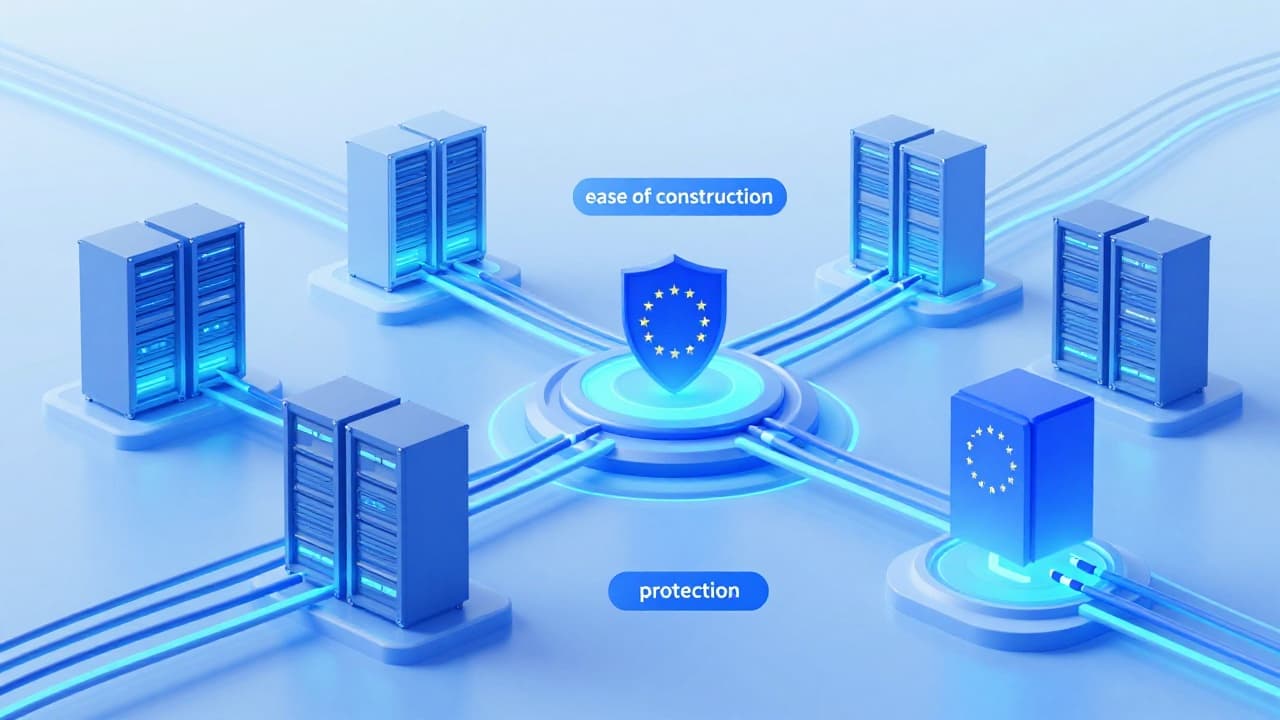
A mandatory element of the system is the access point: a technological service that receives, validates, and forwards e-invoices. A company can develop its own access point, but this is only feasible for the largest systems, subject to approval and successful passing of a compliance test by the Tax Administration. For most of the market, the solution is information intermediaries: companies on the Tax Administration's list that maintain this infrastructure on behalf of users.
An intermediary must implement the AS4 communication profile based on the CEF eDelivery specification, maintain a metadata service for its users, and pass mandatory security and compliance checks. The system uses two complementary services: AMS and MPS. AMS is the Address Metadata Service managed by the Tax Administration, functioning like a central directory: a query with the buyer's OIB (Personal Identification Number) allows the issuer's system to identify which metadata service (MPS) holds the record for that recipient. The MPS then returns the final access point address to which the invoice is delivered.
Each identifier can be registered in only one MPS, thereby avoiding duplicates and incorrect routing. Company X, whose invoices go through intermediary A, can seamlessly send an invoice to Company Y on intermediary B. The two intermediaries 'coordinate' via the AMS and MPS, without the need for mutual contracts or interconnections. When it comes to e-invoices, a peculiarity of the Croatian model is also the fiscalisation procedure.