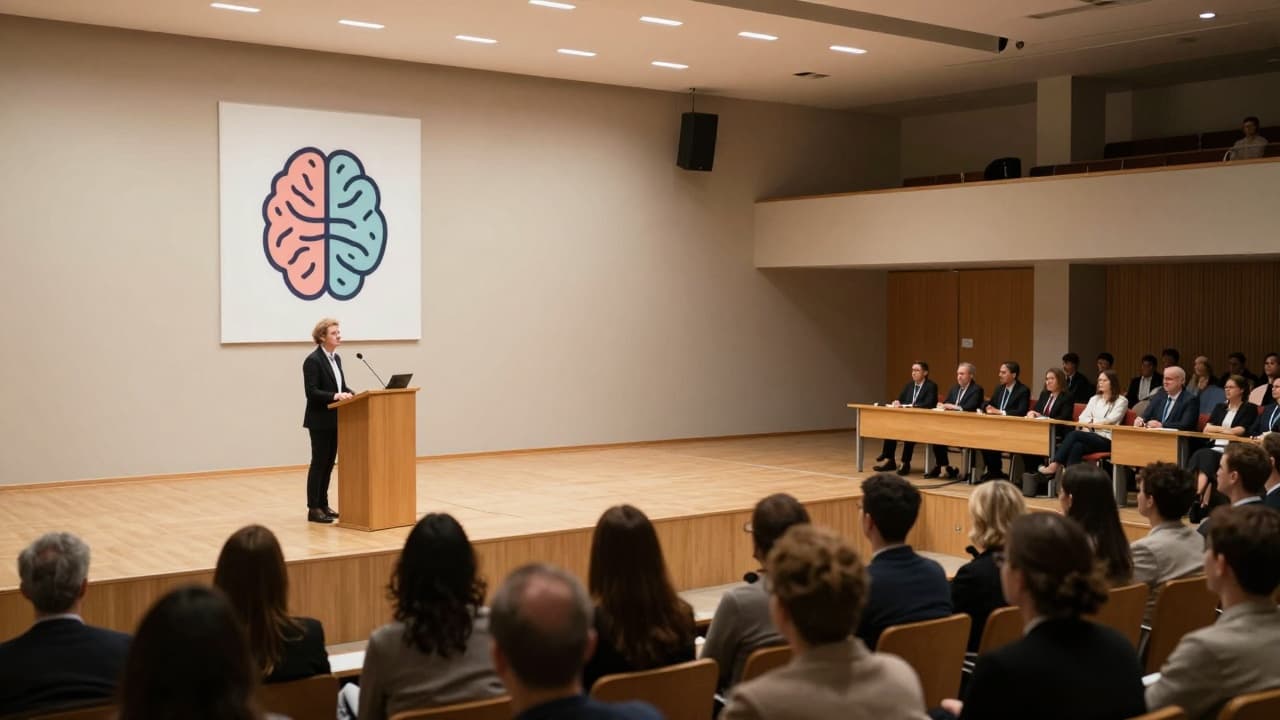
For every person in Croatia receiving treatment for a mental disorder, two more are in need of help but do not seek it due to stigma. This was the warning at a conference on mental health held in Zagreb, organised by the Croatian Union of Women 'Katarina Zrinski' and the Zagreb City Board of HDZ, ahead of World Mental Health Day on 10 October.
State Deputy MP Marija Vrhovski said that care for mental health does not begin when a problem arises, but is managed daily. "At the moment when that red alarm is triggered, it is not a sign of weakness. We must seek help," said Vrhovski.
The head of the service for mental health at the Croatian Institute of Public Health, Danijela Štimac Grbić, stated that mental disorders account for 30 per cent of all causes of disability in Croatia. The most common cause of hospitalisation for men is alcohol-related mental disorder, while for women it is depression. The majority of hospitalised patients are still admitted via the emergency department, which, according to her, shows that there is a lack of timely recognition in the community and in primary health care.
Štimac Grbić warned of an increase in self-harm following the pandemic, especially among girls aged 15 to 19. The number of suicides in 2025 was slightly lower than in previous years, at below 500, and suicides were four times more common in men than in women. She announced that the Institute would begin training in crisis response in December, as part of the European project PRISM (Prevention-oriented Rights-based Approach to Support Mental Health in Vulnerable Population Groups), aimed at police, fire service, and school staff.
On World Mental Health Day, a digital campaign for the primary prevention programme, titled 'Mental Health Alphabet', will launch. The director of the Health Administration, Ivana Portolan Pajić, announced that four action plans within the strategic framework for mental health until 2030 would be submitted for public consultation by the end of the year. She highlighted that psychological counselling had been returned to health centres following a 30-year absence, and that citizens could consult them without a referral. The aim is to establish 24 dispensaries for mental health in health centres by the end of 2030. "We must all accept that sometimes in life we are not well, and this is true for everyone, without exception," said Portolan Pajić.
The state secretary in the Ministry of Science, Education and Youth, Zrinka Mužinić Bikić, stated that the number of psychologists in schools had risen from 580 to nearly 1,000 in the past three years, and the number of social pedagogues from 103 to 210. She warned that research shows depressive and anxious symptoms, self-harm, and suicidal behaviour in a segment of 16-year-olds. "School is not a healthcare institution, we cannot expect schools to provide treatment," she said, adding that the role of the school is to recognise changes, provide initial support, and connect the child and family with professional help.
The president of the European association GAMIAN-Europe, Tin Pong, stated that stigma is still present, although depression is spoken of more openly today. "No one is condemned to be ill forever, for the rest of their life," he said, referring to Pong.