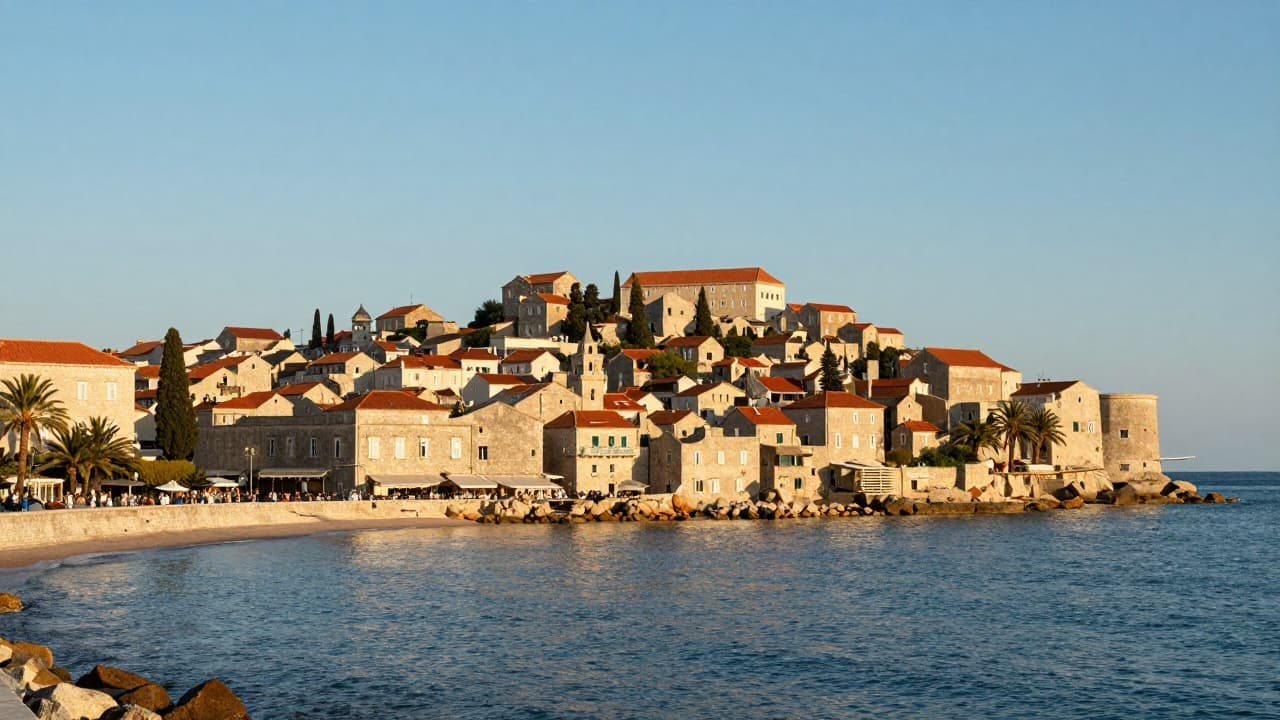
September across much of Croatia brought temperatures significantly above the long-term average, and according to assessments by the Croatian Meteorological and Hydrological Service (DHMZ), 'warm' and 'very warm' conditions predominated across much of the coast. The hottest conditions were recorded in the far south, where the Dubrovnik area and the island of Lastovo recorded a climatic rating of 'extremely hot'.
In Dubrovnik, this was the second warmest September on record, following only 2011. In Split and Rijeka, warmer Septembers were recorded only in 2011 and 2023, further confirming that this year's September ranks among the warmest recorded at those stations.
Precipitation, by contrast, was around the long-term average or below it across much of the country. The exception was western Istria, where a distinctly wet period was recorded. In Poreč, almost 220 litres of rain per square metre accumulated, with 11 September being the peak, when 141mm of rain was recorded in a single day.
One of the clearest indicators of climate change is the rise in the number of warm nights — those in which the temperature does not fall below 20.0°C. Between 1961 and 1990, Split's Marjan recorded an average of 73 warm nights per year; in the period from 1991 to 2020, this average rose to 83 nights, and in the last 30 years (1997–2026) it stands at 89 warm nights per year. The absolute record was set in 2018, with 112 warm nights. In Knin, a previous record was tied with one warm September night.
The part of 2026 so far on the Adriatic ranks among the warmest on record. In Split, temperatures in 2026 have already surpassed those of the previously record-breaking 2024.
Long-term models for the remainder of autumn and the winter months forecast above-average air temperatures, with an increased probability of above-average precipitation. The first week of October, however, passes in the sign of dry weather, while by the end of the week, stronger precipitation is expected on the Adriatic and in the surrounding areas.