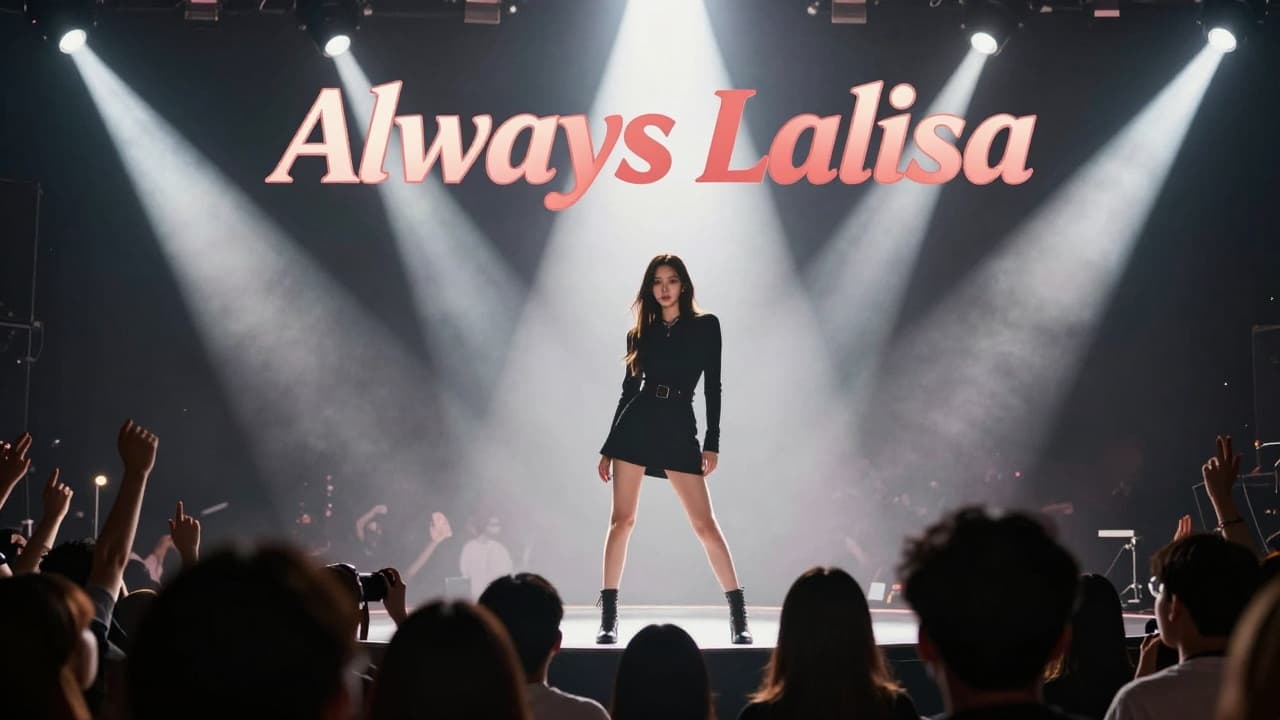
The new documentary 'Always Lisa' follows Lisa Manobal, a member of the K-pop group Blackpink and a star of the series The White Lotus. The film addresses the controversy following the leak of videos showing Blackpink performing covers of American rap songs during training as teenage interns.
The footage showed the group using racial slurs, with explicit language, including the n-word, left uncensored in the recordings. Some fans demanded an apology, but the record label prohibited the members from issuing a statement.
The director of the documentary, Sue Kim, followed Lisa in her dressing room as her team was in crisis mode. 'I said: Look, I know this is new. I know you are very confused and hurt, but this is your time to say whatever you want to say - even if you are just processing your thoughts and telling us how you feel,' Kim said in an interview with the BBC.
Kim 'genuinely expected that she would say no' to the proposal. Lisa lay on the sofa and spoke from the heart. In the documentary, the singer says: 'It is bad,' with a mixture of shame and nervousness. She explains that she was '15 or 16' years old when the recordings were made. 'I did not know that [the word] was sensitive because I am from Thailand and my first language is not English,' says Lisa. She adds that she heard the expression only in rap music and was not aware of its offensive history. 'I would never do that now because I have had an education,' she says. 'Now I know better. But I made a mistake.' Lisa had previously apologised publicly in an interview with Variety, but some people remained unconvinced.
Sue Kim says that Lisa's reaction in that moment is 'one of the most important scenes' in her documentary, Always Lisa, which is released in cinemas on Monday, 12 October. 'There was no premeditation on Lisa's part, no media training,' says Kim. 'I posed one question to her and she just spoke for an hour, and everything came out, and all was a flow of consciousness. And what you see in Lisa at that moment is so sincere, it is impossible not to feel sympathy for her.'
The incident overshadowed what was to be the triumphant debut of Lisa's first solo album, Alter Ego. In the film, the singer receives death threats, but continues with public appearances while security concerns 'are going round in my head'. 'To a certain extent I have to accept [the criticism] and make a compromise,' says Lisa, exhausted. Sue Kim asks Lisa about the negative reviews and records the star being reprimanded by her vocal coach for a lack of effort.
The documentary was commissioned by the star's film department, the same company that produced the recent, much less revealing documentary about Oasis. The film is a marketing product, and even the most brutal moments are calibrated to show Lisa in a good light. The director, however, credits the star for ensuring that the film is not merely a promotional tool. 'You never know how transparent an artist is when you meet them. And I must give credit to Lisa for allowing us almost complete access,' says Kim. 'And when I showed her the film, she did not ask to remove a single scene. That is extraordinary.'
The main story of the film is about Lisa taking a break from K-pop to follow cross-over success in the Western music market. When we meet her, she is one of the most famous women in the world, with millions of records sold and contracts with Louis Vuitton and Bvlgari. Lisa is trapped in the K-pop system, which prohibits her from drinking alcohol and having adult relationships. 'I do not want my [public] life to be a matter that would damage the popularity of Blackpink,' she says in the film. 'But when I turned 25, I realised that I should not live my life like this.'
Lisa decides early on to break away from the Korean entertainment company YG, which discovered her as a teenager, and signs a new contract with RCA Records in the US. 'Knowing her as she is, it required a huge amount of courage,' says Sue Kim. 'Generally, she is a very kind, lovely person - and people like that are sometimes reluctant to cause trouble. Having been trained in the K-pop system from an early age, she became accustomed to obedience. To declare that she wants a break is such a disruption to that way of life that one can only imagine it building up in her over the years.'
In the film, we see Lisa struggling to assert herself in the studio and crying nervously about her voice. At the age of 25, she is still somewhat childish. The wild independence of her single New Woman sounds more like a desire than a reality. Sue Kim says that this began to change during the filming. 'I saw a person who was very insecure and hesitant slowly start to spread her wings. She makes mistakes, but she also returns to the saddle.'
Sue Kim finds inner confidence in Lisa's early home videos of her competing in talent shows. She draws parallels between that precocious seven-year-old and the young woman who is gradually reclaiming her agency. Lisa persistently seeks a role in the third season of the hit TV drama The White Lotus, and she herself films an audition that wins her the role of the kind-hearted wellness trainer, Mook Sornsin.