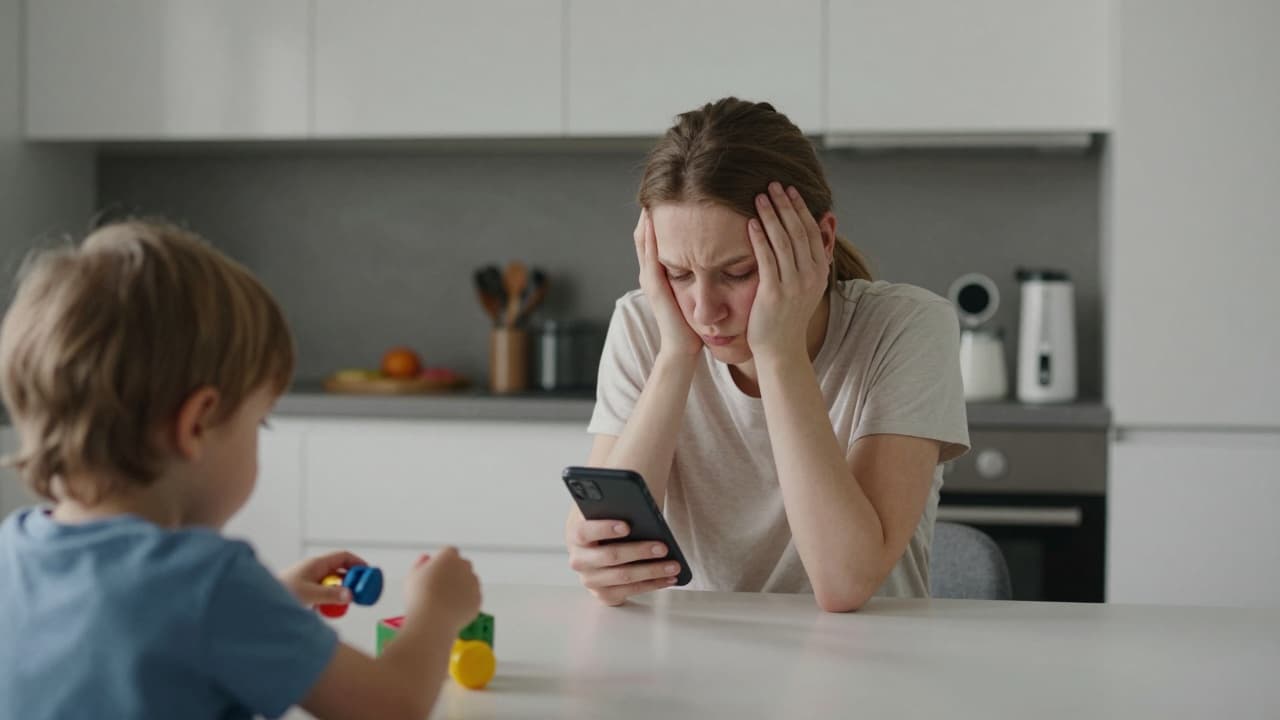
Parents of children aged five and under in the United Kingdom say that pressure from social media and influencers to be the 'perfect parent' makes raising a family more difficult, according to a survey by early childhood charity Kindred Squared. The 2026 National Early Childhood Parenting Survey involved approximately 3,500 parents and includes a range of voices gathered from focus groups.
The results show that 76 per cent of respondents agree that social media has increased anxiety around parenting. 59 per cent complained of 'impossible expectations' and a 'sense of judgement', while 49 per cent were concerned about conflicting online advice. Meanwhile, 21 per cent of participants use AI tools such as ChatGPT for parenting information, and 12 per cent of them trust these tools.
Trust in expert sources is also shaken: 48 per cent of respondents believe it is harder to trust expert advice than for previous generations. On the other hand, 66 per cent believe that children's needs are more complex today, and 71 per cent believe that parents today better understand their children's needs. One parent from south-west England stated that parents today are more emotionally aware of what is happening with their children and themselves, while a parent from the West Midlands said that their own parents have no idea how to raise a child in 2026.
Experiences vary. A parent from London stated that they felt pressure to be perfect and that social media seemed to get into their head, while a parent from south-east England said they felt that a general practitioner no longer knows the patient well enough and that everything seemed rushed. However, one parent from south-west England stated that social media had not increased their anxiety about parenting and that it made things easier for them.
The data indicates marked differences in access to support. 69 per cent of families with a child with special educational needs and disabilities reported difficulties in accessing professional support, compared with 31 per cent of families without special educational needs. 64 per cent of families with a child with special needs and disabilities had difficulties understanding information about services, compared with 28 per cent of families without such needs.
Isolation is also present: 12 per cent of participants have no one outside their household to call within an hour in an emergency. The risk of isolation is higher for residents of social housing and parents for whom English is not their first language.
Kindred's chief executive, Felicity Gillespie, stated that the survey shows that most parents feel capable of caring for young children, but that levels of isolation, the sense of pressure and the lack of trust in official advice are striking. She added that for many parents, the task of raising children today feels harder than for previous generations and that she hopes the findings will inform policymakers at all levels.
A Department for Education spokesperson stated that they want every child to have the best start in life. They highlighted that working parents are given 30 hours of nursery, which saves some families up to £8,000 a year, and that £900 million is being invested in Best Start Family Hubs across England. The survey was published on Thursday.