Following the publication of an article about praying mantises on the island of Mljet, a reader from the island of Ugljan contacted us to confirm that this species is not an isolated case on a single island, but has spread further north. According to her, it has been frequently seen across the entire island of Ugljan this summer.
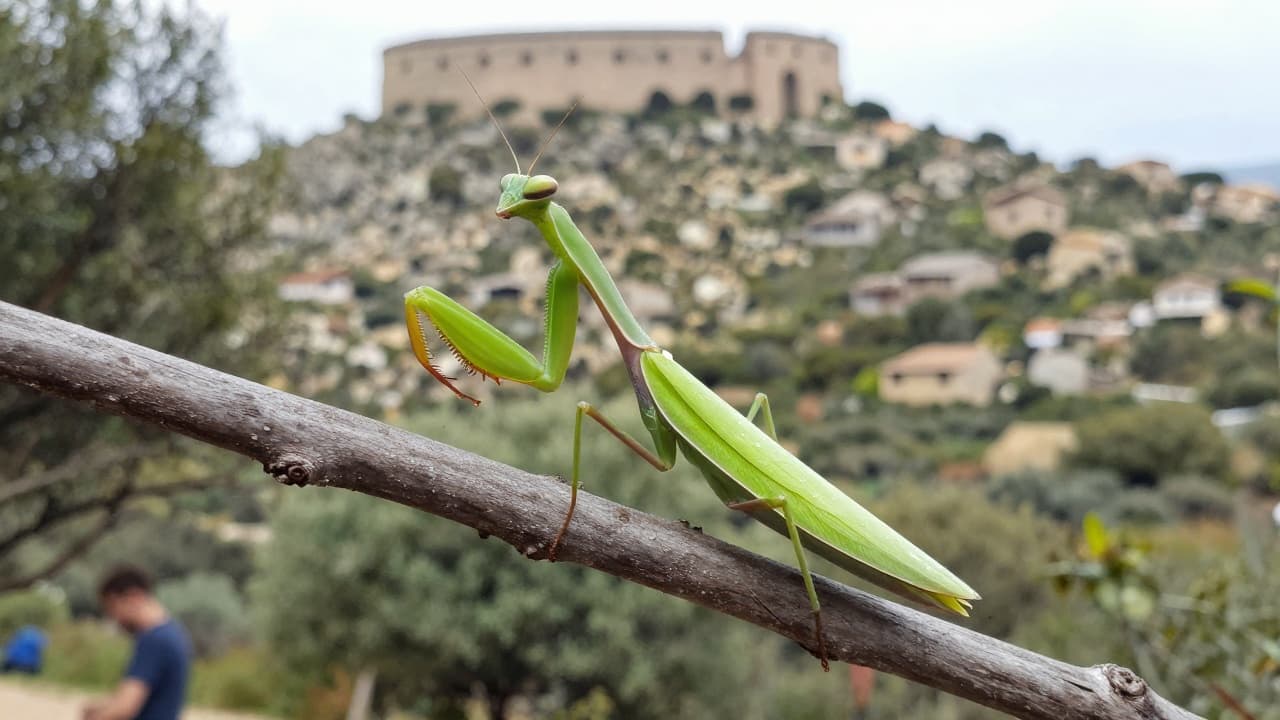
The species in question is Hierodula transcaucasica, which belongs to the family Mantidae, one of the largest families within the order of praying mantises. This family is known for the characteristic position of its front legs, which are held folded and raised in a manner reminiscent of prayer.
The main cause of its spread is climate change. As weather conditions change, Europe is providing increasingly favourable conditions for its survival, and Hierodula transcaucasica has significantly expanded across the Balkan region in recent years, including the area of Croatia.
Unlike the native common praying mantis (Mantis religiosa), this Asian species is clearly distinguished by several key features. It has a noticeable white or yellowish spot on its forewings, and its body is significantly more robust, mainly green in colour, though it can also take on brown or yellow hues. It also shows a marked preference for living high up in the crowns of trees.
It is known to feed on other insects, but its actual long-term impact on local populations of native species is currently still unknown. Scientists and experts will monitor the situation in the field, and the precise effects on the local ecosystem will only become clear in the coming period.