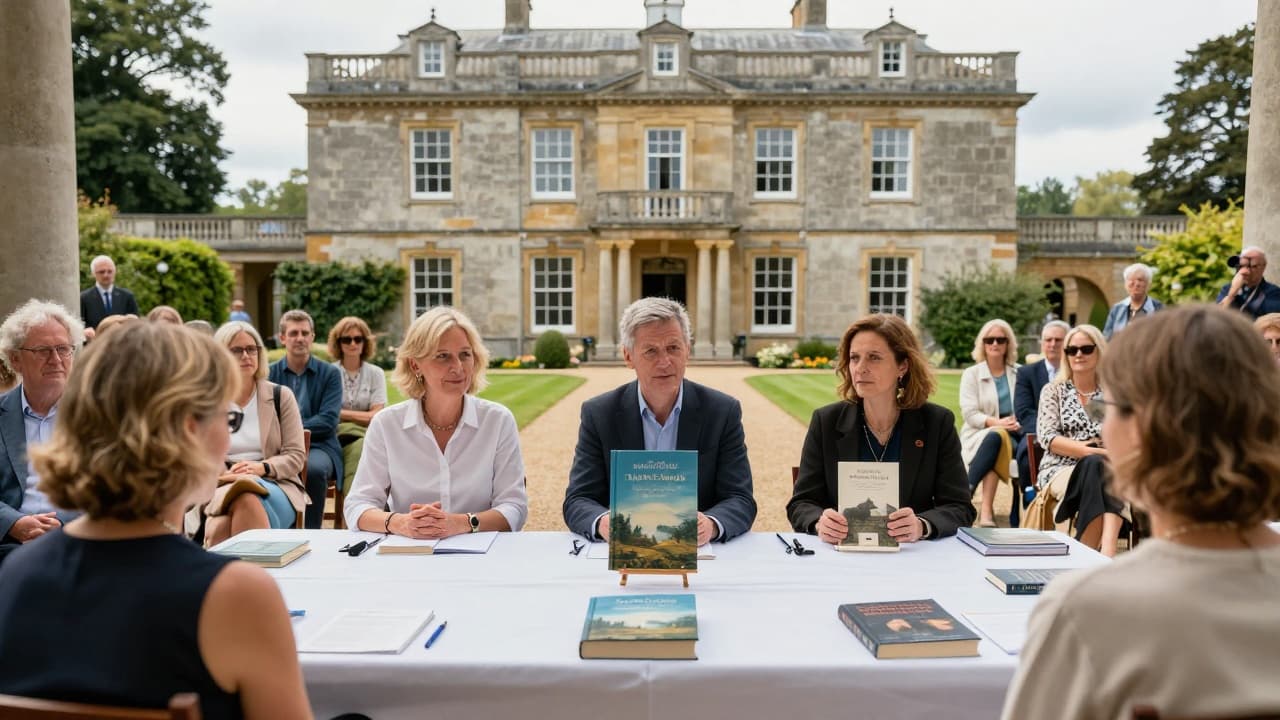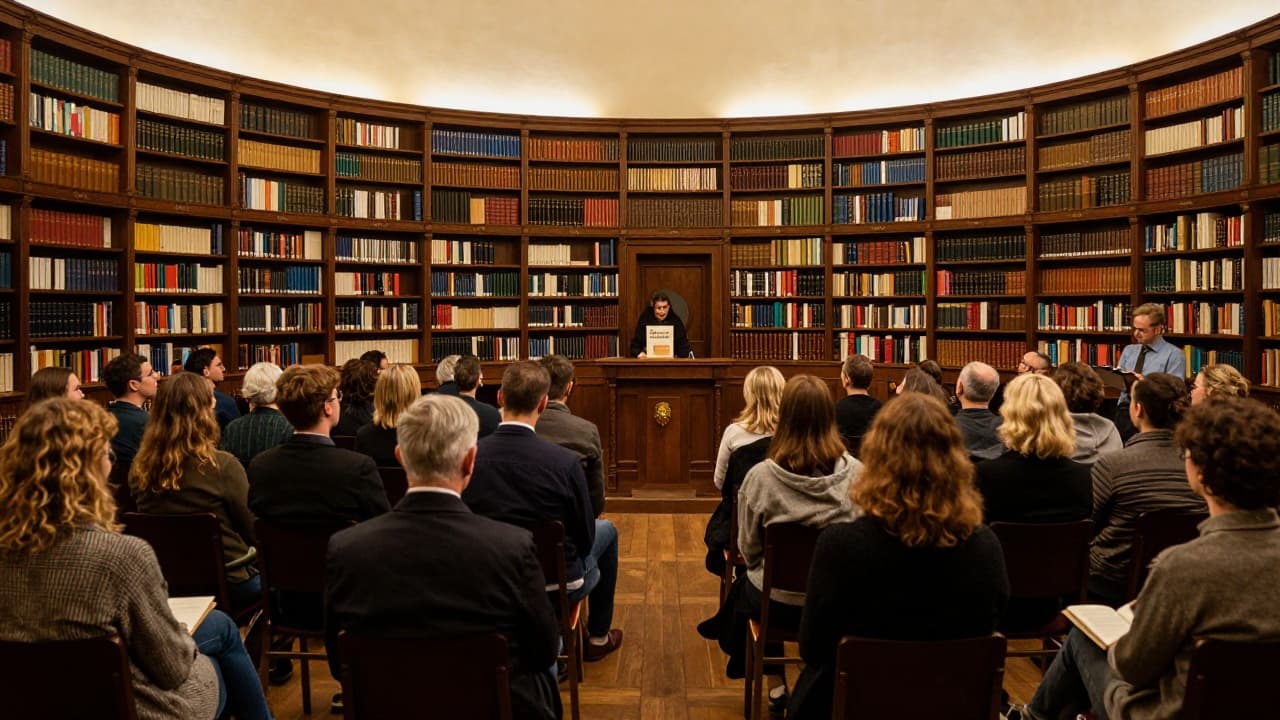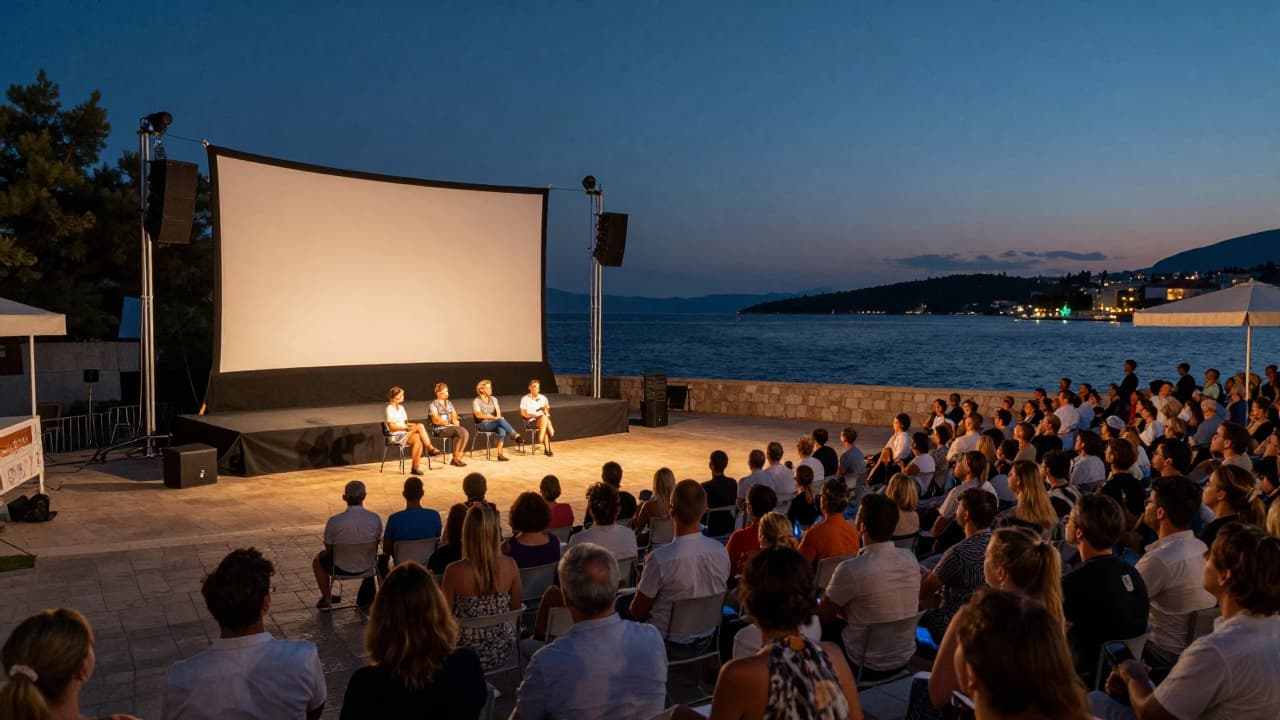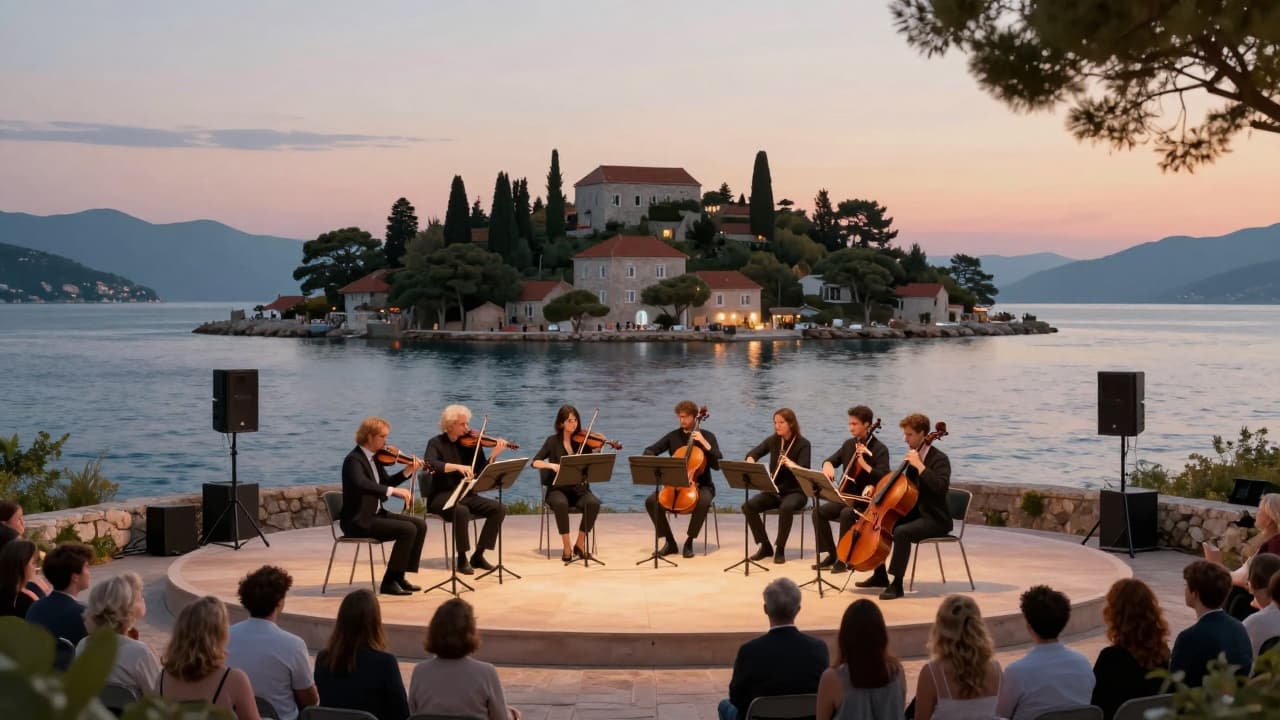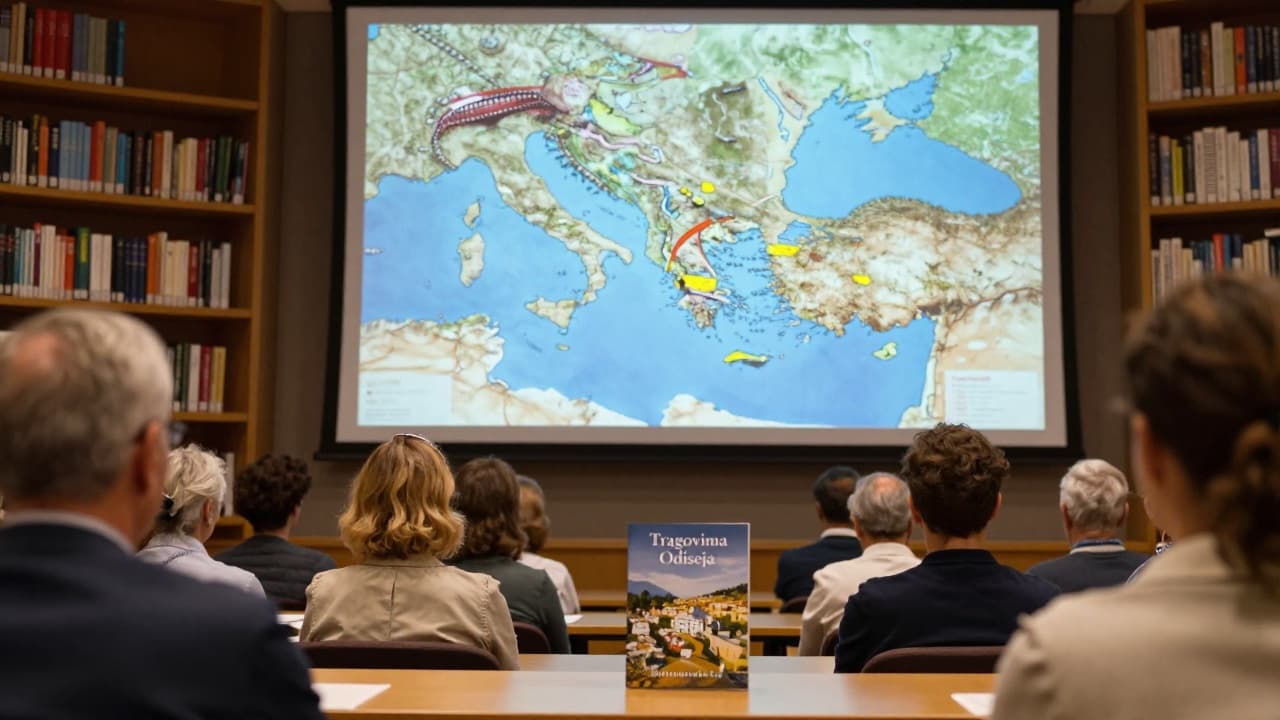
Jasen Boko, a dramaturg, travel writer, literature professor, theatre critic and journalist, delivered a travel lecture as part of the "Travel Stories on Tuesday" cycle and the Croatian Book Month event. On this occasion, he presented the second, expanded edition of his book In the Footsteps of Odysseus: How Penelope's Mischievous Husband Wandered the Adriatic. The audience gathered in the Saloča od zrcala was welcomed by Matija Tija Nenadić, a librarian at the Dubrovnik Libraries.
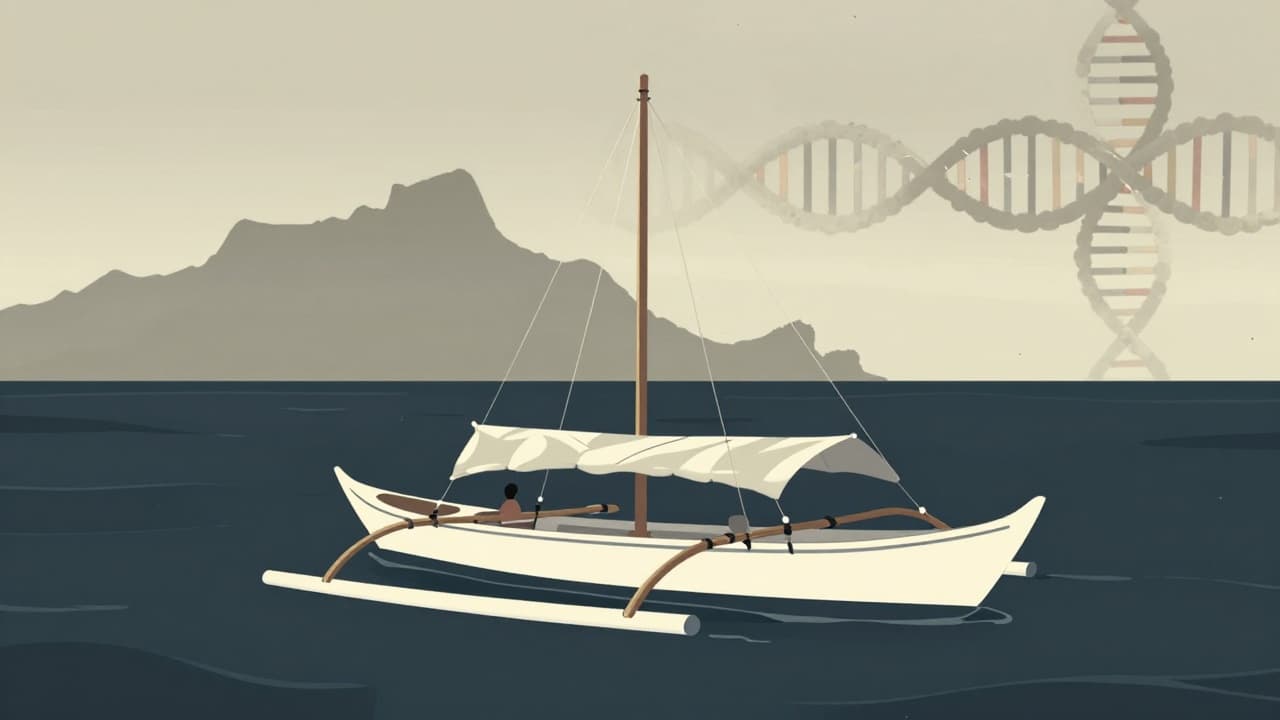
Boko is convinced that Odysseus wandered the Adriatic, rather than Sicily and the western Mediterranean. He claims that Mljet is Calypso's Ogygia, Korčula is Circe's island, Polyphemus was on Hvar, and the Lestrygonians were in Omiš. He made the journey in 2012, starting to visit the alleged places where Odysseus sailed, rather than setting out with the thesis that Odysseus sailed the Adriatic.
Homer, Boko reminds us, stated that Odysseus travels through an unknown archipelago where some barbarians live. The Homeric question of whether the work is by a single poet or a unification of several small cycles and epics has long persisted. The Odyssey has 11,000 lines, while the Iliad has 14,000 lines. Boko is convinced that Homer's work is by a single poet and believes it is based on facts.
He travelled through the Mediterranean from Troy, where Odysseus set out, moved to Lesbos and spent a few days partying with a group there. He went to Crete because a man had built a replica of Odysseus's ship, and he slept in abandoned temples from the Cretan civilisation. The Peloponnese is key because Odysseus's entire wandering was due to a storm that blew him off the Peloponnese, Boko said. He called Sicily spectacular, and Malta and Sicily very interesting. The book is partly a story about the Mediterranean, and Malta is a combination of London, England and the Mediterranean, where Calypso's cave is allegedly located. Homer is very precise about the number of days and which winds are blowing, he noted.
The story of Odysseus in the Adriatic was started by Aristid Vučetić, a surveyor who worked for the army and measured as a cartographer. He wrote a manuscript on the subject which was lost, and he gave it to a publisher before his death. Serbs wrote that Odysseus was a "Serb from Dubrovnik". Boko recently travelled to Vela Luka, where they showed him Vučetić's book with illustrations and drawings, but it is not the manuscript. Stories about barbarians, cannibals and dangerous places spread among traders to drive away competition.
Boko said that Mljet is the most beautiful Mediterranean island to him and that he largely agrees with Vučetić. Grga Novak claimed the same thing 50, 60 years before Vučetić. There is a story that Calypso grew old and everyone called her "grandmother", so the whole village was named Babino Polje. Saint Paul wrote that he wandered the Adriatic for 14 years, and the fifth-century chapel of St Paul is located on Mljet where the ship allegedly ran aground. The Maltese Order of Knights began to say that Saint Paul ran aground in Malta, whereas there had been no mention of this before.
The third part of Boko's journey is Ithaca and Corfu. Corfu is very important in the Odyssey and in the Argonautica, the first island on the way out of the Adriatic, and both the Argonauts and Odysseus pass by it. Boko claims that it is the only logical explanation that both were in the Adriatic. Even for Ithaca, commentators are not sure if it is Homer's Ithaca. The only certain island is Corfu, the most well-founded location because it is at the very entrance to the Adriatic, Boko claims. There is no Sicily, Malta or Tunisia, and Ithaca indicates completely wrong places. Homer is infinitely precise, and the only unknown sea in the Mediterranean in Homer's time was the Adriatic, he said.
In the expanded edition, Boko devoted more space to the Argonauts. He claims that in both the Odyssey and the Argonautica, Corfu is key as the first place where they enter Greek civilisation. Hades is completely invented, and on Korčula, Odysseus encountered Circe, who was probably some kind of herbalist. He added that commentators do not want to read carefully and ignore things that do not suit them.