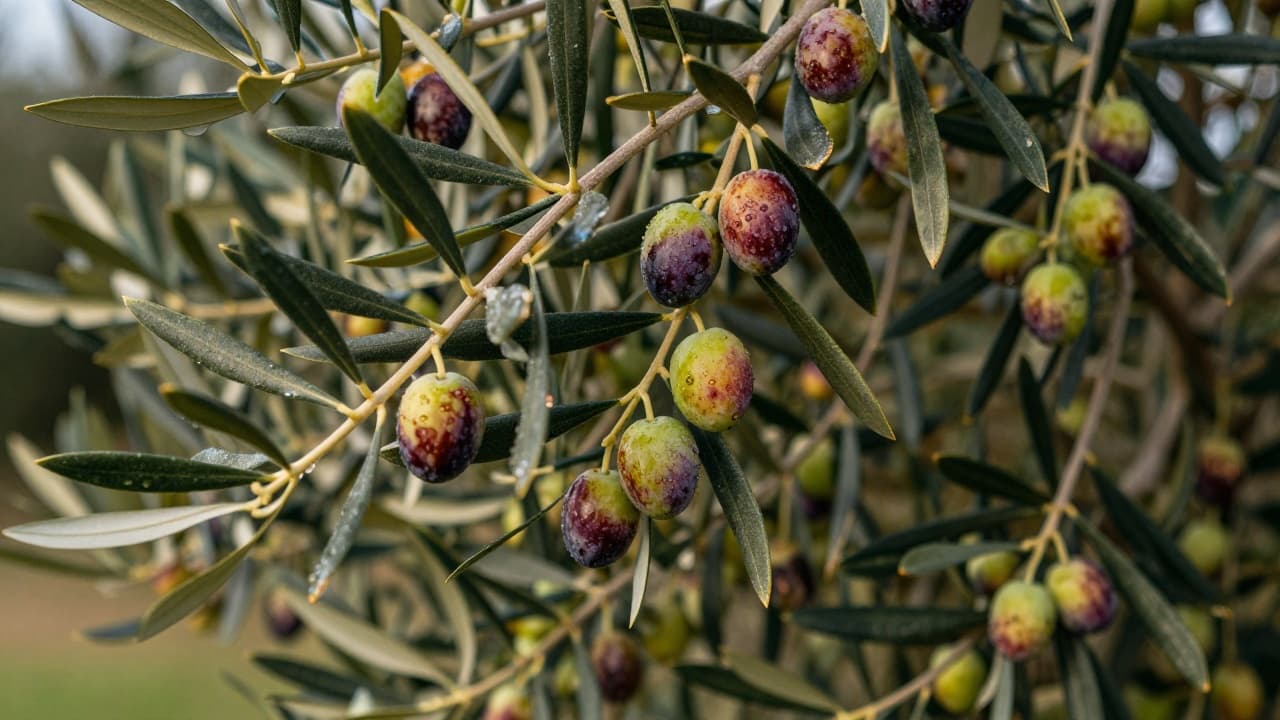
Following a long, hot summer, lower temperatures and rainfall have created more favourable conditions for the olive fly (Bactrocera oleae), according to the Italian specialist portal l'Olivo News in its latest bulletin. Fruit is simultaneously entering the ripening phase where it becomes increasingly attractive to females for egg-laying, so monitoring must not cease in the final weeks before harvest.
The olive fly is highly dependent on temperature. High summer temperatures this year have restricted its development in many areas, with extreme heat limiting reproduction and increasing mortality in developmental stages. Eggs struggle to develop at temperatures above approximately 30 to 32°C, and similar temperature constraints apply to larval development. When daily temperatures fall into a more favourable range and humidity increases, adult flies become more active, females intensively seek out suitable fruit for egg-laying, and the development of eggs and larvae proceeds more successfully than during the peak summer heat.
Following September rains and a drop in temperature, increased activity has been recorded in certain areas, though the situation varies significantly by region. In the Kvarner area, the advisory service warned on 21 September that the colour change had already begun in varieties of the early ripening period, and such fruit is highly attractive to attacks by the olive fly. On the same day, the catch of adult flies remained below the threshold of damage, with infestation at approximately one to three percent. A infestation of 10 to 15 percent is cited as the threshold in that area.
In Istria, the advisory service recorded a very high population of olive fly on predictive points on 14 September and recommended protection. In Zadar County, following 30 to 80 litres of rainfall per square metre and a significant drop in temperature, a low to medium intensity population was recorded, with advice to conduct regular inspections, sampling, and fruit checks. Treating the entire canopy is considered justified when more than 10 percent active stings are present.
As the olive ripens, the physical and chemical properties of the fruit change, as does its attractiveness to the olive fly. Scientific research confirms that variety and ripening stage play a significant role in the selection of fruit where the female lays eggs, so varieties entering ripening early must be monitored closely. Monitoring of the population must continue until harvest.
This year's high temperatures and drought in much of the Croatian growing area have slowed the development of the olive fly. The advisory service estimated in mid-September that, due to prolonged drought and heat, the pest had not achieved the strong generational reproduction possible in more favourable years. Registrations of products may change, so current data in the Croatian Phytosanitary Information System should be checked before application.