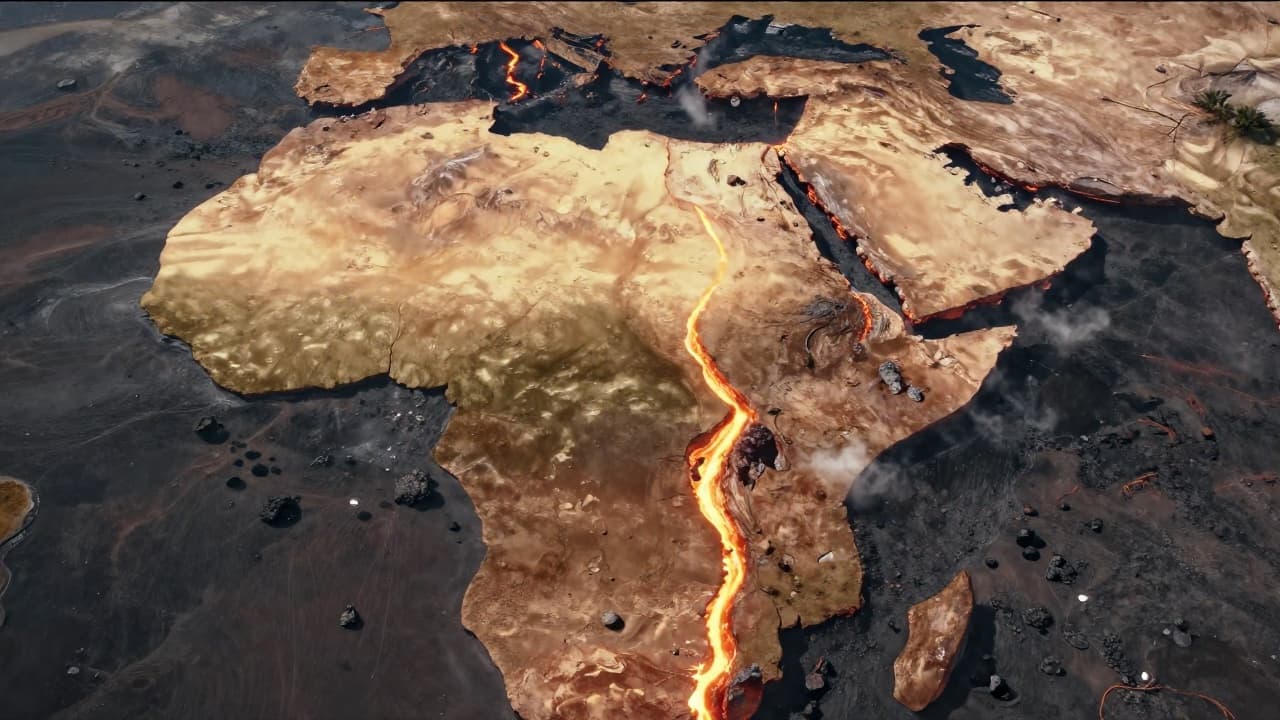
The African continent is undergoing a deep geological change that will permanently alter its physical map. The continental plate, which has long been understood as a single entity, is now actively splitting. According to new research, the African plate is dividing into two main parts: the massive western section, known as the Nubian Plate, and the smaller, eastern section, known as the Somali Plate. This process, which is essentially the splitting of the African plate, marks the beginning of the formation of a new ocean basin in the east.
The key factor in this geological transformation is the East African Rift, which stretches for hundreds of kilometres through Kenya and Ethiopia. Research has shown that the Earth's crust in this rift area is significantly thinner than expected. At the centre of the rift, the crust is only 13 kilometres thick, which is drastically less than at the edges of the rift where the thickness reaches more than 35 kilometres. This process of crustal thinning, known as rifting, began approximately four million years ago and is currently in an intense phase of development.
Scientists have determined that the East African Rift is in a specific phase of narrowing, which is a key step in the formation of a new ocean. This phase is characterised by specific conditions that allow for the rapid accumulation of sediment, creating ideal conditions for the preservation of fossils. These geological processes, which began several million years ago, continue to shape the current appearance of the African continent, preparing the ground for future changes that will shape the geographical landscape of Africa.
These findings, published in the journal Nature Communications, confirm that the African continent is actively changing. Although the process of separation appears slow on a human timescale, in geological terms it represents a significant and permanent transformation. This natural phenomenon, which began several million years ago, continues to shape the geographical landscape of the African continent, preparing the ground for future changes that will shape the geographical landscape of Africa.