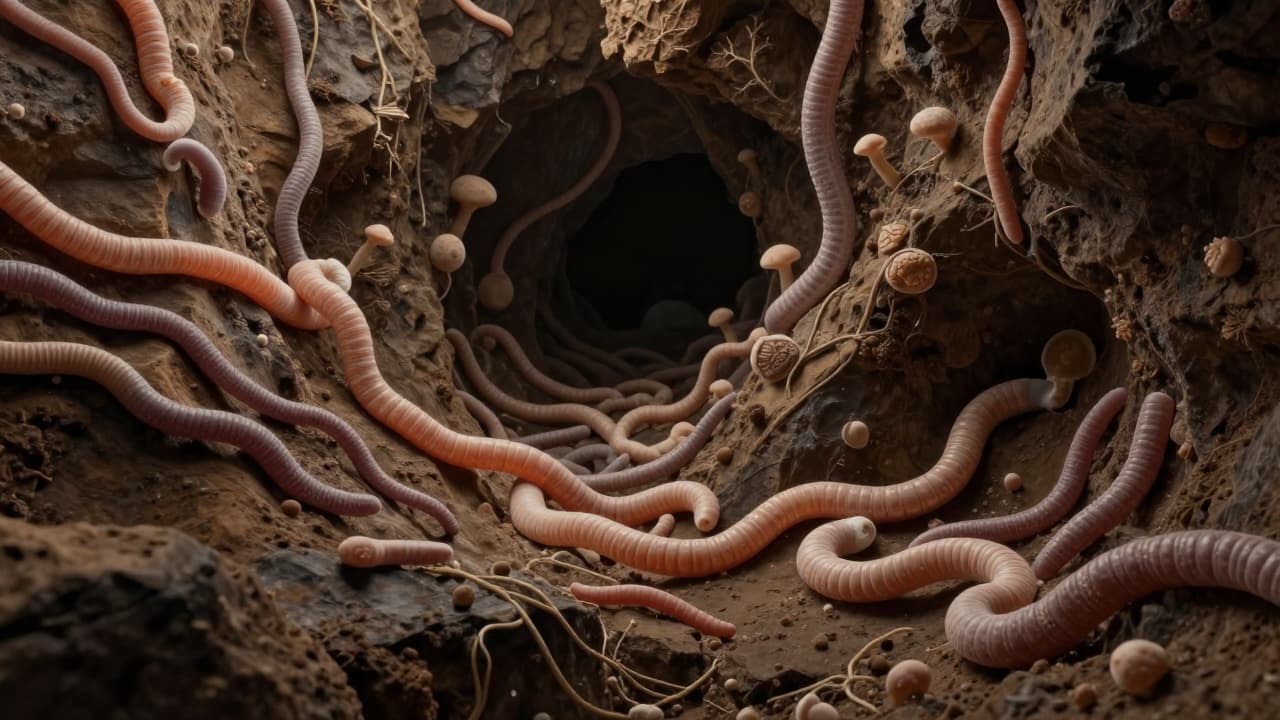
Scientists have discovered a surprisingly complex ecosystem extending hundreds of metres below ground, including organisms such as fungi and worms. These organisms, which are thousands of years old, are actively involved in the breakdown of carbon in the Antrim shale. The findings, published in The ISME Journal, challenge the established view that the role of fungi in decomposing organic matter is limited to surface ecosystems.
The study was conducted by a team led by Quinn Moon of the University of Michigan, in collaboration with mycologists and earth scientists. The team analysed DNA from water pumped from depths between 247 and 556 metres. The process involved filtering large volumes of water to isolate genetic material; the samples were then placed on nutrient media to cultivate fungi, revealing a surprising biological diversity.
The Antrim shale represents an ancient mud deposit approximately 350 million years old. This area currently encompasses one of the largest gas fields in the United States, where energy companies extract vast quantities of water to isolate methane. Although deep habitats such as the Antrim Shale have been known to contain bacteria and archaea, this is the first time such a complex network of multicellular organisms has been identified at that depth.