Scientists have discovered more than 11,000 to almost 12,000 new viruses on the sea floor of the Pacific, the vast majority of which were previously unknown to science. The research was conducted in the Clarion zone, an area rich in minerals that is the subject of intense interest from several countries.
The study was conducted by Bowen Hou and Li Li Zhang of Chongqing University and Dong Sun of the Second Institute of Oceanography, with the results published in the journal Nature Communications. The researchers analysed the virome of the Clarion zone and extracted DNA and RNA from the samples for sequencing. In total, they identified 11,742 distinct viruses, of which 99 per cent had never previously been recorded in science. The discovered viruses show very little similarity to viruses from other deep-sea habitats.
The sediment samples were collected during 2023 and 2024, with the researchers comparing the obtained data with samples from other parts of the deep ocean to determine the function of the genes in the discovered viruses. The aim was to establish a baseline for the microbial ecosystem before the onset of mining, so that the environmental impact could be assessed in the future. The study was funded by several Chinese scientific agencies.
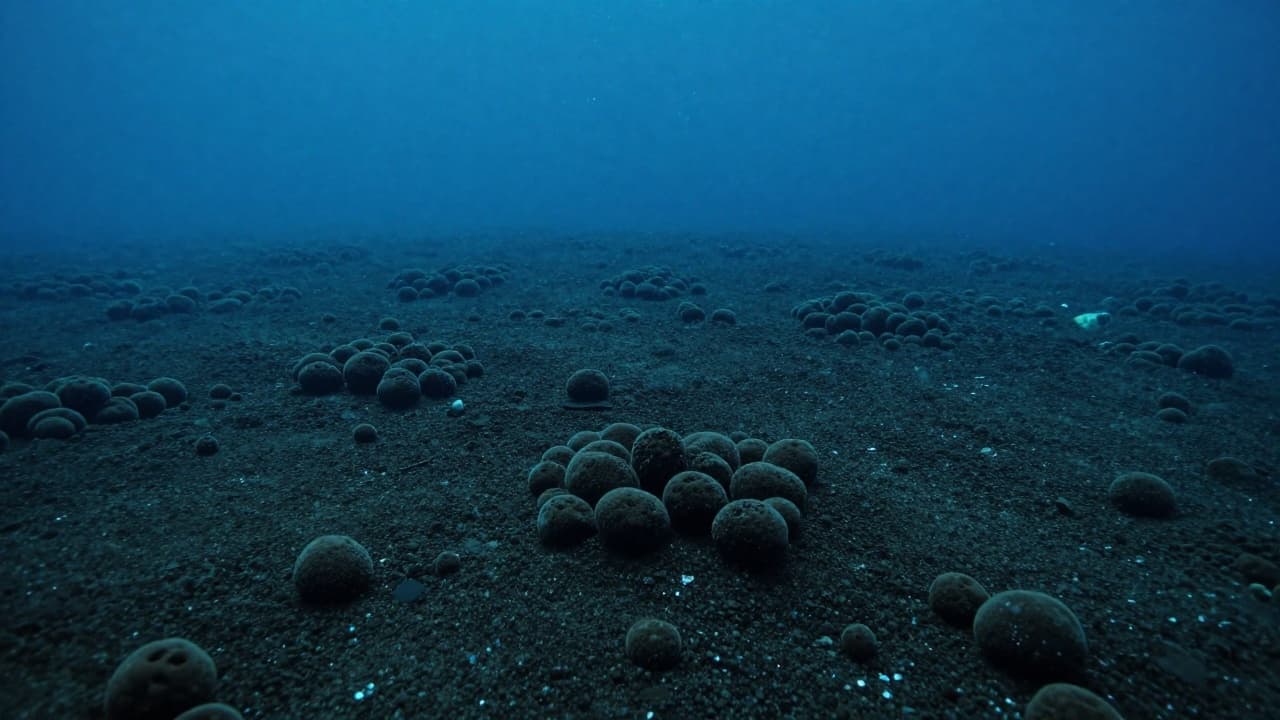
The Clarion zone contains the world’s largest reserves of polymetallic nodules, metal-rich formations used in the production of electronics. These nodules form gradually, with manganese and other metals such as cobalt, nickel, lithium and zinc settling around a central core, which can be a microscopic piece of shell or rock. Some nodules grow at a rate of 250 millimetres per million years, while others grow by only one to five millimetres per million years. The polymetallic nodules form the basis of many deep-sea ecosystems, with much of the sea floor covered in a thick layer of fine sediment.
The International Seabed Authority has allocated 31 contracts for mineral exploration in the deep sea, of which 17 contracts relate to the Clarion zone. Five contracts in that zone are held by China.
The new study suggests that viruses could play a significant role in biogeochemical processes in the sediment where the polymetallic nodules are located. Each virus requires a host, and many of the viruses found in the Clarion zone are specialised to infect prokaryotic organisms – bacteria and archaea. These simple, single-celled microorganisms are involved in the cycling of carbon, nitrogen, phosphorus, sulphur and even metals.
Viruses can alter the genetic structure of their hosts, infect key functional microbes and encode auxiliary metabolic genes, thereby modulating the host’s metabolism and survival during infection. Deep-sea viruses from the Clarion zone may provide host organisms with genetic material to cope with the stress caused by metals. Scientists note that there is still debate over whether viruses are alive.
Mining activities will cause physical disturbances, lifting and redepositing surface sediments. Long-term experiments have shown that the effects of such disturbances on sediment can last for decades. Populations of viruses and functional modules in deeper and surface sediments could serve as a potential source for the partial restoration of surface virus communities following disturbance. However, much more research is needed to determine how mining would affect these viruses, their hosts, and the ecological functions they perform.