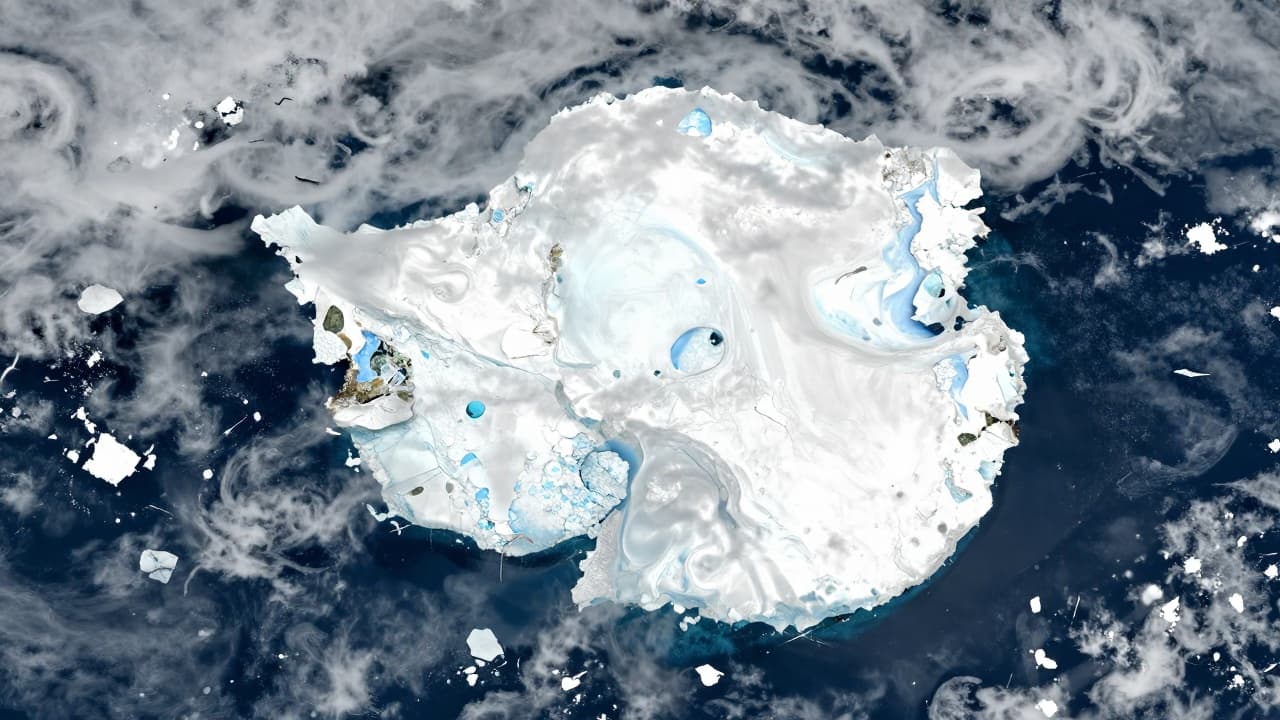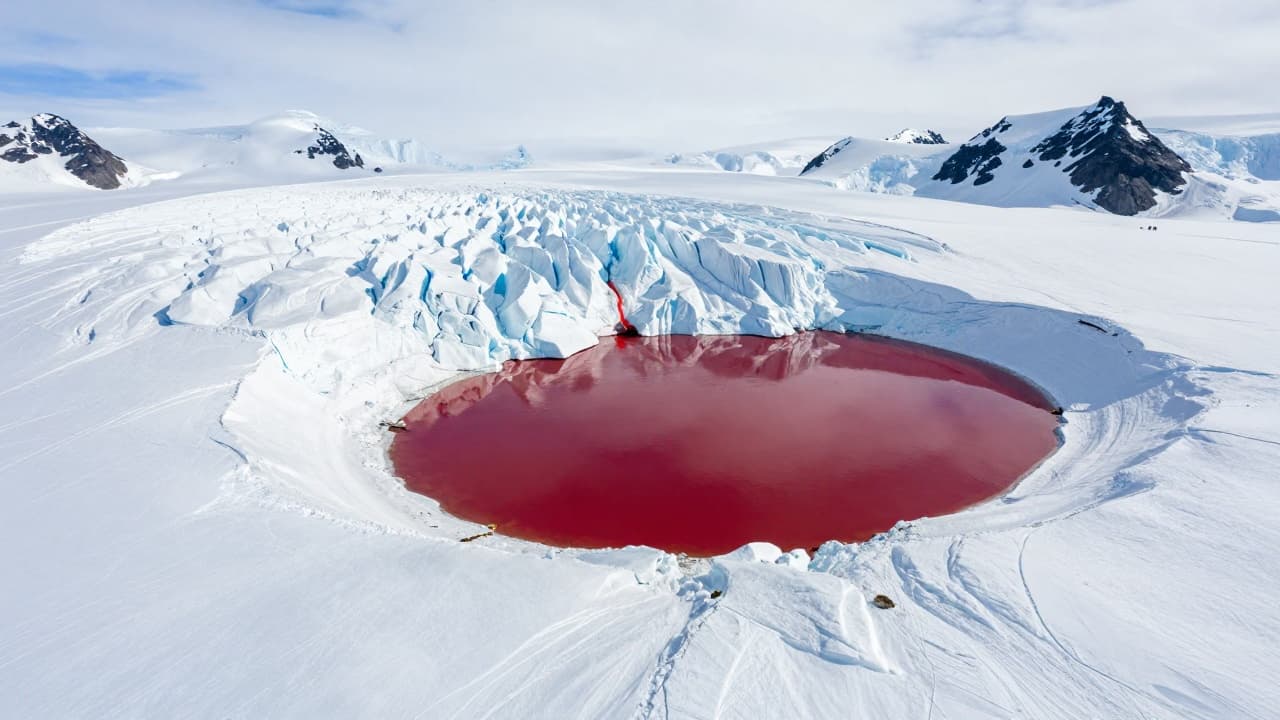
The blood-red waterfalls of Antarctica, one of the most unusual natural phenomena on Earth, represent a complex ecosystem that has long attracted scientific attention. The waterfalls flow from the Taylor Glacier into Lake Bonney, and their characteristic bright red colour has long been the subject of scientific debate and speculation. Although first discovered in 1911 during an expedition led by the geologist Thomas Griffith, the initial assumptions about the cause of the colour were incorrect.
The original hypothesis was that the red hue was caused by algae, but new research has disproven this theory. The source of the colour is actually an ancient reservoir of extremely salty water trapped beneath the Taylor Glacier. This liquid remains in a fluid state despite the extremely low temperatures, as the high salt concentration lowers the freezing point. The water is exceptionally rich in dissolved iron, which is invisible while the water is trapped beneath the ice.
The key process that creates the visual effect of the blood-red waterfalls occurs when the water emerges into the open. Upon contact with the air, the iron in the water oxidises rapidly, rusting. This rapid oxidation gives the waterfalls a dark, rust-like colour, which is why they appear to be bleeding. This is water that originates from an ancient sea, trapped by the advance of the ice sheet over 1.5 million years ago.
In addition to their physical characteristics, the area is home to a complex ecosystem. Scientists have long studied the bacteria and archaea present in the blood-red waters. These are simple, single-celled organisms that are descendants of ancient sea life. According to new findings, these microorganisms may have been completely isolated from the rest of the world for millions of years.
New research, reported in Science Alert, has revealed a complex community of these ancient microorganisms beneath the Taylor Glacier. These organisms represent the remaining trace of life from a time when the area was part of the ocean. Their ability to survive in isolated conditions provides valuable insights into the potential for life in similar extreme environments, whether on Antarctica or other celestial bodies.