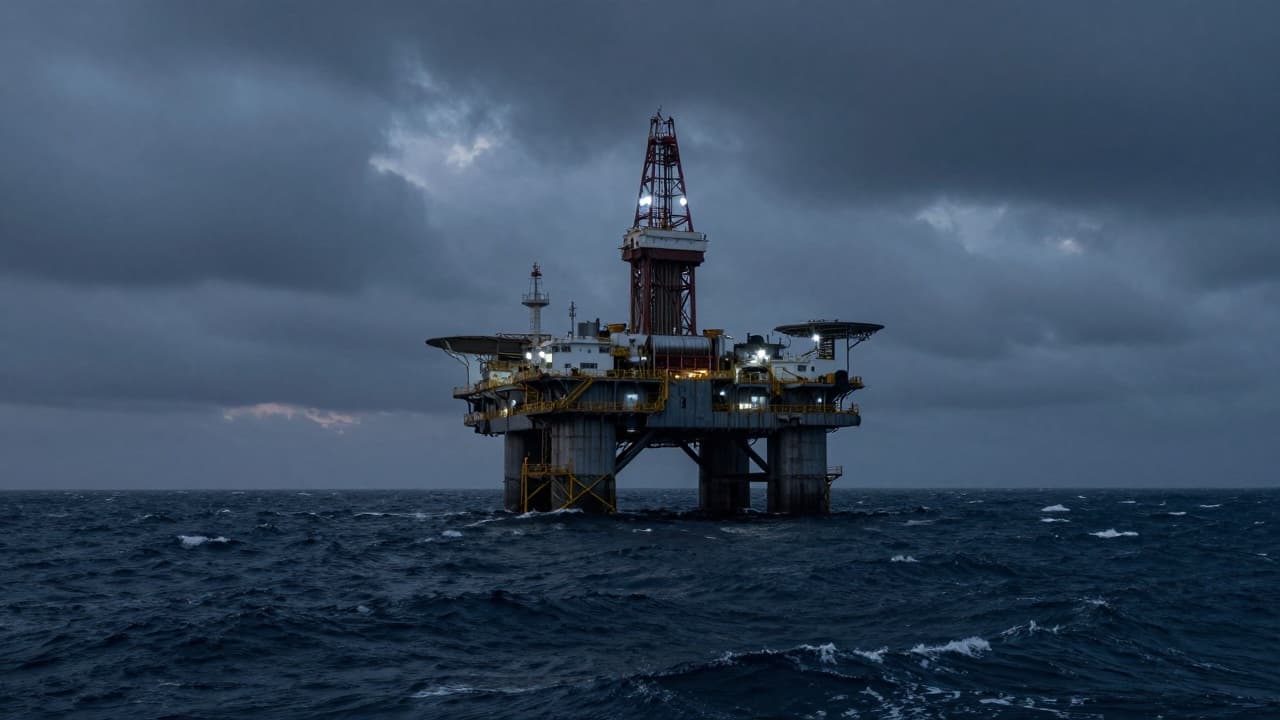
The Argentine government has announced the introduction of stricter economic sanctions targeting companies involved in the exploitation of oil fields near the British overseas territory of the Falkland Islands. This measure, to be implemented through a new law, is primarily aimed at companies operating in the Sea Lion field, located approximately 130 miles from the islands. This decision represents a significant step in increasing pressure on those involved in exploration and extraction in the disputed waters.
The key target of the new measures is the British company Rockhopper, which, along with the Israeli company Navitas, is planning to begin oil extraction. According to reports, Rockhopper and Navitas are expected to begin operations within two years. Rockhopper had previously stated that the oil in the Sea Lion field is of high quality and easily accessible, which is one of the key reasons for the intense investment in this location. In preparation, the companies have already begun work, including the construction of a port, a helipad, and worker accommodation, creating the infrastructure necessary for the start of exploitation.
This geopolitical tension is deeply rooted in historical relations. In 2013, the inhabitants of the Falkland Islands voted in a referendum to remain under British rule, with 99.8 per cent voting in favour. Despite this, tensions have continued, and the US position regarding sovereignty over the islands has been re-examined. Britain has noted that it may revise its stance on neutrality if London increases its defence spending, further complicating the diplomatic picture.
In response to these developments, Argentina has announced plans to build a military base on the island of Tierra del Fuego, further escalating tensions. These steps continue a long-standing dispute between Argentina and the United Kingdom, which culminated in the 1982 war in which 255 British soldiers, 649 Argentine soldiers, and three civilians from the islands lost their lives. Although the past years have seen a degree of stabilisation, these recent moves by Argentina serve as a reminder of the enduring sensitivity of this territorial dispute.