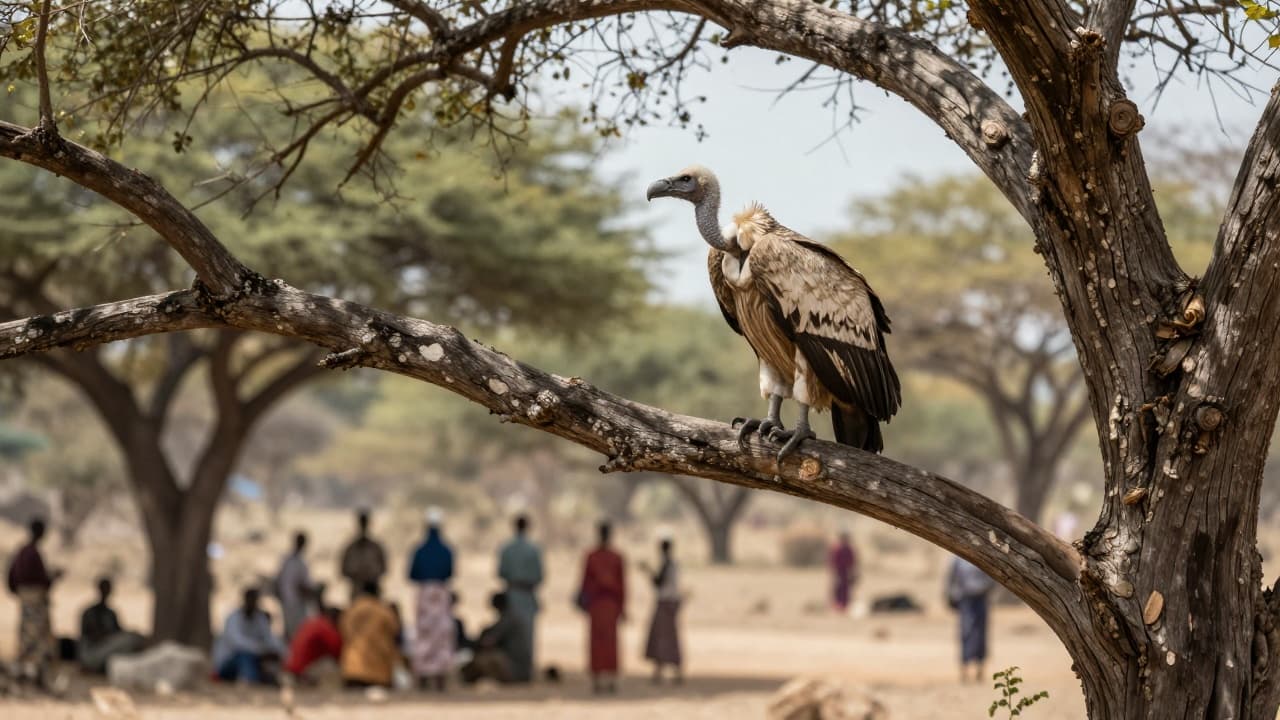
In south-east Nigeria, in the settlement of Awka-Etiti, the local community is carrying out conservation activities for vultures within a sacred forest. This measure is aimed at conserving a species that is facing extreme pressure in West Africa due to hunting driven by traditional beliefs. Vultures play a key role in natural cycles by acting as a natural defence against the spread of disease, yet their presence is becoming rarer on the continent.
The centre of conservation is the sacred forest surrounding a shrine dedicated to the deity Nguma. At the heart of this area lies an ancient tree, which, according to local belief, watches over the community for centuries and represents the spiritual home of the shrine. Although the community of Awka-Etini is predominantly Christian, a portion of the population still observes traditional practices in which vultures play a significant role.
The effort to protect these birds is led by Chukwuemeka Igwe, a local activist known to residents as the 'King of Vultures'. Igwe, who works as a volunteer, told BBC that people avoid approaching the shrine because they believe evil cannot befall a person in that area. These beliefs, he said, make the place a safe haven where no one attacks the birds that settle in the shrine.
The example of Awka-Etiti shows how a local community can strike a balance between religious belief and nature conservation. Protecting the sacred tree and the shrine of Nguma has become a symbol of resistance against the decline of vultures, providing the birds with protection in a region where they are otherwise targeted by hunters due to beliefs in their spiritual power.