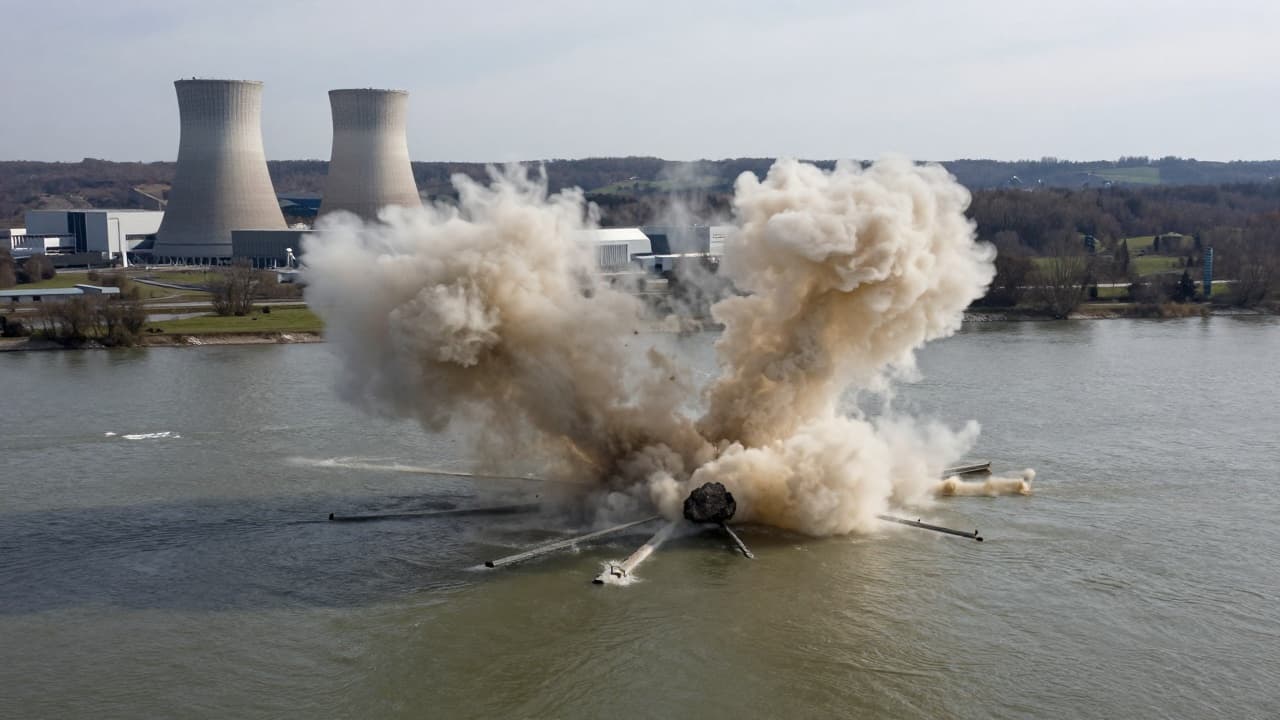
The Romanian Ministry of Defence is conducting intensive operations involving controlled explosions in the area of the Danube River. The primary objective of this military intervention is to ensure a stable and uninterrupted water supply for the Cernăuți nuclear power plant. The operation was launched in direct response to the record-low water levels, which threaten the functioning of critical energy infrastructure in the region.
On Monday, 3 August, the Romanian military continued to detonate sections of the riverbed. The focus of the operation was to direct a greater volume of water directly towards the Cernăuți nuclear power plant. The aim is to redirect the main flow of the river so that it provides the sufficient quantities of cooling water required for the safe operation of the reactors.
A key component of the operation involved the detonation of the Parjoaia rock formation. A total of 100 kg of explosives were used in the operation, partially destroying the rock formation. This measure is intended to increase the flow of the Danube in the direction of the power plant, thereby mitigating the effects of the drought on the country's energy system.
The decision to proceed with the operation was made following the previous day's operations, which did not yield the expected results. Although previous attempts had aimed to improve the water flow, experts concluded that the intensity of the intervention needed to be increased. Consequently, the military planned to use twice as much explosive material on Monday compared to the previous day to achieve the desired effect of diverting the water.