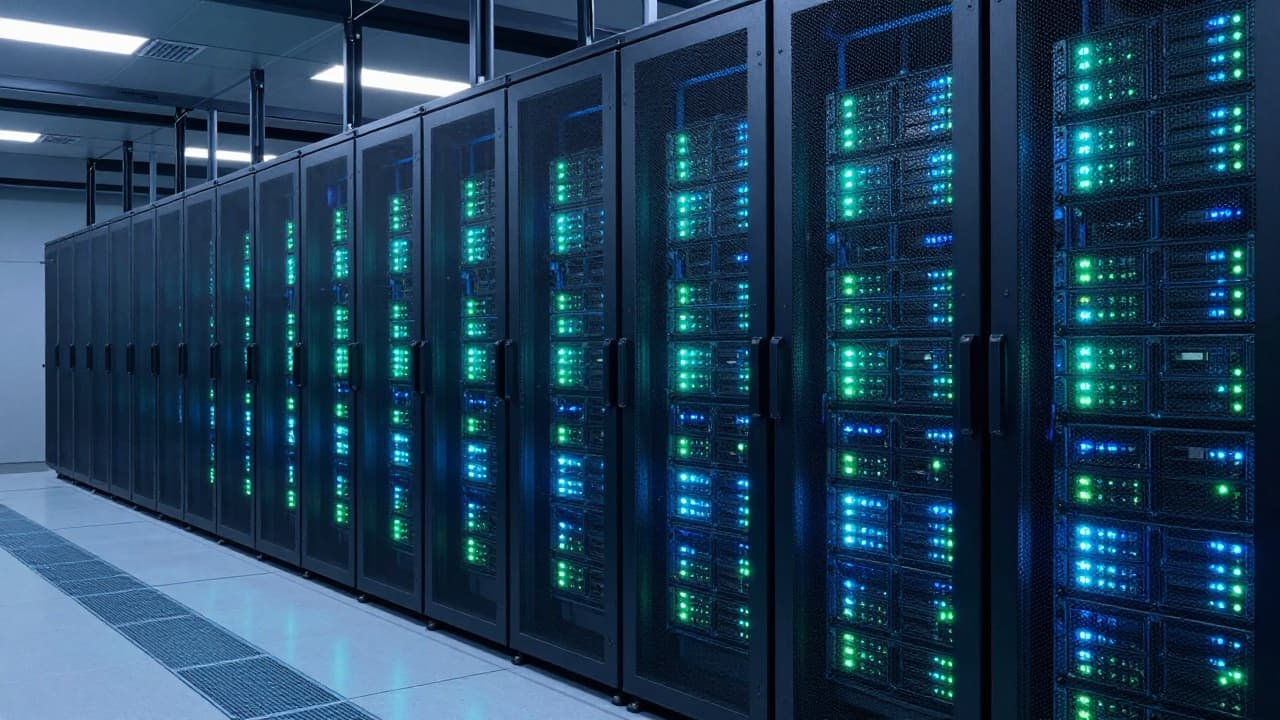

US President Donald Trump has threatened to impose a massive tax on American companies that build data centres abroad. He argued that such infrastructure should remain in the country to preserve the US advantage over China in the field of artificial intelligence.
Trump described leadership in artificial intelligence development as a race that America cannot afford to lose. He considered such practices related to chips and other technologies to be very harmful to the US.
In the background of the decision, concerns are growing that the Chinese are using Nvidia's most advanced graphics processing units to train artificial intelligence models via access to cloud computing services located in third countries. The Bureau of Industry and Security (BIS) at the US Department of Commerce recently introduced new rules to curb this practice.
The question, however, is not only whether Trump's threat is feasible, but also how effective it is. It seems unlikely that Congress would approve such a policy, given that both houses will be under the control of the Democratic Party when the new session convenes in January next year. Analysts are currently sceptical, believing that companies will find ways to circumvent it.
Amazon, Google and Microsoft already manage global networks of data centres to provide services to users in different regions, so restrictions on further construction abroad would make it harder for those companies to do business. Google is simultaneously expanding its capacities in Finland, including one project that recently came under scrutiny because the investor, according to reports, illegally felled 250,000 trees to secure space for construction.
Trump could influence the investment of American capital, but at the cost of consequences for trade relations. Data centres consist of thousands of components from around the world, and there are also issues such as latency and compliance with regulatory provisions.