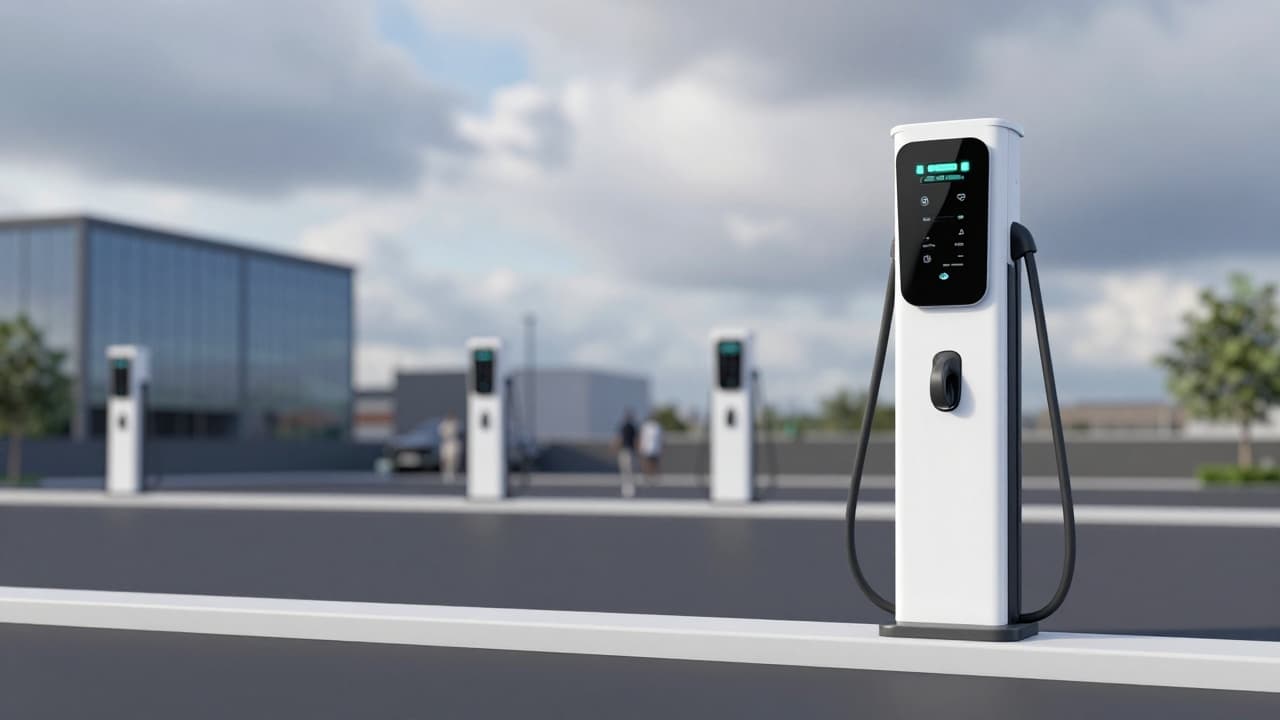
The UK government has announced it is considering scaling back ambitious targets for electric vehicles, a move that could have significant consequences for future greenhouse gas emissions. Experts warn that such a decision could add millions of tonnes of CO2 to the country’s annual emissions, delaying progress in the fight against climate change.
On Friday, the government launched a consultation on new guidelines for the car market. The proposed measures include reducing the zero-emission vehicle (ZEV) mandate to a minimum of 50 per cent of all new cars by 2030. Current regulations require that 80 per cent of new vehicles be electric or hybrid, representing a significantly higher standard than the proposed options.
The consultation document opens the door to various scenarios, including retaining the current target unchanged or gradually reducing it to 70 per cent, 60 per cent or the proposed 50 per cent. This flexibility reflects the government’s attempt to balance environmental goals with economic realities, although critics argue that any retreat from existing standards represents a step backwards.
Despite political tensions, data shows that demand for greener transport is rising. Sales of electric vehicles in the UK have risen by 29 per cent this year, indicating that consumers are increasingly embracing the technology. Nevertheless, the automotive industry argues that the current sales targets place too much pressure on manufacturers, limiting their ability to adapt supply to market conditions.
The context of this decision is particularly sensitive given the current weather conditions. The measure comes amid record heatwaves sweeping across the UK, highlighting the paradox between the need to reduce emissions and the climate challenges the country is currently facing.