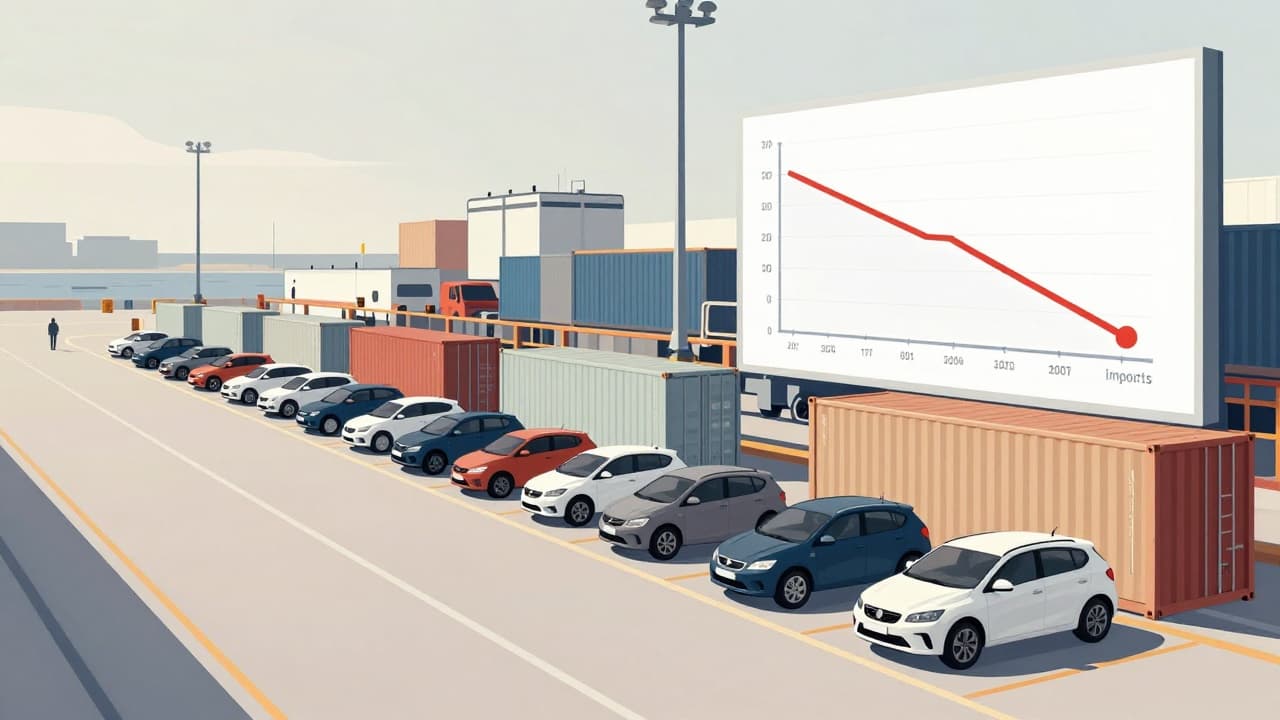
The European Union will limit the number of hybrid electric vehicles imported from China to 350,000 vehicles a year, the European Commission confirmed. The limit takes effect in December, and it is a four-year agreement reached in Beijing last week.
Imports of hybrids have risen sharply over the past two years. Some 800,000 battery electric and plug-in hybrid vehicles are expected to be sold in the EU this year, and the EU expects the quota to halve the Chinese market share, which currently stands at 6 per cent. Chinese exports of hybrids to the EU have tripled to €6.7 billion ($5.7 billion) in the first half of this year, according to Chinese customs data.
The annual limit on hybrid imports will be introduced under World Trade Organization safeguard measures. Such measures can be implemented quickly, without the investigations required for anti-dumping measures. Vehicles imported above the quota level will not be subject to tariffs, but will remain blocked in ports in Europe.
Vehicles assembled within the EU, such as those produced in Hungary or in the future in Spain, will not be subject to the quota. Conversely, EU companies producing vehicles in China will be subject to the quota.
China has agreed to eliminate certain tariffs on auto parts and halve tariffs on footwear, olive oil, and ice cream from the EU. Officials have stated that China fully supports the quota, and dialogue on vehicles and other imports, including chemicals, renewable energy, and furniture, is continuing.
The agreement comes amid growing concern over the EU’s trade deficit with China of £1 billion a day. Previously, the EU’s strategy for addressing "unfair" trade imbalances was to increase exports to China. However, sources indicate a "paradigm shift" due to concerns about de-industrialisation and job losses in industrial hubs, which has forced a renewed focus on limiting imports rather than increasing exports. "We are closely monitoring our imports. We know what is coming. We know where the surge is and we know what is being hit the hardest in terms of our de-industrialisation," a source said.
The EU has previously called for feedback on a new rule that would require companies to diversify supply chains, with legislation on "Made in Europe" making the same point in public procurement. On Thursday, EU leaders will discuss a French-German proposal for a "kill switch" or new instrument that would allow Brussels to block access to the single market for specific goods in the event of adverse developments, such as a ban on rare earth metals critical to the technology and automotive industries.
Andrew Small, director of the Asia programme at the European Council on Foreign Relations, said that China is likely to "pull the EU into protracted negotiations" on other sectors, but that the mood in the EU has changed. "I think that if China had offered such a deal earlier in the year, say in spring, it would have been much easier to defuse tensions. My sense is that things have now gone too far politically," said Small.