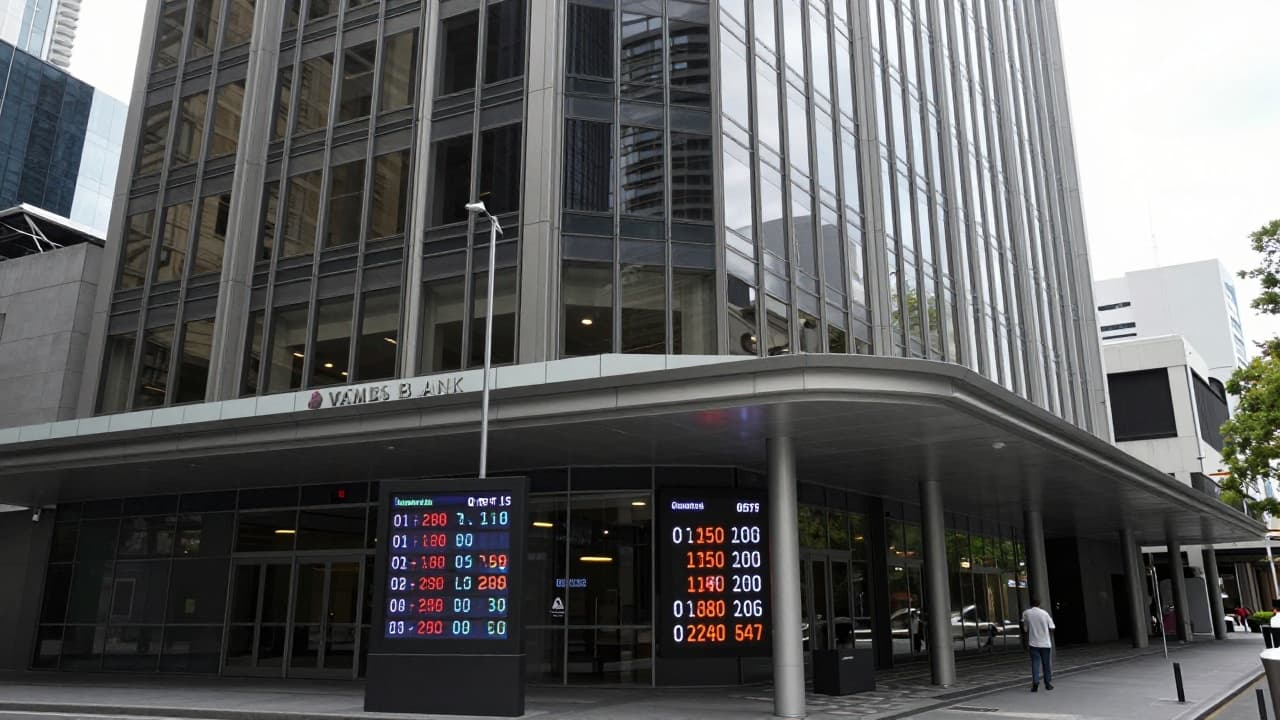
Macquarie Bank has agreed to pay a $14 million court penalty after admitting it breached the Australian Corporations Act regarding so-called 'welcome rate' promotions. The penalty comes amid increased oversight by the Australian Securities and Investments Commission (ASIC) of complex savings product terms.
The bank described its savings offer in 2022 promotional materials as a 'welcome variable rate' or 'bonus'. The regulator assessed that this could lead some clients to conclude that the interest was paid on top of the standard variable interest rate. As interest rates rose that year, the difference between the introductory and standard rates narrowed. When the standard rate exceeded the introductory rate, clients received only the standard rate, without any added bonus, ASIC argued in proceedings before the Supreme Court of New South Wales.
ASIC Commissioner Alan Kirkland stated that clients should not have to scrutinise every transaction to check whether the bank had paid the correct interest. He emphasised that banks must get the basics right, which includes systems and processes that fulfil promises made to clients. In his view, this was not just about unclear wording, but about Macquarie’s systems and controls not being rigorous enough to recognise the risk that clients would misunderstand how the 'welcome rate' worked.
A Macquarie spokesperson stated that the bank would admit in court proceedings that it had not provided financial services 'effectively, fairly and honestly'. He added that the bank would not contest the proceedings and that a $14 million civil penalty is expected to be paid.
Most lenders today offer noticeable savings interest rates with strict conditions. The Australian Competition and Consumer Commission found in a 2023 study that 71 per cent of accounts with bonus interest did not receive the bonus rate every month because clients breached often opaque terms. Kirkland warned on Wednesday that clients should not assume they are guaranteed the highest advertised rate from their bank. Multiple advertised rates may only apply for a limited time or depend on meeting certain conditions, he said. Consumers should check which terms apply, whether they meet them, and whether the bank is paying the promised interest rate.
Savers can lose their right to advertised rates if they do not deposit funds into the account every month or increase their balance. Some savings products also require clients not to withdraw money. The official interest rate in Australia is currently at a 18-year high of 4.85 per cent as high inflation persists.
Angel Zhong, a finance professor at RMIT, said that banks 'amplify' promotional savings product offers when interest rates change. It is precisely then that clear and honest disclosure of rates is most important, as small differences in wording can influence major decisions, she highlighted. She added that the issue is one of clarity, not complexity, and that rate formulation should be treated as a key compliance risk, with clear accountability at the highest level.