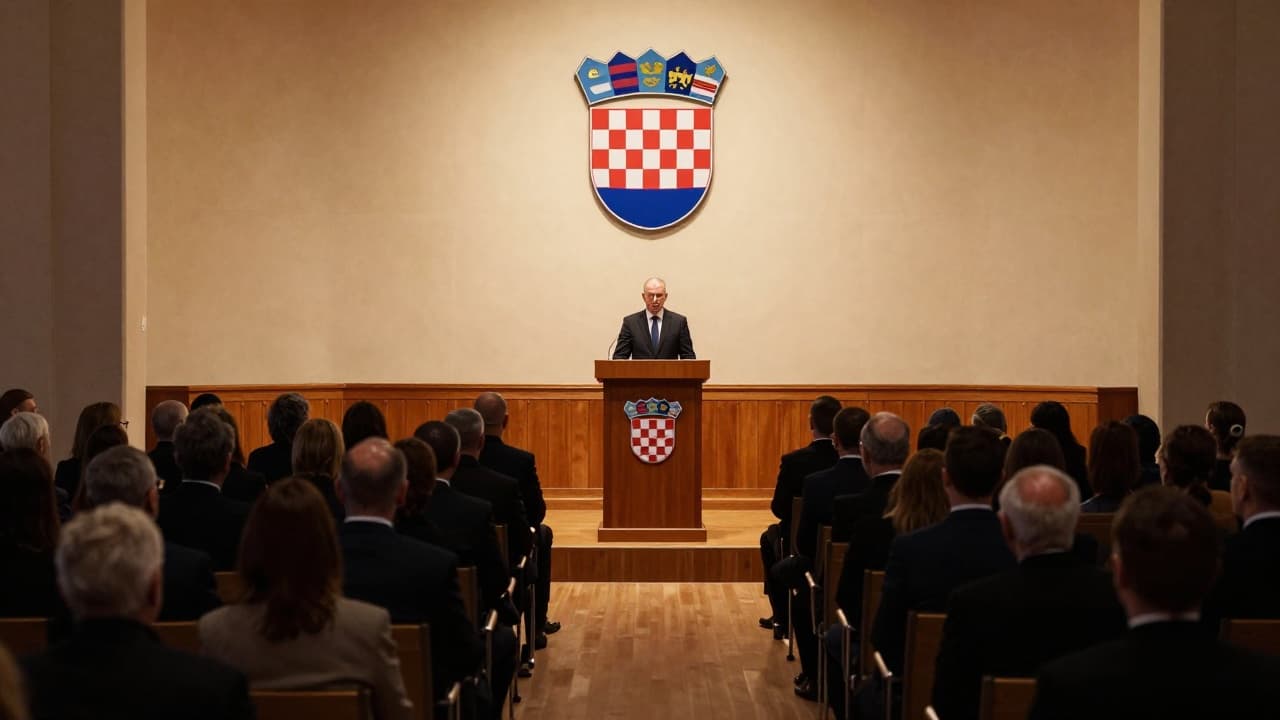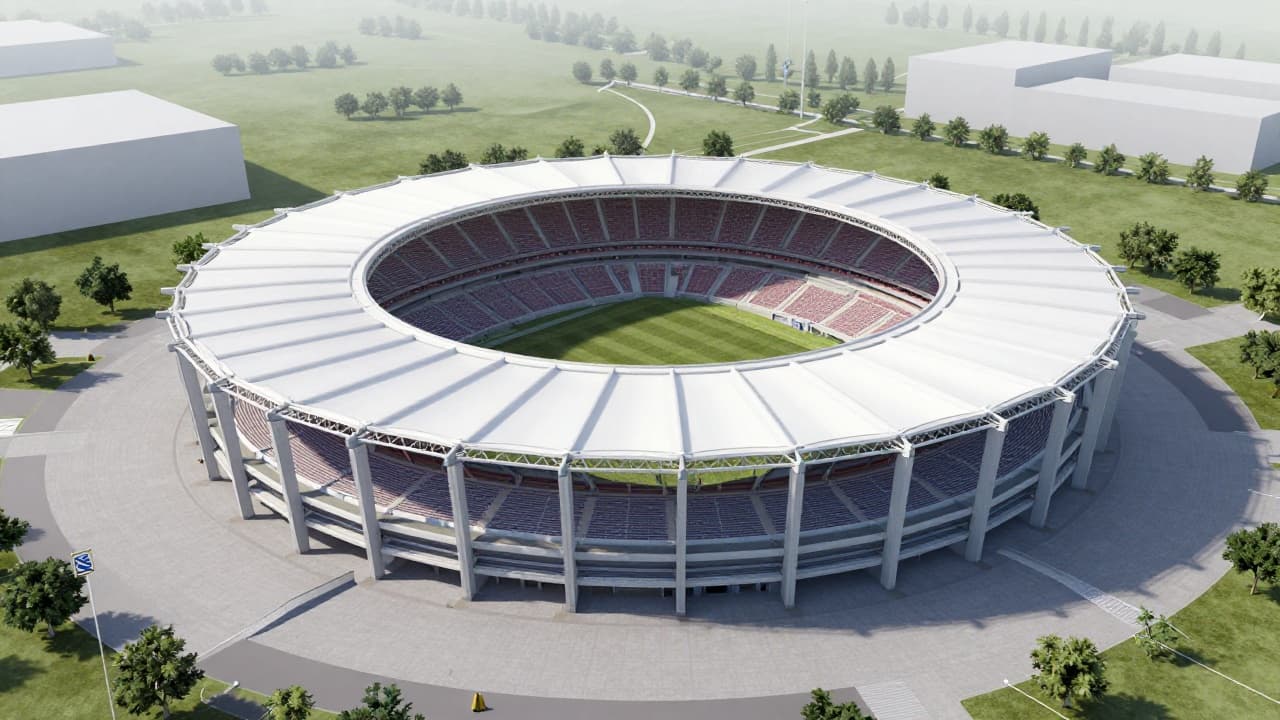
The architectural solution for the new Maksimir stadium, estimated at 175 million euros, has been approved. The cost will be shared equally by the City of Zagreb and the state, with completion planned for 2029. The winning design has triggered a wave of negative reactions in public.
The renovation of the old Maksimir has been definitively abandoned. The old stadium is to be demolished, and a completely new structure will be built on its site at the expense of taxpayers. This continues the decades-long saga of the Zagreb stadium, in which more than 120 million euros of public money have already been invested, without counting inflation.
Decades-long renovation
The renovation of Maksimir began in 1997, during the presidency of Franjo Tuđman, with Mirko Novosel at the head of NK Croatia. First, seats were installed on the eastern and southern terraces, and in 1998 the northern terrace was demolished. The work was due to be completed in 2000, but by then only the northern and western terraces were finished. The bill had then reached 360 million kuna.
Due to the renovation, Novak, Tomislav Horvatičić, and Damir Vrbanić ended up in the dock. They were accused of evading 80 million kuna in taxes and surcharges, and an illegal return of 40 million kuna in tax. Fifteen years later, they were acquitted of the charges.
With the arrival of Milan Bandić at the head of the city, work and promises continued. Bandić had promised the completion of the western terrace for 15 to 20 million in the then currency, but an additional 250 million kuna was spent in the following four years. The city, after the bankruptcy of Dinamo, took over its reconstruction obligations. An additional 66.5 million kuna was provided from the budget, with the city paying 56.7 million kuna in 2003 alone. 2.4 million was paid for the VIP lounge, and 23.7 million for the loans taken out by Dinamo for the stadium. In October 2004, the City Assembly approved a further 73.6 million kuna. The deadline for completion was pushed back first to 2006, and then to the end of 2008. The stadium was not yet finished by then.
Unrealised plans
Bandić launched a plan in 2007: the completion of Maksimir, the construction of an alternative stadium on Kaiserstein, and an athletic stadium in Svetice. The tender, based on a public-private partnership, was won by Alpine Bau with a bid worth 250 million euros. According to the model, Zagreb would pay almost five billion kuna, including 13.2 million in monthly maintenance for the Maksimir stadium. The project was never implemented, and the five billion refers to the planned, not the actually spent, sum.
The city issued four tenders for the renovation of Maksimir, but only the first, from 1997, was implemented. Five to seven million was set aside annually in the budget for preparatory documentation. In 2011, it was said that the investment would be worth around 200 million euros, and two years later, renovation was announced for 2015. The covering of the two terraces alone was to cost around 40 million euros. Neither plan was implemented.
The fans of Dinamo, the Bad Blue Boys, have long warned that there is no cost estimate for the renovation and construction of the stadium, insisting that "two toilets were not working on the stadium". The project of a national stadium for 35,000 spectators, estimated at 100 to 120 million euros, was also proposed. The Blue Volcano remained only a project.
Change in funding model
Tomislav Tomašević previously stated that the construction of a new stadium should not burden the city budget. He spoke of a model in which the stadium would be built by a private investor, with the city contributing land and other forms of support. The model was ultimately abandoned. Tomáš explained the change in model by a study which suggested that the private investor would have between 40 and 50 years to recoup the investment.
The study, obtained by Index via the right to access information, does not fully align with the explanation given. The document, valued at 15,912 euros, was produced by the company UHV Consulting. The study analysed three models of stadium with 32,000 to 35,000 seats and between 35,100 and 42,120 square metres of commercial space. The model envisaged that the private investor would invest 20 per cent of their own money, with the remainder secured by loan. The city would provide land, valued at 15 million euros, and pay for the demolition of the existing stadium.