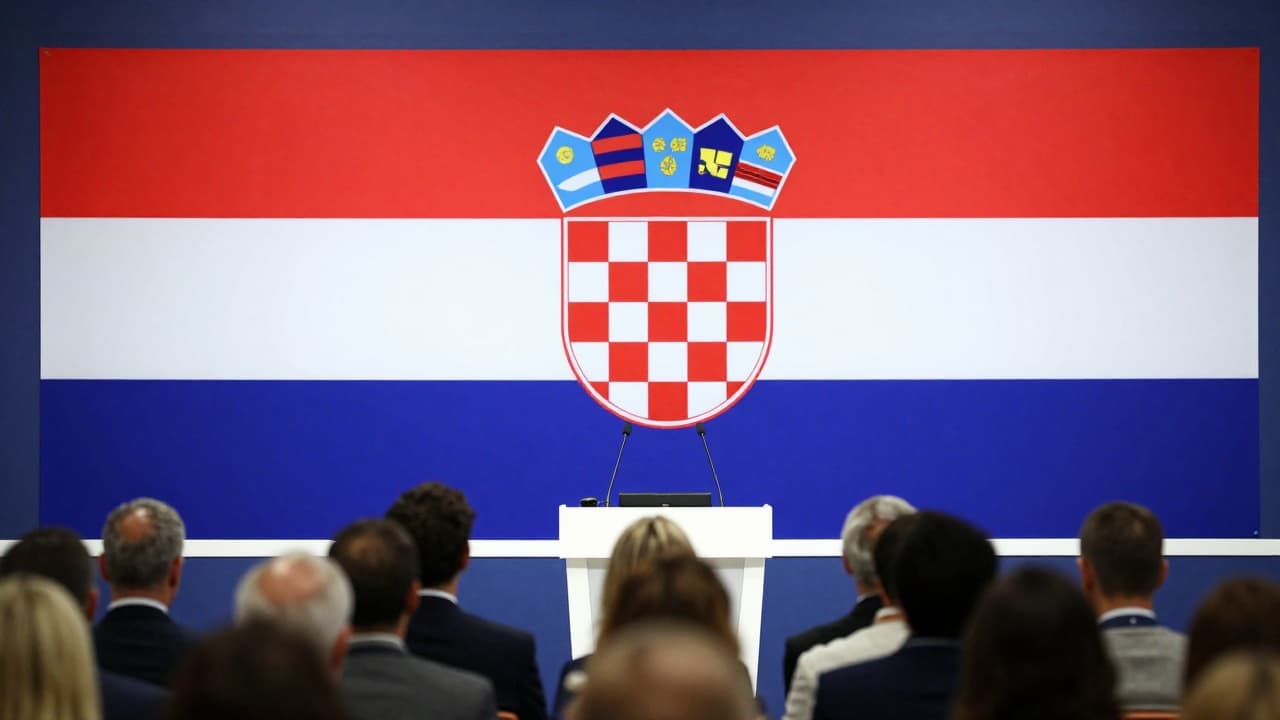
Croatian Prime Minister Andrej Plenković responded on Friday from Poreč to statements by Montenegrin Foreign Minister Ervin Ibrahimović regarding the demarcation between the two states, stating that Croatia will not give up its territory and expects the confirmation of the existing land border.
Plenković emphasised that Croatia has no territorial claims against its neighbour, but will not accept the renunciation of its own territory. “I cannot fully discern what issue is being referred to,” the Prime Minister stated, adding: “Croatia never seeks another’s territory, but it will not give up its own, and our government, nor anyone else in Croatia, will allow this.”
At the centre of the dispute is the issue of confirming the land border between Croatia and Montenegro, particularly in the area of Prevlaka. According to Plenković, the Croatian draft agreement is based on the principles of the Badinter Commission, under which former republican borders after the breakup of Yugoslavia became international state borders. The Prime Minister recalled the temporary demarcation regime established in 2002, which, according to the Croatian interpretation, confirms the border at Cape Konfin, and the decision on the temporary demarcation regime was confirmed by joint expert teams from Croatia and Montenegro more than two decades ago. He believes it is now time for the formal confirmation of the existing border.
“Regarding our position, it is clear, clean and will not change,” Plenković stressed, warning of the possible consequences of a different interpretation of the border. He reminded that Montenegro had already resolved demarcation issues with Bosnia and Herzegovina and Kosovo under the same principles, and therefore believes that an agreement with Croatia should also be straightforward. He added that rejecting such a solution would be surprising and could raise the question of whether there are territorial pretensions from the Montenegrin side towards Croatia, expressing hope that this is not the case.
Ervin Ibrahimović stated on Friday that Podgorica will not agree to ceding its territory. He emphasised that Montenegro wants to continue talks with Croatia and resolve open issues through bilateral agreement or, if that is not possible, before international institutions. He confirmed that Montenegro had sent a diplomatic note to Zagreb requesting the continuation of negotiations on the border.
Croatia withheld its consent on Thursday for the closure of negotiation chapter 15, which relates to energy. One of the reasons for withholding consent, according to the Croatian stance, is the disputed Montenegrin documents related to maritime demarcation. Zagreb demands that the former republican land border be confirmed first, while it is prepared to discuss final maritime demarcation subsequently. Montenegro advocates for the continuation of bilateral negotiations on the land and maritime borders and rejects the unilateral determination of the border line. The two states also have other open issues, including the school ship Jadran, the compensation of former Morinj camp detainees, and the issue of missing persons.