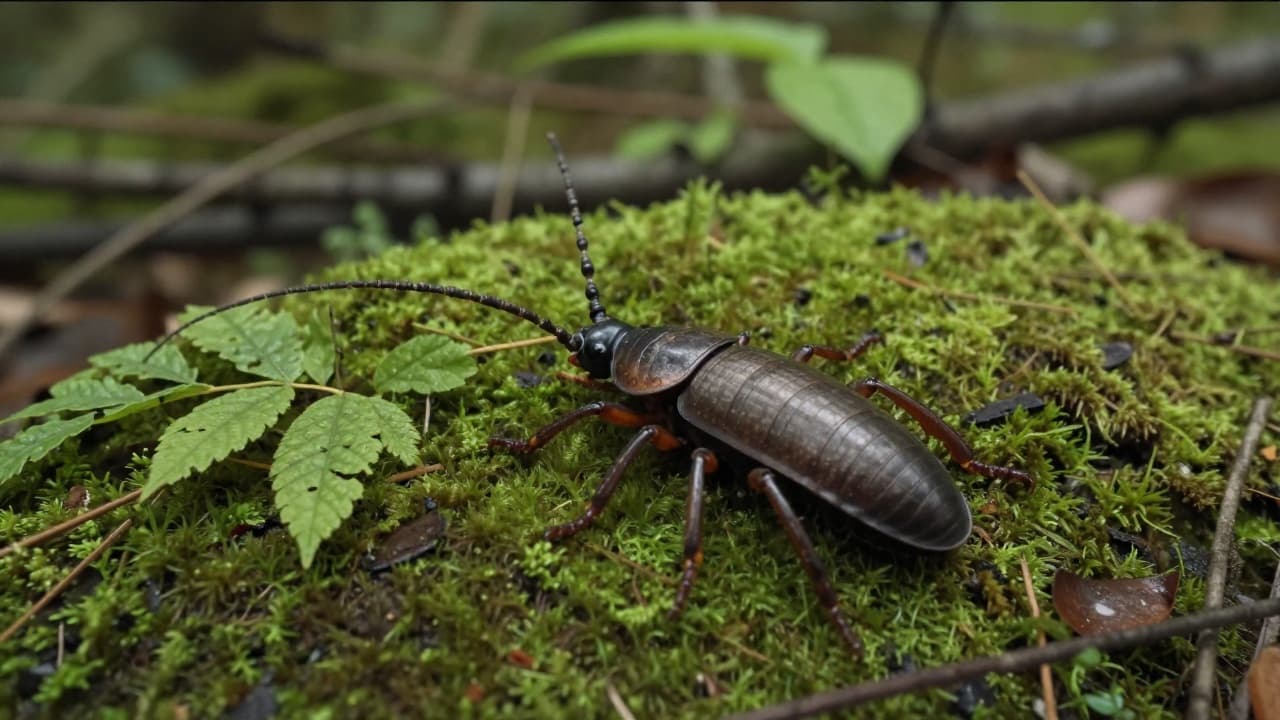
The New Zealand endemic insect, the giant weta, has changed its conservation status from 'nationally threatened' to 'nationally recovered'. According to a report published on 2 October in the New Zealand Journal of Zoology, the population is recovering following a long-term breeding programme, with 11,000 individuals released.
The giant weta is the largest of 70 weta species. It once lived in parts of the North Island, but its numbers have dropped drastically following the arrival of introduced predators and habitat loss. By the 1990s, the species was considered threatened, and today it is believed to have disappeared completely from the mainland of New Zealand. The surviving population is mainly located on a few predator-free islands in the Hauraki Gulf, near Auckland.
The turnaround began 15 years ago. Dozens of giant wetas were bred at Butterfly Creek and the Auckland Zoo, which developed and gradually expanded techniques for breeding large numbers of individuals in shared enclosures. The bred individuals were translocated to predator-free islands and to reserves on the mainland north of Auckland. The programme involved 45 translocations into the wild.
The young wetas, known as nymphs, feed on a mixture of fresh leaves, protein from fish flakes, and forest leaf litter. The protein is crucial for the survival of the youngest individuals, and the insects are moved to new habitats as soon as they have grown large enough to defend themselves.
Monitoring on two islands has confirmed that the wetas have established self-sustaining populations. On them, the fourth and fifth generations have already hatched. Dr Chris Green, a honorary researcher at the New Zealand Department of Conservation and a co-author of the report, states that he is not aware of any other breeding programme of this scale with such success.
New Zealand is particularly vulnerable to species extinction due to the high number of endemics and the problems posed by introduced pests, although the country is a leader in the recovery of invertebrates. The project is documented to encourage other institutions to develop similar programmes.