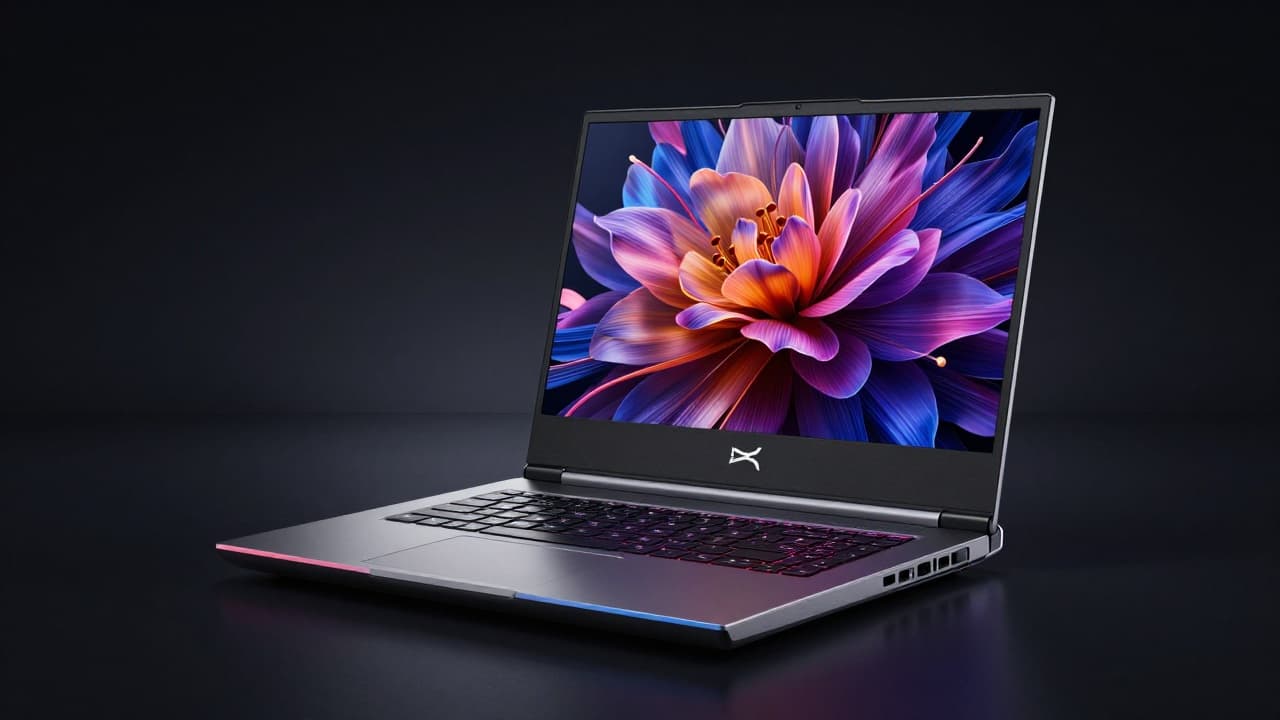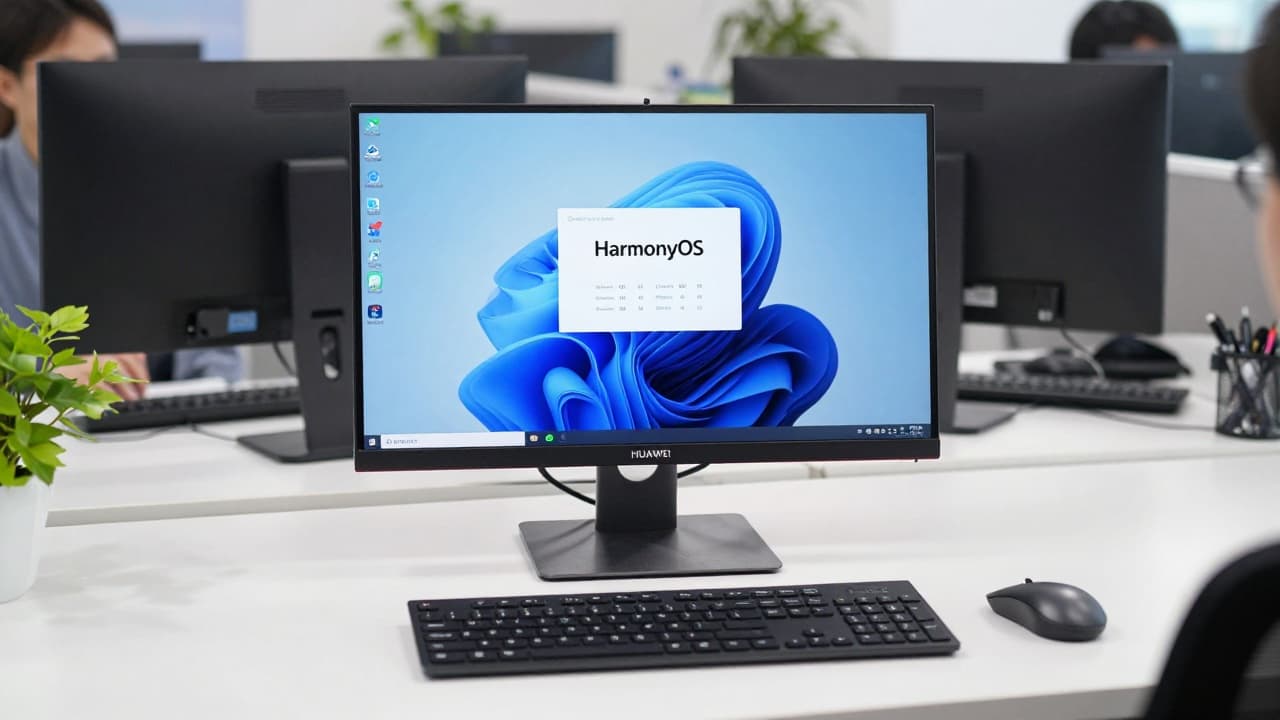
Huawei has unveiled the Qingyun HM650 series, the company's first desktop computer running the HarmonyOS operating system. The device is aimed at enterprises and state institutions, with Huawei promoting it as a computer with a 100 per cent localisation rate for hardware components.
HarmonyOS had previously appeared on Huawei laptops, but the HM650 is the first desktop PC in the HarmonyOS computer line-up. Huawei is developing its own operating system and device ecosystem at a time when US restrictions make it difficult for the company to access certain American technologies and services. The HM650 is thus an attempt to build an entire domestic platform: from processor and computer to operating system and applications.
The PC version of HarmonyOS is adapted for use with a keyboard and mouse and includes computer functions for managing files, windows, the screen and external devices. The business edition on the HM650 brings tools for centralised device management, separate digital workspaces and protection of business data.
Huawei announced on 5 November that the number of HarmonyOS computers delivered had exceeded one million and that the ecosystem has more than 21,000 applications. These figures refer to the entire line of HarmonyOS computers, not just the HM650. Applications are downloaded via Huawei's store, which features programmes adapted for computers, applications that work on multiple types of devices and compatible mobile apps.
Some Windows programmes can be run via virtual machines from other manufacturers, but Huawei warns that compatibility issues may arise due to the ARM platform. Microsoft Office is currently not adapted for HarmonyOS, and Huawei cites WPS Office and other programmes as alternatives. HarmonyOS includes the Xiaoyi AI assistant for office tasks, and a function for recording and transcribing meetings can operate locally. Some other AI features require an internet connection or are charged for separately. For data protection, the system offers SSD encryption, file access restrictions and encrypted document sharing.
The Qingyun HM650 is powered by Huawei's Kirin X90 processor. The series is offered in eight- or ten-core configurations, with the ten-core version supporting 20 threads. According to Chinese reports, the ten-core version runs at a clock speed of up to 2.3 GHz. Huawei cites a TDP of 40 W, and the processor includes integrated Maleoon graphics and an NPU for AI tasks. The computer comes with 16 or 24 GB of LPDDR5 memory, configurations with 256 or 512 GB SSDs are available, and some models include a hard disk with a capacity of 1 or 2 TB. Huawei lists dimensions of 293 × 93 × 315.5 mm and a weight of around 3.6 kg for the configuration without an optical drive and hard disk. Among the ports are USB-C, seven USB-A ports, HDMI, DisplayPort, gigabit Ethernet and audio outputs.
The localisation certificate was issued by Zhejiang Kezheng Electronic Information Product Inspection, and Huawei displays confirmations for the chip, memory, SSD, power supply and Wi-Fi. A note clarifies that a rate of 100 per cent means that all hardware parts on the motherboard can be sourced from domestic manufacturers. Huawei adds that it uses multiple suppliers, so specific components depend on availability at the time of delivery. The certificate does not prove that every part of every delivered computer is exclusively produced and designed in China, nor does it mean that the entire semiconductor production chain is independent of foreign machinery, materials and software tools.
Chinese portal IT Home published prices for several configurations. The HM650g configuration, 8 cores, 16 GB RAM, 512 GB SSD costs 6,899 yuan. The HM650 configuration, 10 cores, 16 GB RAM, 512 GB SSD costs 7,199 yuan, while the same configuration with Wi-Fi costs 7,399 yuan. The HM650 configuration, 10 cores, 24 GB RAM, 512 GB SSD and 2 TB HDD costs 10,499 yuan.
China Communications Construction Group listed an estimated 600 HM650 desktop computers and 1,800 HarmonyOS laptops in a procurement document. Quantities may change after negotiations and according to actual needs, so this is not a final confirmed order.