Fighting between the Tigray People's Liberation Front (TPLF) and the national army broke out at the end of September, continuing a two-year civil war that officially ended in 2022. In less than two weeks, federal forces entered Mekelle, the capital of Ethiopia's northern Tigray region. The TPLF then carried out what it called a "strategic withdrawal" from Mekelle and other major cities in Tigray, and the army faced little resistance when taking control of these cities.
According to reports, hundreds of people have been killed in the conflict, with dozens killed in drone attacks and airstrikes. Telephone lines and the internet, which had been cut off when the fighting began, have now been restored. Residents in different parts of Tigray told the BBC that fighting continues in the central, northern and northwestern parts of the region, with the use of heavy artillery and drone attacks. Witnesses around Sherara, a town near the Eritrean border, reported heavy artillery and ground force fighting in recent days. An entrepreneur told the BBC that military convoys from both sides had moved towards Sherara, while a motorcycle driver in the southern town of Yechila said military checkpoints were still active.
Getachew Reda, a senior TPLF official who defected and is now an advisor to the prime minister, stated that the war in Tigray is over and that stabilising the region should be an immediate priority. On the other hand, TPLF spokesperson Mikael Asgedom denies that the group has lost, describing the retreat as a deliberate tactical and strategic pullback. He claims that the TPLF "deliberately allowed the ENDF to penetrate deeper into the heart of Tigray" and is preparing for a major counter-offensive. According to him, TPLF fighters launched attacks on Ethiopian forces at several locations after withdrawing from the cities.
Cameroon Hudson, an analyst and consultant on African peace and security, believes that the TPLF has lost the support of the population at home and is fragmented. He points out that the TPLF does not possess the advanced military technology needed to confront the ENDF and has lost many generals, strategic thinkers, top diplomats and fighters, either through defections or arrests. Internal fights within the TPLF leadership, he adds, have caused significant damage. Abraha Hailezgi, a scholar at Mekelle University, says the army lacks a clear political vision and is associated with coercion, abuse, forced mobilisation and arbitrary conduct. Many people, he claims, view the TPLF army as an adversary rather than a force acting in their interest.
Military sources close to the federal army claim that operations against the TPLF are continuing and that the group's capabilities are gradually diminishing. Recent fighting and troop movements have been recorded in northern Tigray, near the Eritrean border, as well as across the central mountainous areas of Tigray. Soldiers from Eritrea and Ethiopia have reappeared in Tigray towns. Yared Tibebu, a prominent US-based Ethiopian commentator, sees the possibility of a prolonged war in Tigray. He argues that the TPLF has a long history of conducting prolonged armed conflict and believes the group is again preparing for a long war. He considers that, after reorganising its military and political structures, it may attempt to continue offensive operations, but that this will not happen for some time due to internal divisions.
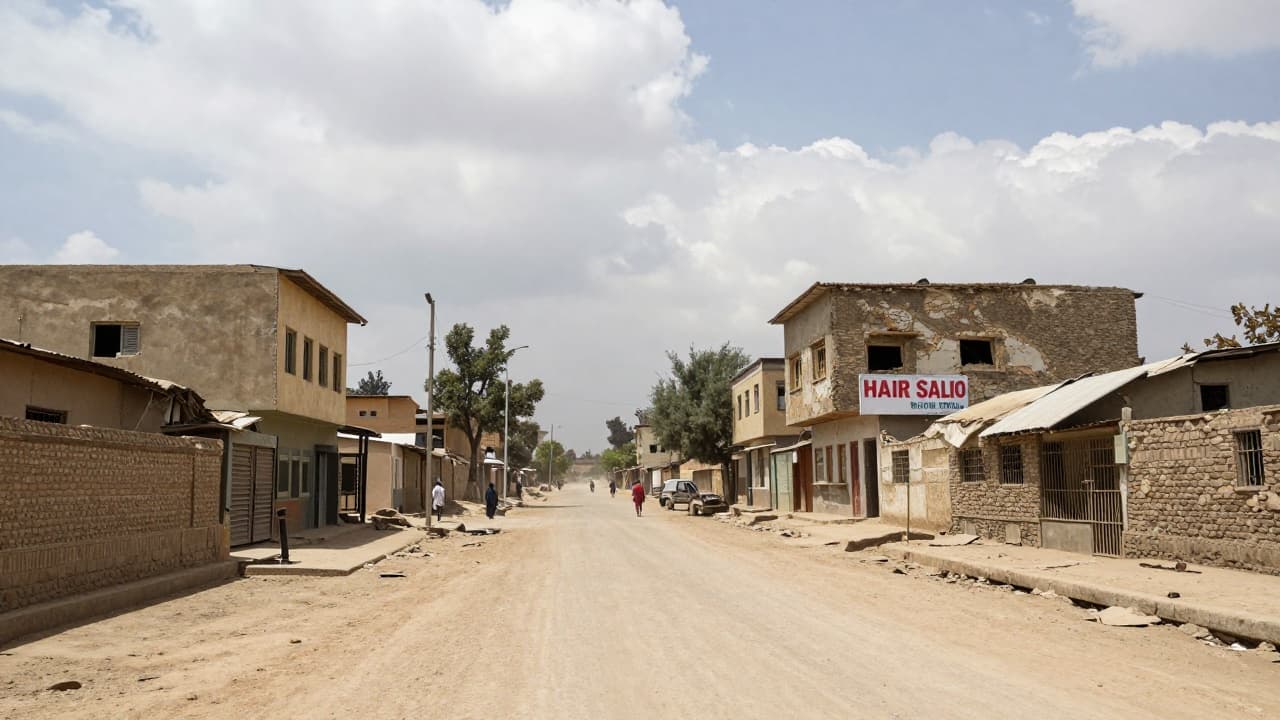
The 2020-2022 war in Tigray was marked by widespread human rights violations and allegations of ethnic cleansing in western Tigray. Estimates suggest that the war took hundreds of thousands of lives. Firut Me'ar, a single mother of a ten-year-old daughter, runs a hair salon in Mekelle.