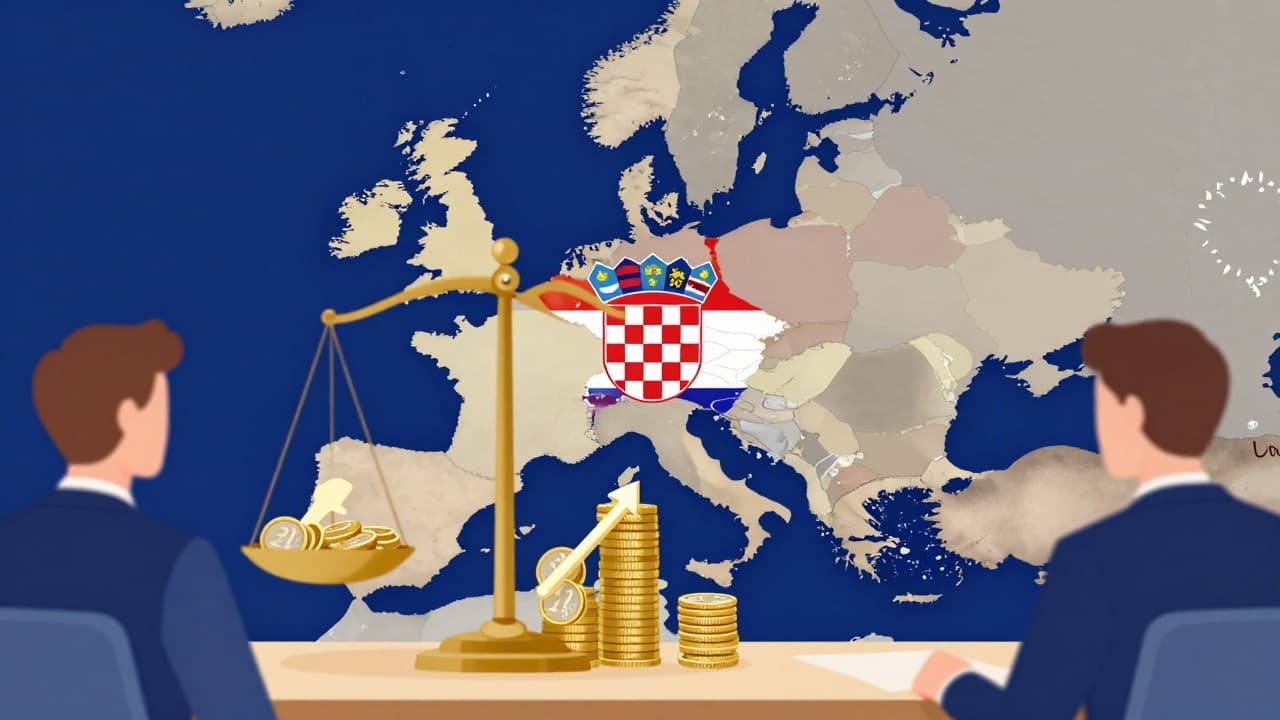
Montenegro is paying compensation to Croatian detainees from the Morinj camp, resolving one of the conditions Croatia refused to waive in exchange for its support of Montenegro’s path towards the European Union. The Montenegrin Government adopted a report on the compensation for camp detainees totalling 18 million euros, with more than 800 euros provided for each day of captivity.
More than 300 people, mostly from the Dubrovnik area, were taken and detained in the former Morinj camp in Montenegro during 1991 and 1992. Among them was Vlaho Varamenta, a minor detainee at the time and now a member of the presidency of the HDLSKL DNŽ. "I was detained with my father; he was taken away to be shot, so I did not know at all what had happened to him. Later, he was returned badly beaten, and I was happy he was alive at all," Varamenta said, adding that he, like all the camp detainees, will finally receive compensation.
Families of the deceased will also receive compensation, while those who previously received compensation after filing private lawsuits will now receive the difference. Zdenko Bulić, president of the HDLSKL DNŽ, announced that efforts would be made to reach all beneficiaries. "We will strive to reach everyone, including the first and second order of heirs who are entitled to compensation. We will find all the people in the field, whether they are in Munich, the US, Konavle or Vinkovci," Bulić said.
This is the result of long negotiations between Croatian and Montenegrin diplomacy. Minister of Foreign and European Affairs Gordan Grlić Radman assessed it as a satisfaction, but also an important recognition. "It is their satisfaction, but it is important to acknowledge it. We offer recognition to the Government of Montenegro, which is not easy in a very interesting domestic political spectrum. In Montenegro, there are those who believe there was a civil war," Grlić Radman stated.
Compensation for camp detainees is one of eight demands Croatia placed on Montenegro as a condition for its accession to the European Union. Along with compensation for Morinj, Montenegrins have so far fulfilled two other demands: the preservation of the memorial plaque in Morinj and the renaming of a pool in Kotor that bore the name of a Montenegrin camp guard. Five points remain unresolved: the issue of war crimes, resolving the fate of 14 missing persons, the return and compensation of Croatian families' property, the return of the ship Jadran, and the most disputed issue – border demarcation.
For Croatia, the issue of the land border is resolved, while for Montenegro, both the maritime and land borders need to be discussed. For Montenegro, the southernmost point of Croatia, Rt Oštro, is a state interest. Prime Minister Andrej Plenković stated: "That means, if this is something that the Montenegrin authorities are questioning today, in 2026, we cannot interpret it differently than potential pretensions to Croatian land." President of Montenegro Jakov Milatović replied: "Montenegro does not pretend to a millimetre of Croatian territory, not a millimetre."
Croatia expects the resolution of open issues before the conclusion of Montenegro’s accession negotiations with the EU, while Montenegro aims to become a member in 2028.