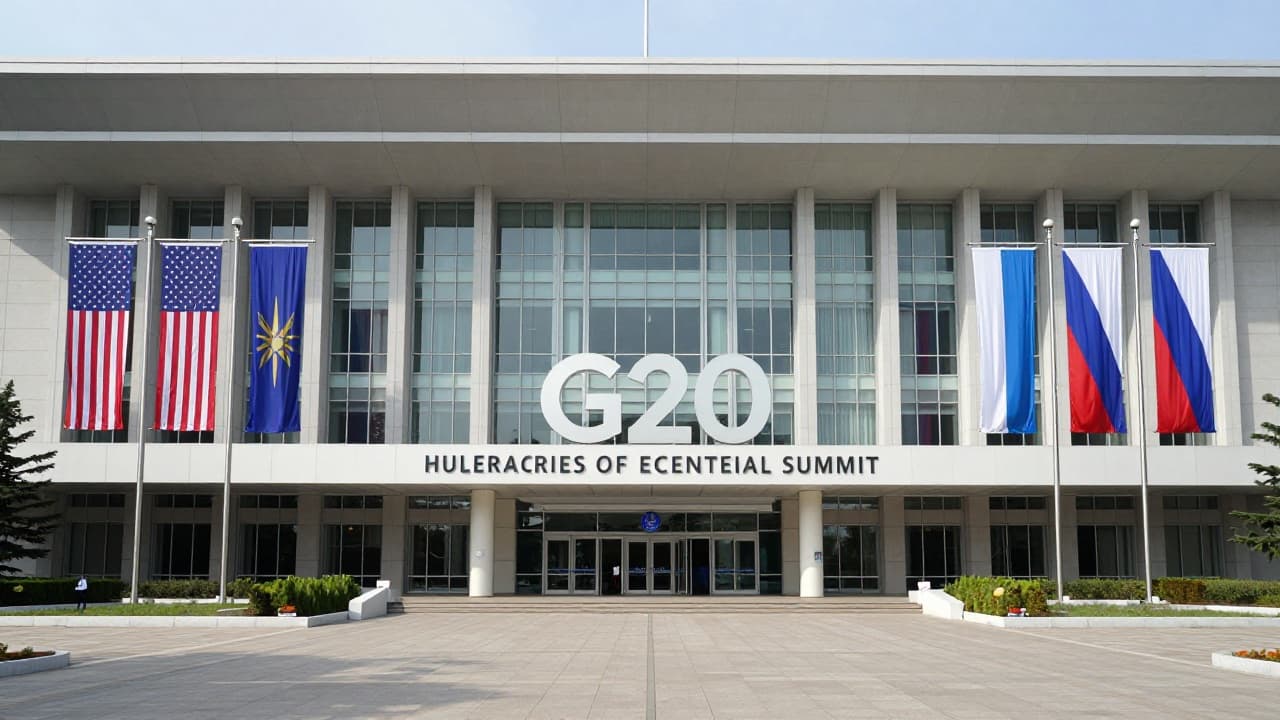
The traditional group photo at the opening of the G20 foreign ministers' meeting in Atlanta was abruptly cancelled after Australia and the United Kingdom refused to appear alongside Russian foreign minister Sergey Lavrov. US Secretary of State Marco Rubio cancelled the group photo after several European officials, the United Kingdom and Australia indicated they would boycott the photo or leave the shoot.
Rubio opened the talks in Atlanta with a call for unity on issues threatening international security and trade. "We are at a critical juncture. We face a series of interconnected economic and geopolitical crises," Rubio said. About one-third of the countries at the talks indicated they would not appear with Russian representatives, and European Union countries made it clear they would boycott any photo with the Russians.
German foreign minister Johann Wadephul warned: "There will be no group photo with European partners and Mr Lavrov together under any circumstances because... there is no normalisation with Russia." British foreign minister Ed Miliband pledged the same, saying: "We do not communicate with the Russians in that way and we have not for a number of years."
During the opening session of the meeting, Australian foreign minister Penny Wong condemned Russia's invasion of Ukraine in front of Lavrov. Penny Wong said that Russia's illegal war had affected international markets and worsened global food security. A spokesperson for Penny Wong said that Australia supported the US decision to cancel the group photo. "Australia has been clear and consistent: we will not normalise Russia's brutal and illegal invasion of Ukraine," the spokesperson said.
Diplomats who attended the opening session described it as cordial, but said that Russia's stance on Ukraine was immovable. Russia opposes Poland's membership in the G20, and disagreements include the fact that the Trump administration did not invite the Republic of South Africa, a G20 member. Participants said that disagreements would likely prevent the foreign ministers from producing a joint statement when the meetings conclude on Saturday.
Polish deputy prime minister and foreign minister Radosław Sikorski is representing his country for the first time as a guest at the G20 meeting. Sikorski told journalists: "We have wars that are ongoing and we have participants in those wars at the table, so it is very difficult to agree on a common line." Several participants, who spoke on condition of anonymity, said that everyone had agreed to try to overcome their differences and work to ensure that next month's G20 leaders' summit, hosted by President Donald Trump in Florida, is a success.
Ukraine, which is not a G20 member but was invited to previous meetings, was not invited this year. US officials said that not inviting Ukraine was a deliberate choice to include only formal members of the group. Poland, which is not a member, is seeking formal membership with US support. The Republic of South Africa, a founding G20 member and the only African country in the group, was not on the list of invitees. The Republic of South Africa is embroiled in several sharp disputes with the Trump administration. When the Republic of South Africa chaired the G20 last year, senior US officials, including Trump and Rubio, avoided meetings it organised. Phindile Kunene, spokesperson for South African minister of international relations Ronald Lamola, said: "We have consistently maintained that our non-participation is not voluntary."