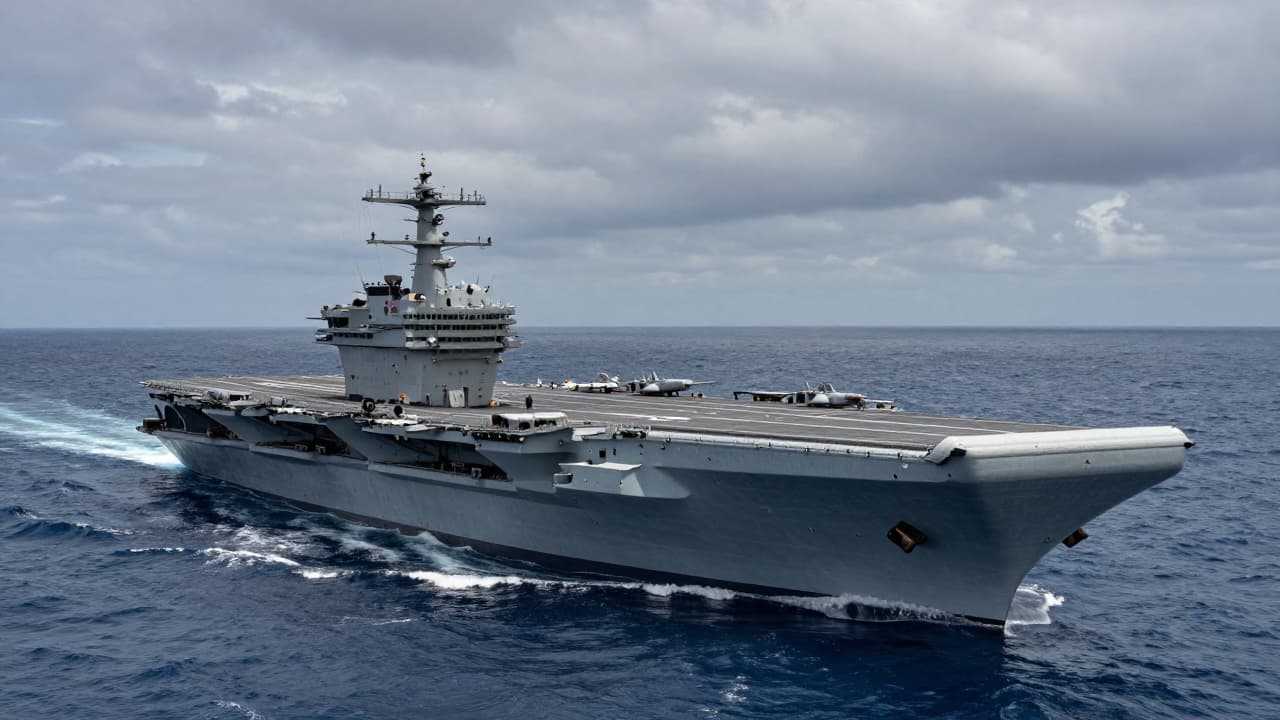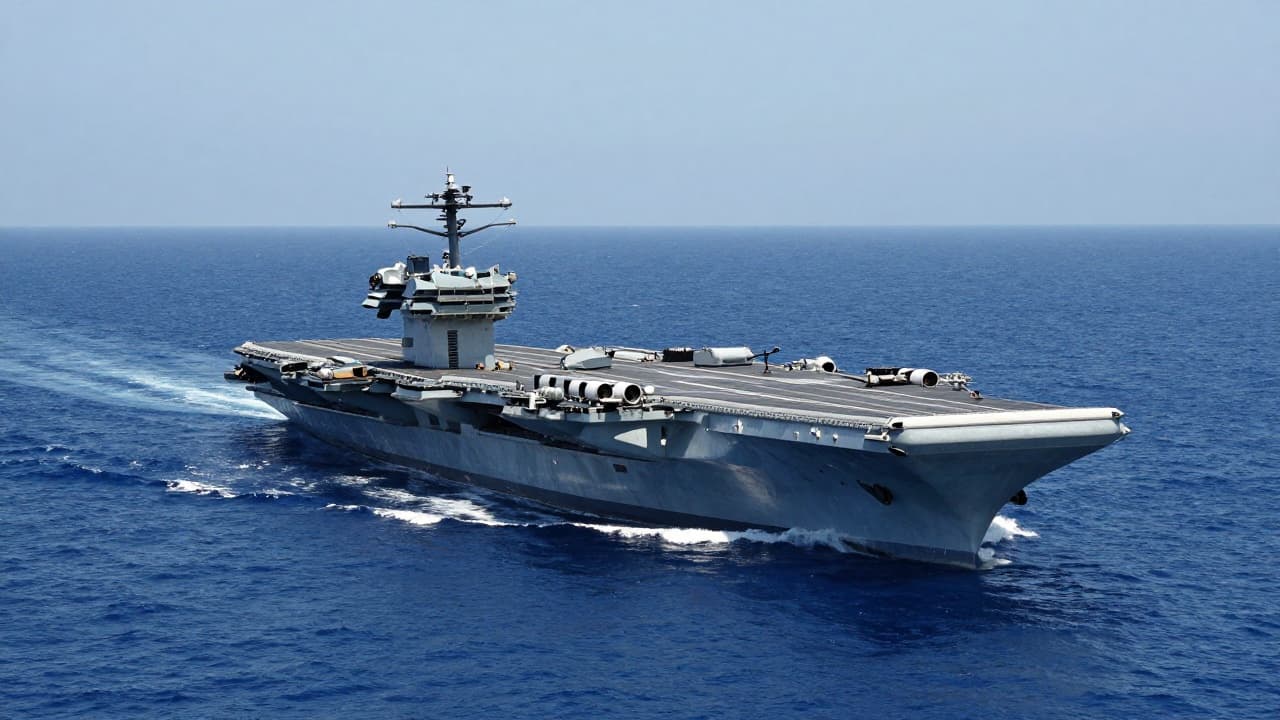
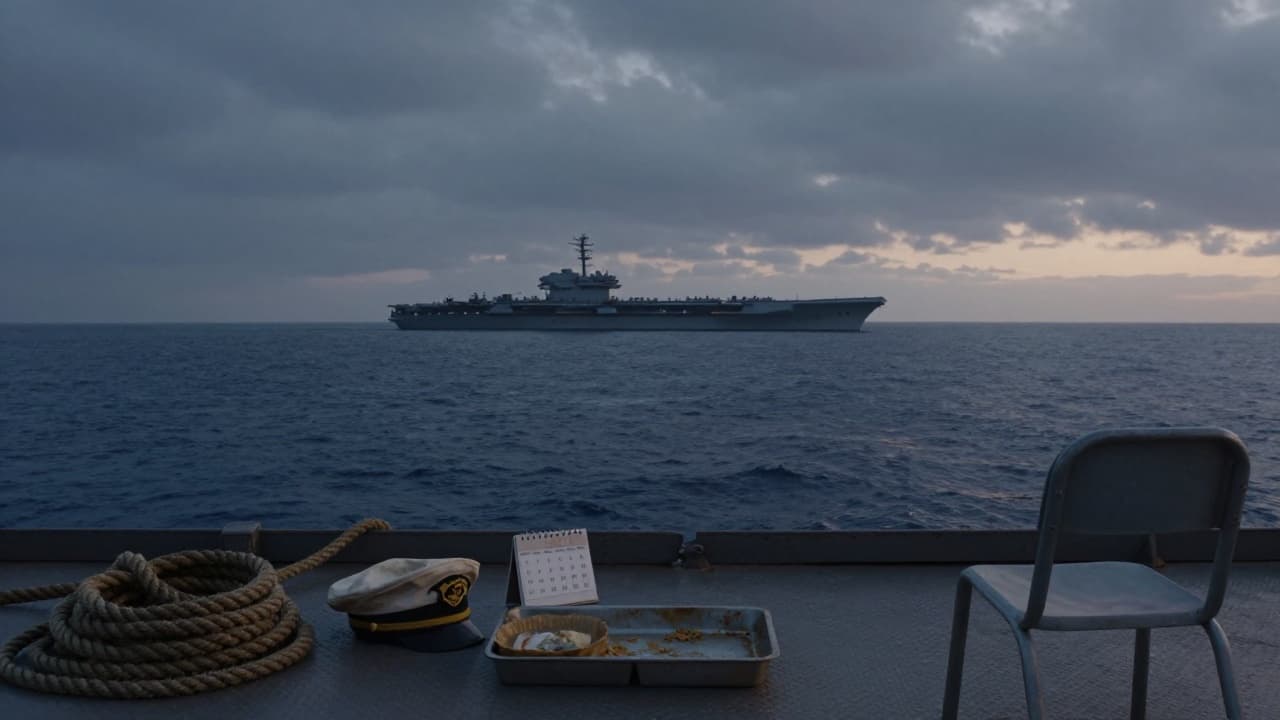
The US aircraft carrier USS Abraham Lincoln has returned to San Diego after nearly a year at sea. According to data from the US Department of Defense, the voyage spanned 321 days, including 264 consecutive days at sea without docking, a record in modern maritime history.
Four minutes to midnight, or rather, just before dawn on Thursday, 19-year-old Grayden Monroe and his mother arrived at the naval base. They were the first military family to gather on the metal bleachers overlooking the dark water, waiting for Monroe’s 21-year-old sister to disembark from the carrier. Monroe, a soldier stationed at Fort Campbell, wore his military uniform for the occasion.
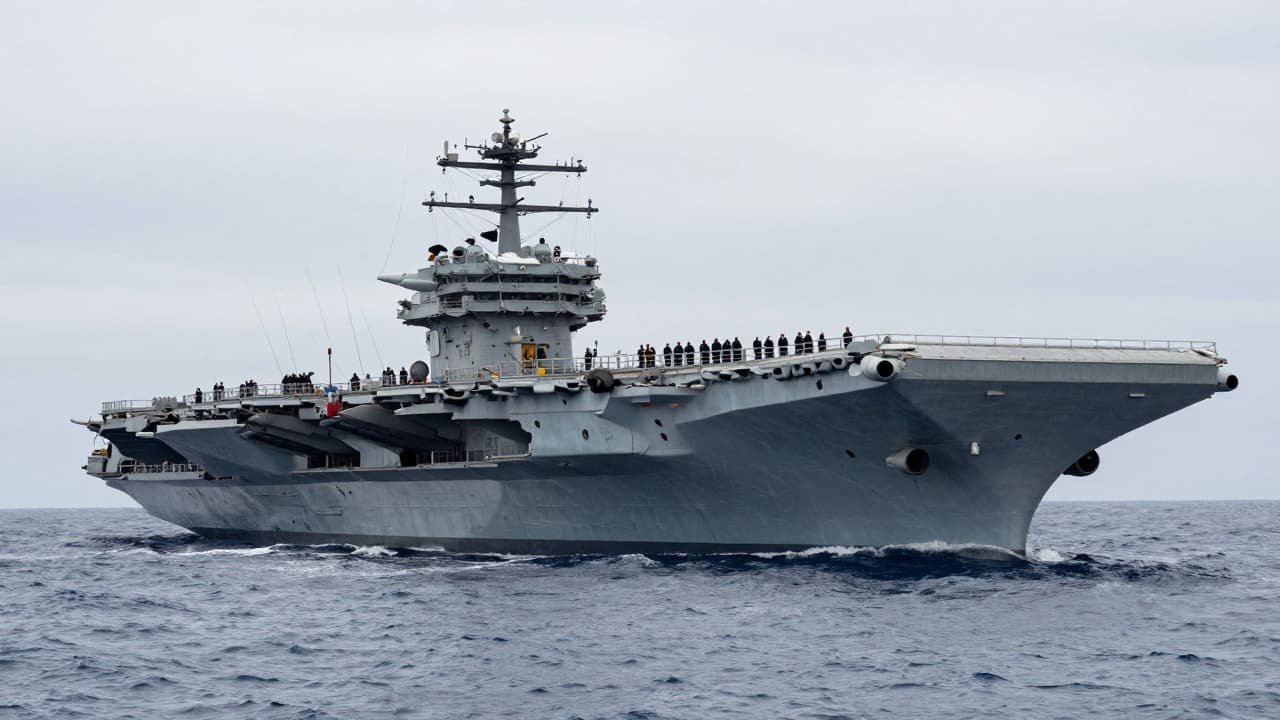
As the sun rose over the North Island air base, thousands gathered at the base for the return of the USS Lincoln. The atmosphere was akin to a festival, with live music, performers on stages, therapeutic dogs, and hand-made banners featuring large cut-out faces of smiling sailors. When the Lincoln appeared in the middle distance around noon, having rounded the corner near the city centre, applause broke out across the bay. Sailors stood along the edges of the ship in uniform, waving to the crowds.
The Lincoln had first departed San Diego in November, with an expected return in the spring. When the US and Israel launched their war against Iran, the carrier was redirected to the Middle East, and the schedule was extended for the approximately 5,000 sailors and marines on board, for an unknown period. After the return was officially announced in August, the ship took nearly two months to return to San Diego, with a short stop in Thailand and a route across the Pacific to the east.
For months, sailors had reported harsh living conditions on the Lincoln: food shortages, a series of suicide attempts, and a general decline in mental health and morale. The reports sparked political controversy, with Democrats calling for an investigation. The US Navy confirmed last month that eight members of the crew from the Lincoln and its accompanying strike group had attempted suicide since the start of the deployment. In September, Acting Secretary of the Navy Hung Cao also acknowledged that eight personnel had attempted to take their own lives.
The gathered crowd held banners and flowers. One child in a stroller held a sign: 'I have been waiting 234 days to hug my dad!'. The child's mother, Brenda Rivas, said that when her husband left for the deployment, she was five months pregnant. He missed the birth, and it was only six months later that she could first see her daughter via video call.
A mother, who asked to be known only by her first name as she feared retribution from military officials, watched the ship's arrival live from a small town in Texas. Her son serves on the Lincoln and, next week, she will fly to California to reunite with him and his five-year-old daughter. Her son had sent updates via WhatsApp whenever he had a signal. Last spring, he told her that the conditions were harsh. In a message, he wrote: 'Like the third world... We could not get soap or toothpaste.'