In Croatia, it is mandatory to conclude new inter-owner agreements and management contracts for co-owners of multi-unit residential and residential-commercial buildings by the end of this year. This legal obligation stems from the Act on the Management and Maintenance of Buildings, which came into force on 1 January 2025, with a two-year transition period granted to co-owners to align their documentation.
The final deadline for signing new contracts is 31 December 2026. If new contracts are not concluded by that date, existing contracts will cease to be valid, which could lead to serious problems in the management and maintenance of buildings. In such cases, the provisions of Article 62 of the Act apply, which provide for the possibility of appointing a compulsory manager.
A compulsory manager does not automatically take office at the start of the new year; rather, the appointment procedure is initiated by a report to the competent city or municipal body. Anyone with knowledge of disorganised management, including co-owners, managers, neighbours or other citizens, may file a report. Following a report, the mayor or municipal head has a deadline of six months to appoint a compulsory manager. This process is regulated by Article 50 of the Act.
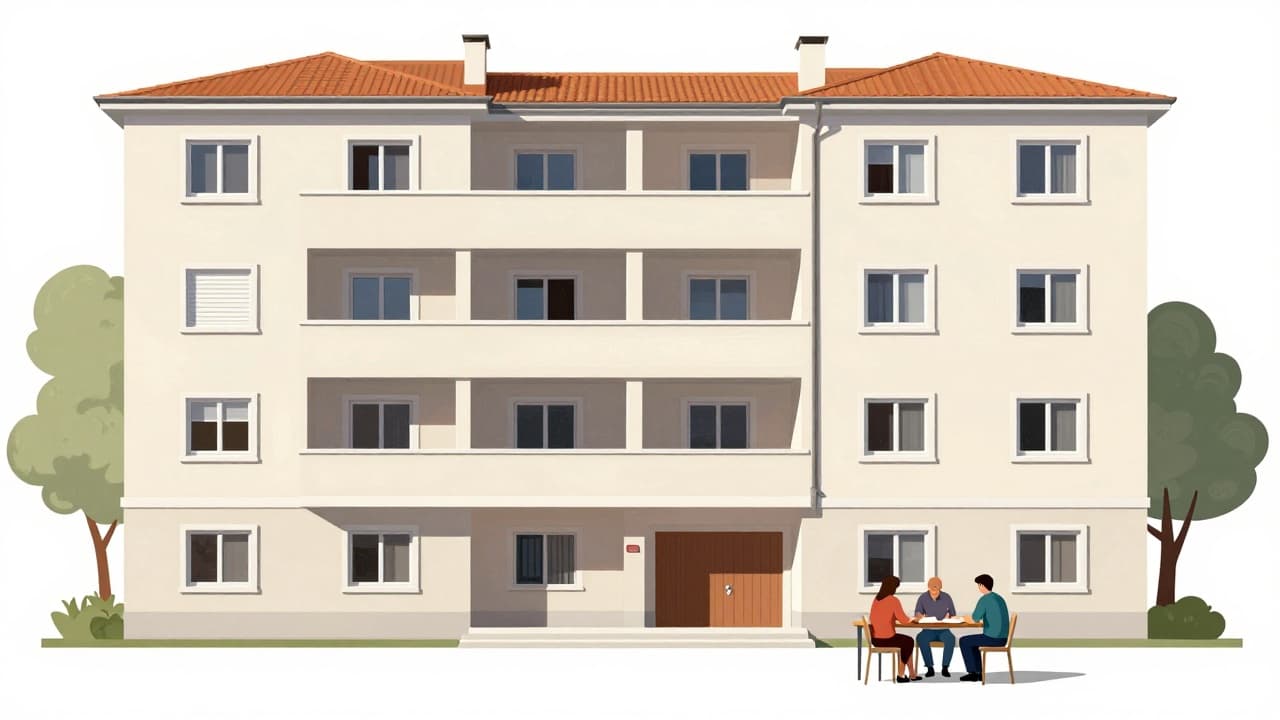
The legal obligations apply to multi-unit residential buildings with at least four apartments, residential-commercial buildings with at least three apartments and one commercial space, commercial buildings intended for business activities, and block garages for parking more than 20 vehicles where the predominant ownership lies with natural persons. Managers were also required to register buildings in the Register of Building Managers (Registar upravitelja zgrada) and the Register of Co-Owner Communities (Registar zajednica suvlasnika), which enables the recording of buildings and co-owner communities and the assignment of tax identification numbers (OIB) to communities that acquire legal personality.
On 19 October 2026, the Register of Building Managers contained 62,526 contracts, and 32,254 OIBs had been issued, with the same number of co-owner communities established. However, registration in these registers and obtaining an OIB does not exempt co-owners from the obligation to conclude new contracts. Among the key documents, the inter-owner agreement governs mutual relations, the method of managing and maintaining common parts of the building, and other important issues, and together with the management contract forms the basis for the building's operation.
If co-owners do not align their documentation with the new law, questions arise regarding further management, maintenance, the election of co-owner representatives, and the disposal of the common reserve. In such situations, compulsory administration may be a necessary solution, but it often brings a significantly higher financial burden for co-owners.
Therefore, co-owners are advised not to wait until the last days of December to sign contracts. The portal ZGRADOnačelnik.hr describes the inter-owner agreement as the "Constitution of the building", highlighting its importance in clearly defining rights, obligations and rules of communal life in the building. The coming weeks until the end of the year are not just an administrative deadline for thousands of co-owners, but an opportunity to regularise their relations and avoid potential problems with building management and maintenance.