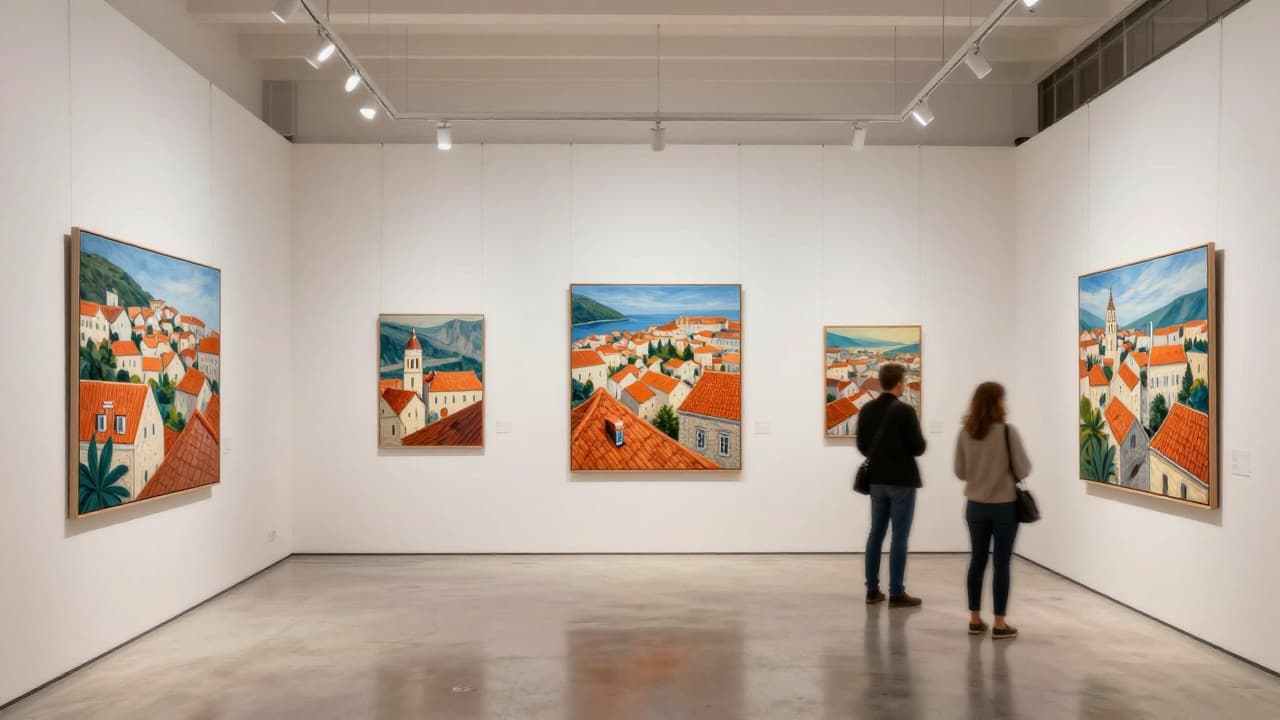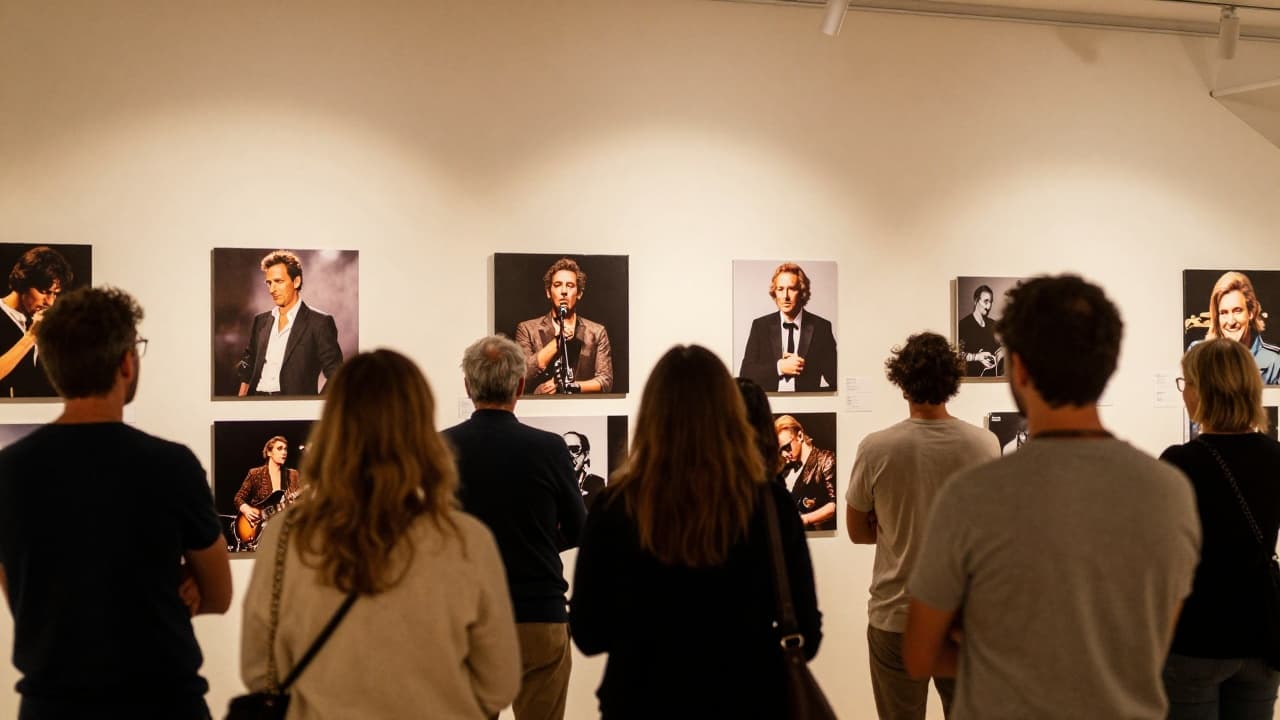
An exhibition titled "Đoser and Tusta", dedicated to Serđo Blažić Đoser and Branko Črnc Tusta, has opened at the Rock Gallery in Pula. The opening was marked by personal memories of their music, friendships and human kindness.
Paola Orlić, head of the Administrative Department for Culture and Civil Society of the City of Pula – Pola, and Boro Angelovski, president of the Teo-Đoser-Tusta association, spoke about Đoser and Tusta. Angelovski had been Đoser's best friend since primary school.
Orlić noted that Đoser belonged to the generation of her parents, while Tusta had strongly influenced her own generation. She recalled the time when KUD Idijoti were played at the Istrian Club in Zagreb. She emphasised that she quickly realised the importance of Đoser and his legacy for the Pula scene, from which Tusta and KUD Idijoti emerged.
Angelovski spoke about Đoser from the perspective of a friendship that lasted from their school days until the singer's premature death. He recalled Đoser's love for music, his illness and treatment, but above all the kindness he remembers to this day. He stated: "I could never believe he would become a singer." He added that Đoser used to hit the drums a bit, but nothing serious, and later travelled with them across Yugoslavia, confirming how popular Đoser was. He also pointed out that Đoser travelled directly from chemotherapy in Ljubljana to Belgrade to participate in the song "Za milion godina" by the YU Rock Mission.
As a boy, Angelovski met Tusta in Vodnjan, where their parents had been best friends for life. They lived as children of military personnel in Vodnjan because there were no flats in Pula at the time. Angelovski's family came from Split, while Tusta's was from Koprivnica. Tusta was the reason for Angelovski's parents' return to Istria, their place of origin, and as a child he had lung problems, which is why they came here. He said that, for Tusta as well, he could not have predicted he would become a singer.
Angelovski briefly touched upon Mate Parlov, particularly highlighting his incredible memory. He recalled how Mate knew almost all the lyrics of old-town and popular songs, and how he nurtured a great love for poetry and culture in general.
The exhibition opening offered a view of Đoser and Tusta off-stage, through memories of childhood, friendship and moments that remain permanently etched in the lives of their loved ones.