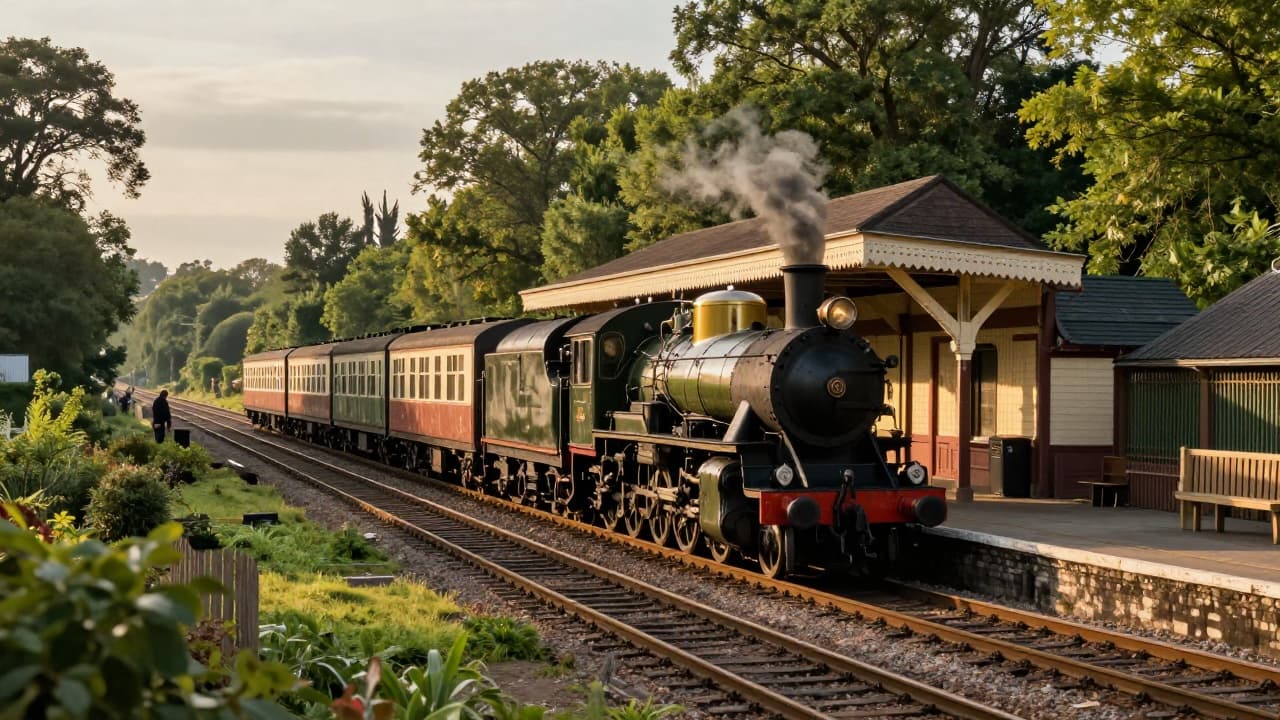
The ceremonial journey concluded in Pazin, where the train arrived on 17 September 2026 at 17:00. This event, organised by the local tourist board, the 'Viribus unitis' Society, and the Croatian Association of Railway Engineers, marks the 150th anniversary of the line, honouring the historical significance of the railway connection in the region.
The historical importance of this line dates back to 1876, when the first train passed through on the birthday of Emperor Franz Joseph I. The official opening for passenger traffic followed on 20 September 1876. The infrastructure was constructed by the Fröhlich company, with approximately 20,000 workers involved in the execution of the works, illustrating the scale and complexity of this 19th-century infrastructure project.
The route through the interior was chosen for strategic and military reasons, with the aim of ensuring security from potential attacks from the sea, as opposed to the options of building along the coast or via Trieste. In addition to the technical aspect, the arrival of the railway brought cultural changes, introducing new customs such as the accordion and popularising new dishes, such as goulash, among the local population.
The centenary celebrations include expert discussions, including the conference '150 Years of Istrian Rail: A Look to the Future', held on 18 September 2026 in Pula, in a venue on Marko Marulić Street 5. This gathering brought together experts to consider the historical development and future perspectives of rail transport in the region, highlighting the continuity and significance of this infrastructure for the local community and tourism.
The Mayor of Pazin, Suzana Jasić, welcomed the participants in the event, highlighting the importance of preserving this heritage. Her presence symbolises the local community's support for the preservation of cultural heritage and the promotion of tourism through historical and cultural content. This event not only commemorates the past, but also encourages reflection on the future of rail transport and its role in modern society, linking historical heritage with contemporary needs and development.