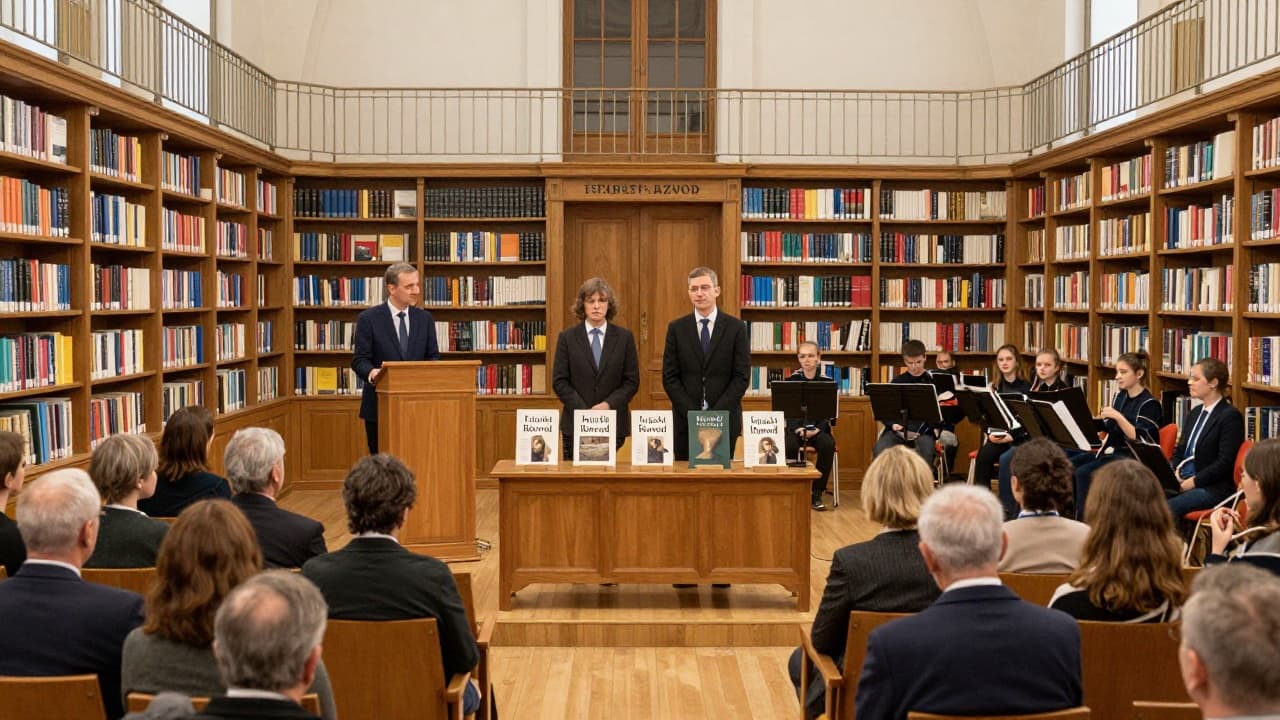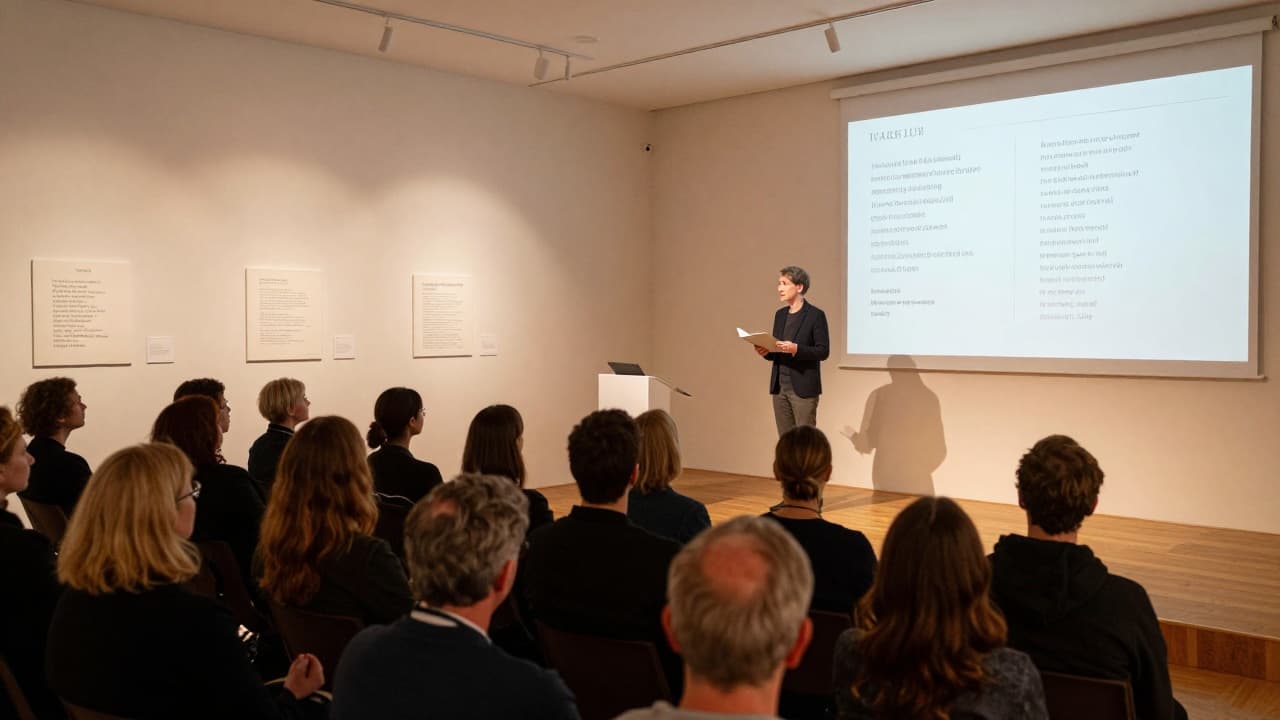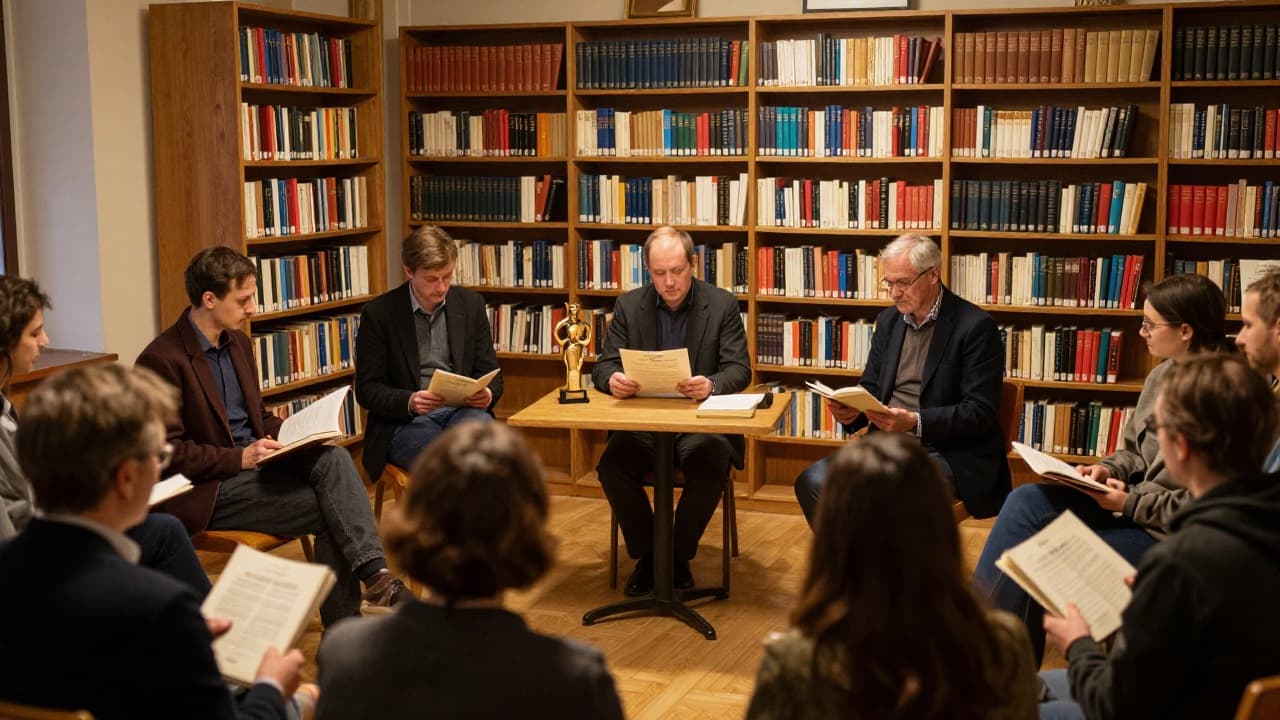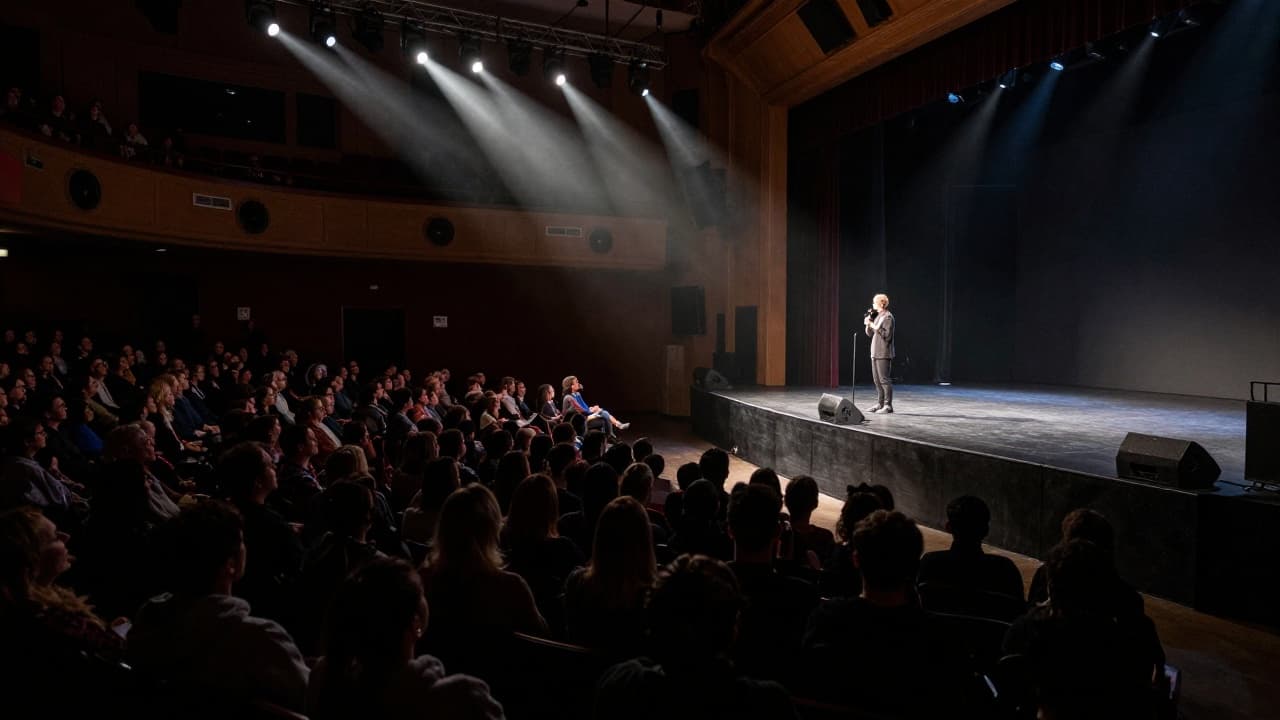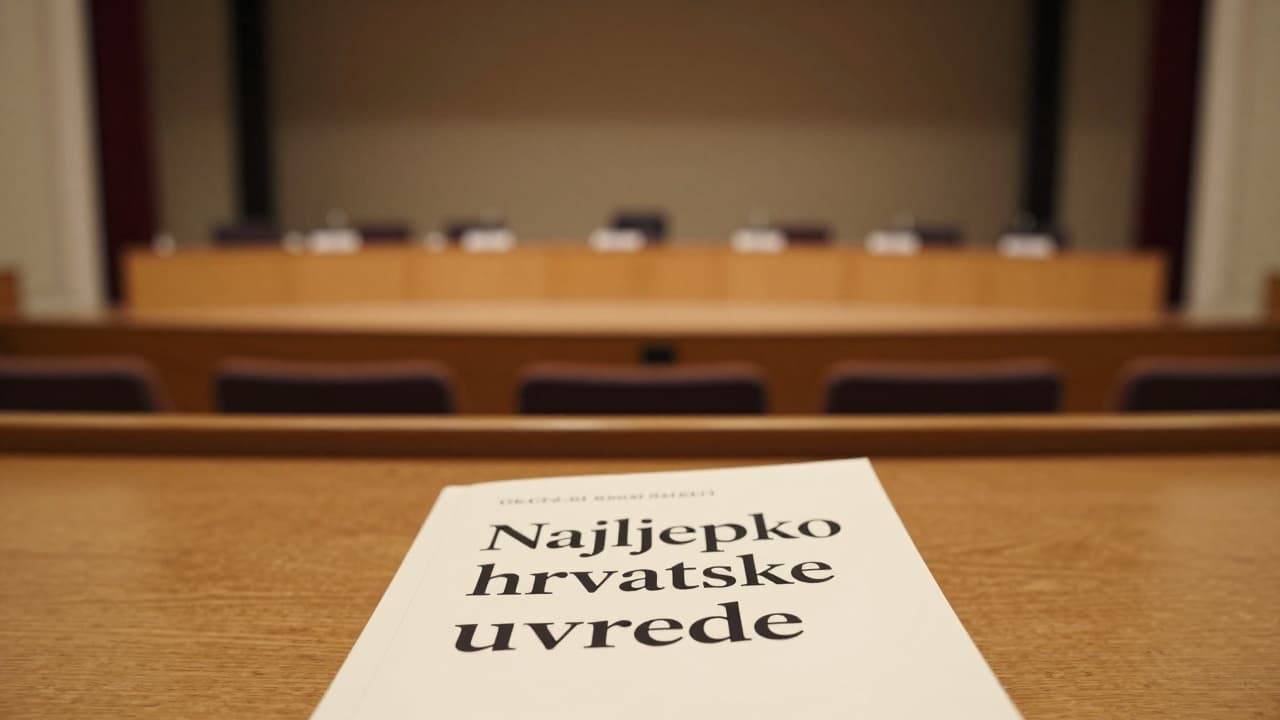
The book "The Most Beautiful Croatian Insults" is a new book by academic Pavo Pavličić, presented on Thursday, 26 November 2026, at the Croatian State Archives (Državni arhiv Hrvatske) in Zagreb. The presentation was held within the Kulturni četvrtak (Cultural Thursday) forum titled "The Exciting Reality of Language". The book discusses insults as examples of linguistic creativity that "with style, spirit and measure" were reflected in everyday life, Croatian literature and theatre.
The author explained that he was less interested in how an insult was formed when writing, and more in how it lives. One of the reasons for writing the book, which he called somewhat amusing and shameful for himself, is that, like a child who draws attention by speaking simple words, he decided to write something that would be similarly interesting. Another reason is that his father loved Czech literature, especially the soldier Švejk (The Good Soldier Švejk), with whom he shares the very beginnings of his interest in simple words. The author noted that he was delighted that words like guzica (little fool) and govno (shit) were used there, while until then he had been convinced that only beautiful words could exist in literature. He also pointed out that the greatest reason is a feeling of gratitude towards the language in which he has been cursing and chatting for so many years. He stated that, in order to express his love for these words, he wrote that they are the most beautiful, and that he wanted to highlight the creativity of those who invented them.
The book of angry, but also already forgotten insults shows not only what insults say, but also what they say about us, where they come from and how they were formed. It deals with, for example, where the words "ološ" (rough fellow) or "pimplati" (pimply one) come from, what the connection between "prčvarnica" (busybody) and "prč" (busybody) is, what "jarac" (brawler) means in Dalmatia, what it means if you are called "janpika" (fool) in Osijek, how the meaning of the word "guba" (bitch) changes from Zagreb to Split, and how the parody of Hektorović's (Hektorović) "Fishing and Fishermen's Talk" came about on Hvar in 1976.
Literary critic Vesna Muhoberac said that the author gives dignity to every word in his 70 chapters – insults, finds their hidden meanings and almost forensically investigates their roots. She stated that every note, chapter, 'short short' story, record or step can be read however one wishes, and that one still gets the whole picture that one creates oneself. In her words, the author chose an ideal, small format for the book, for TikTokers and Generation Z, but it can be read by everyone because it is unpretentious and irresistibly attractive. She also confirmed that swear words are interesting to everyone because we do not know what we are actually saying when we use them in moments of anger or great joy, that they are very vivid in Croatia, that they do not exist in some languages, and that Pavličić also includes the emotional-psychological dimension that these words leave on a person. According to Vesna Muhoberac, Pavličić in his works seemingly simply depicts events by entering into characters and drawing the reader into his romantic worlds, and he used a similar method in this poetic and witty hybrid novel which is fluid, inquisitive and transparent.
Theatre scholar and academic Boris Senker warned about situations where insults are not exactly beautiful, such as in the case of a mentor who called a student's doctoral dissertation a cabbage during the defence. He pointed out that insults can be tolerated when used among equals, but when someone is in a position of power and cannot retaliate, there is no beauty in being insulted. He believes that the beauty of this book lies in its diversity, even though on the surface they are all short texts or lexicographic entries; each story stands on its own and carries something different. He noted that in the case of "alapača" (tattletale) the word is pure autobiography, while with other words small linguistic studies emerge, so the book can be read in multiple ways, both as light entertainment and as a scientific work. He stated that many insults were a revelation to him, such as "kulen" (a type of sausage) which he never thought could be an insult, while for words like smušenjak (screwball), smrad (stench) and polovnjak (halfwit) one immediately knows they are negative. He added that he would like to have a conversation with whoever invented the word prčvarnica (busybody).
Book editor Julijana Matanović said that this book was published by the artistic organisation Lađa od vode (Lađa od vode) in the Lijepi običaji (Beautiful Customs) library. She pointed out that this is his ninth feuilleton book, and that his first, "Zagrebački odrezak" (Zagreb Cutlet), was published as far back as 1985. She stated that Pavličić writes with great ease, and that when she asked him when he wrote this book, it turned out he had done so more or less along the way. She noted that in their house there is no feeling that they have a writer who must create in silence and that others must be shushed.
Pavo Pavličić was born in 1946. He is a novelist and short story writer, author of works "Večernji akt" (The Evening Act), "Dobri duh Zagreba" (The Good Spirit of Zagreb), "Koraljna vrata" (The Coral Gate), "Kronika provincijskog kazališta" (Chronicle of a Provincial Theatre). He has written screenplays for the films "Ritam zločina" (Rhythm of Crime), "Treći ključ" (The Third Key), "San o ruži" (Dream of a Rose), "Orao" (The Eagle). An important part of his opus also consists of memoir texts. He has published more than a hundred books and is a recipient of the most important awards and recognitions.