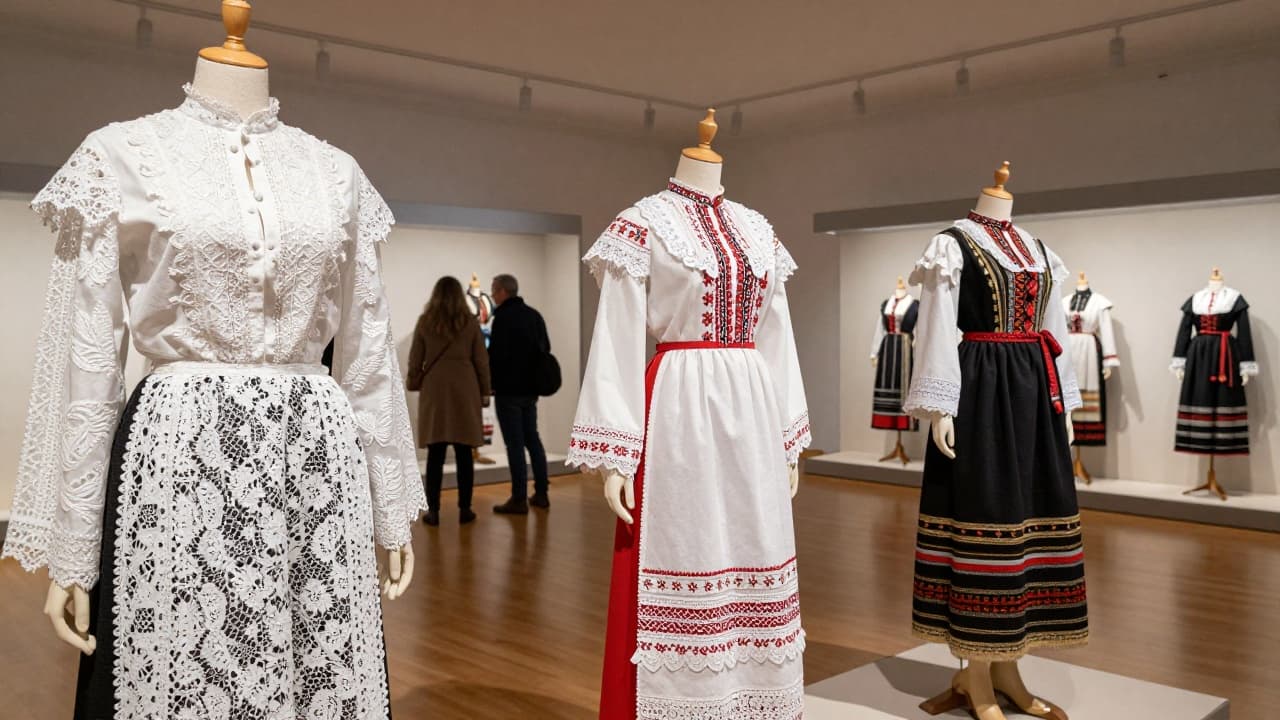
The 'Beli Vez' (White Lace) exhibition was opened at the Jastrebsko Town Museum, as part of the 'European Heritage Days 2026' event. The exhibition is dedicated to a textile technique that emerged in the 15th century, during the Renaissance.
Stylistic influences of this technique are evident in the traditional attire of the regions of Prigorje and Pokuplje, particularly in the folk costume of Draginje and the surrounding area of Vukšić. The exhibition presents the results of field research on white lace, known in local folklore as 'našiv/našvano/našiveno' (embroidered). The research was conducted by the 'Zrka' Association from Draginje, in time for the 50th anniversary of the film 'Breza' (1967). The inspiration for the research came from the folk costume worn by members of the 'Ivan Mažuranić' ensemble.
Anđelko Vrbek from the 'Zrka' Association spoke about the themes of the field research. 'White lace is hidden in the colour of different shades and ornaments, it is lace that is not noticed at first glance, but takes you back to the Renaissance,' said Vrbek. He particularly highlighted the story of Ana Fok from Guci, who had previously 'worked' on white lace.
The exhibition was opened by Nadica Žužak, the Head of the Office for General Affairs of the City of Jastrebarsko. The opening was accompanied by original songs from the region of Pokuplje, performed by the Karlovac Folk Ensemble 'Ivan Mažuranić'.
The president of the 'Ivan Mažuranić' ensemble, Ivana Gojak Kučinić, stated: 'We have an immense love for the folklore and traditions of our ancestors. When we step onto the stage, we revive a part of the soul of our ancestors, our past, all that we are. We wear the folk costumes with dignity, with pride, with great love, knowing how much time, love, and effort went into making them, especially the white lace, which requires a great deal of skill.'
The exhibition can be viewed until 16 October.