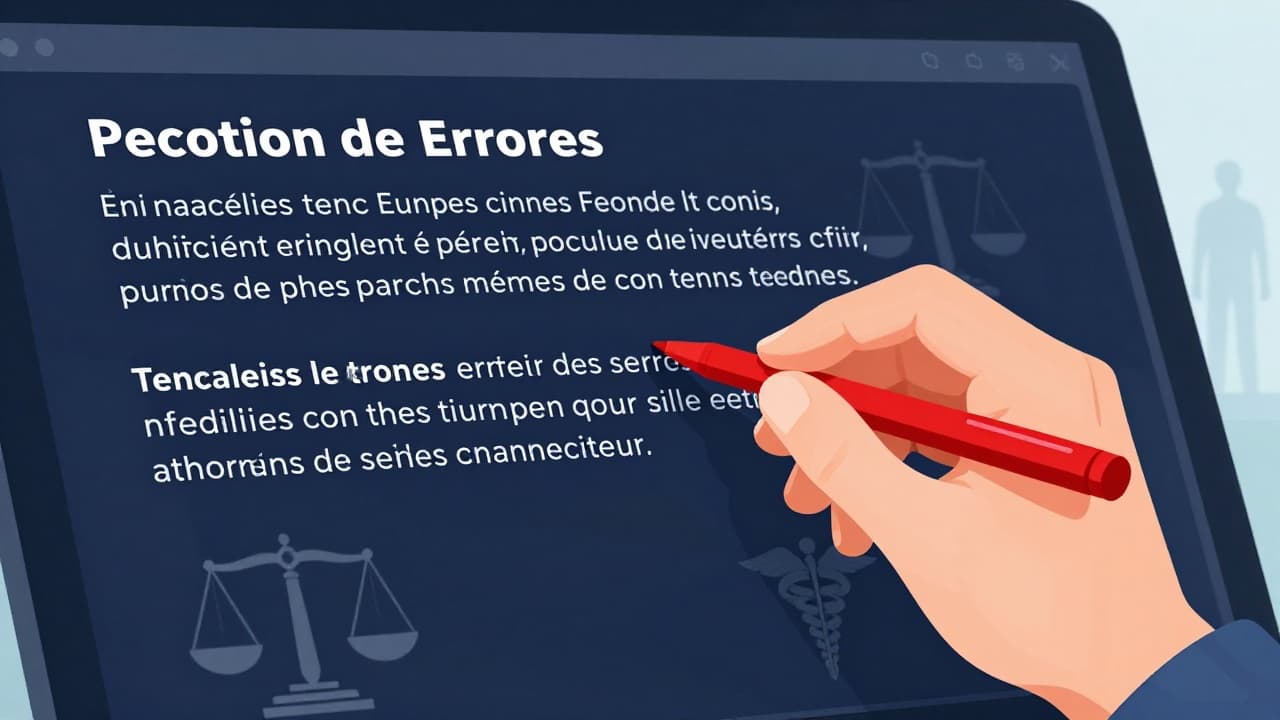
Machine translation has advanced significantly in recent years, yet in sensitive fields such as law and medicine, errors that can have serious consequences still occur. This is why human review remains necessary to achieve complete translation accuracy.
François Yvon, director of machine translation at the French National Centre for Scientific Research (CNRS), points out that a well-trained system does recognise context. As an example, he cites the French expression for heavy rain, "il pleut des cordes", which literally means "rope is falling". According to Yvon, a quality system will know that ropes do not fall from the sky and will likely use the English expression "it's raining cats and dogs".
Google announced in April that users translate a trillion words a month through its service, but this figure does not include DeepL, Microsoft, Claude, ChatGPT, Gemini or specialised corporate systems. Direct sales of machine translation, excluding general artificial intelligence subscriptions, reached an estimated value of $1.4 billion last year.
John Zimmerman, founder of OKA (Open Knowledge Association), a non-profit organisation that translates articles from Wikipedia into other languages, says that OKA, with more than 10,000 published texts, mostly in Spanish, Portuguese and English, is the largest individual contributor to translating articles for Wikipedia. In OKA's process, AI creates a draft, and a human translator then checks each sentence.
Ariella Baltié, a translator and lawyer specialising in court documents from English to French, recently received a request from a client who had already translated their documents using an AI tool and asked for a review. The AI translated the legal term "le demandeur" (the claimant) as "the requester", and when the system encountered the phrase "Madame X, épouse de Y" (Mrs X, wife of Y), it translated it as "Mrs X marries Y". In the US, errors in machine-translated asylum applications have caused delays in the release of detainees.
Carol Bereuter, a specialist in medical translations, warns of the dangers of inaccuracy in this field. In a machine-translated text, the Greek letter mu was translated as milli (one thousandth) instead of micro (one millionth), and if someone is given a milligram instead of a microgram, they are given a dose a thousand times larger. When a machine translator encounters the phrase "translate into Polish", it may conclude that it is referring to shoe polish. If it does not recognise that it is referring to a football match, it is likely to mistranslate the expression "taking a corner".
Last year, OKA conducted a study funded by the Wikimedia Foundation. They analysed 119 articles, 10 language pairs and more than 1,000 hours of translators' work. Even 27 per cent of the text generated by AI was corrected before publication, and three-quarters of those corrections related to errors introduced by the AI. Five to six per cent of errors changed the meaning of the original text.