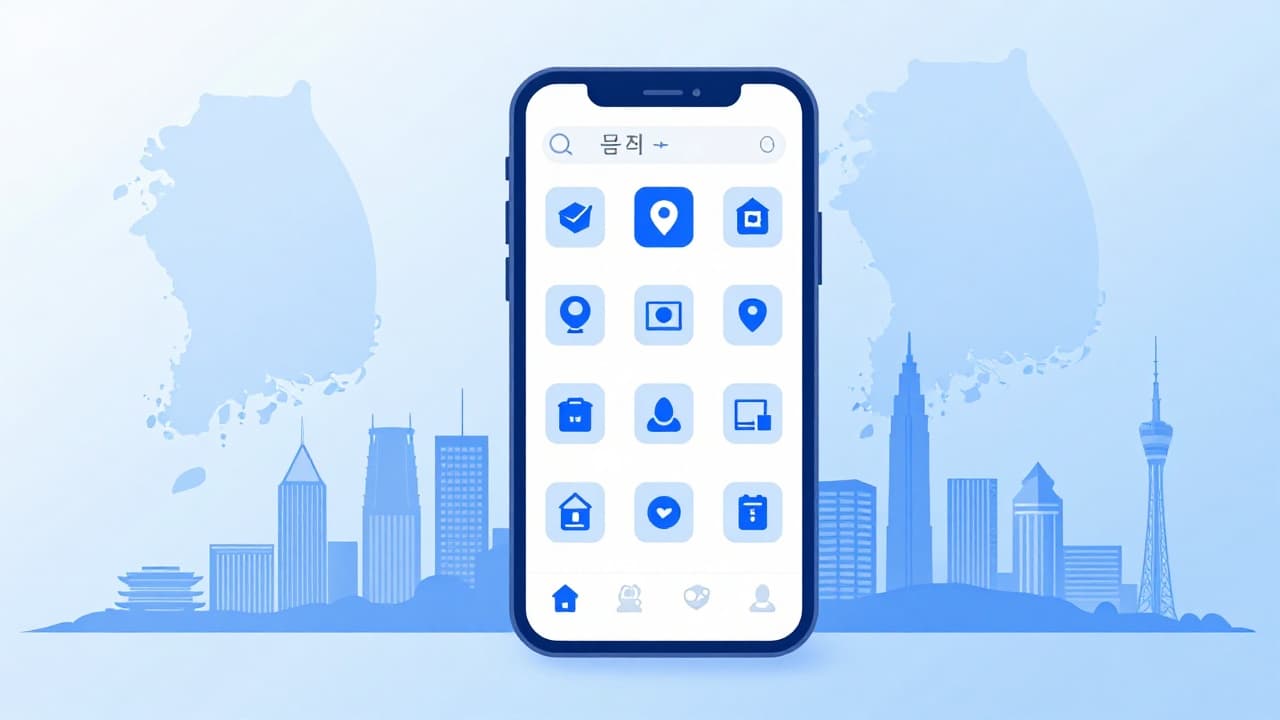
South Korea has digital sovereignty installed on its mobile phone. Google, Meta and Apple operate there legally, but domestic users largely bypass them in key services.
Instead of Google, Naver is searched, which held 62.86 per cent of the market last year, while Google had 29.55 per cent. Naver filled the internet with Korean content before Google even appeared there.
Instead of Google Maps, Naver Map, KakaoMap and T Map are used. Google's map shows places, reviews and public transport, but lacks step-by-step navigation, for car or pedestrian. Apple's app is slightly better, but finds the right path with difficulty.
Instead of WhatsApp, there is KakaoTalk, with 49.1 million monthly users, which is 95.1 per cent of the population. Friends and acquaintances communicate through it, as do institutions and services, from delivery drivers and doctors to government offices. Taxis are called via Kakao T, which holds around 90 per cent of the market, while Uber is a secondary provider in South Korea. Payment is made via KakaoPay and Naver Pay, with Coupang having 35 million monthly users and overnight delivery. Coupang is a US company by headquarters.
Kakao is not one app that swallows all others, but a family of separate apps linked by the same user account. In South Korea, there is no firewall.
The law on maps has given domestic companies priority in a business that today is based on delivery, taxi, and payment. One market, one language, and one payment system allow an app that succeeds in Seoul to work the next day in Daegu or Busan. The law was not created as industrial policy, but out of fear of the northern neighbour. The Korean War ended in 1953 with an armistice, not a peace treaty, so the two Koreas are formally still at war, and Seoul is thirty-two kilometres from the demilitarised zone.
Google's requests in 2007 and 2016 were rejected on the grounds of national security. Export was only approved in February this year, after 19 years of dispute, with the decision made by the Ministry of Defence and the intelligence service. Among the conditions are the blurring of military objects in images and the removal of coordinates. Full navigation has not yet arrived.
Critics, primarily American, have long argued that security was a convenient excuse for protecting domestic companies. The European Commission proposed a package of measures for technological sovereignty in June, focused on chips, cloud computing, artificial intelligence, and open-source software. The European Parliament and the Council are debating the package. According to data from the Commission itself, the European Union depends on external suppliers for more than 80 per cent of key digital products, services, and infrastructure.