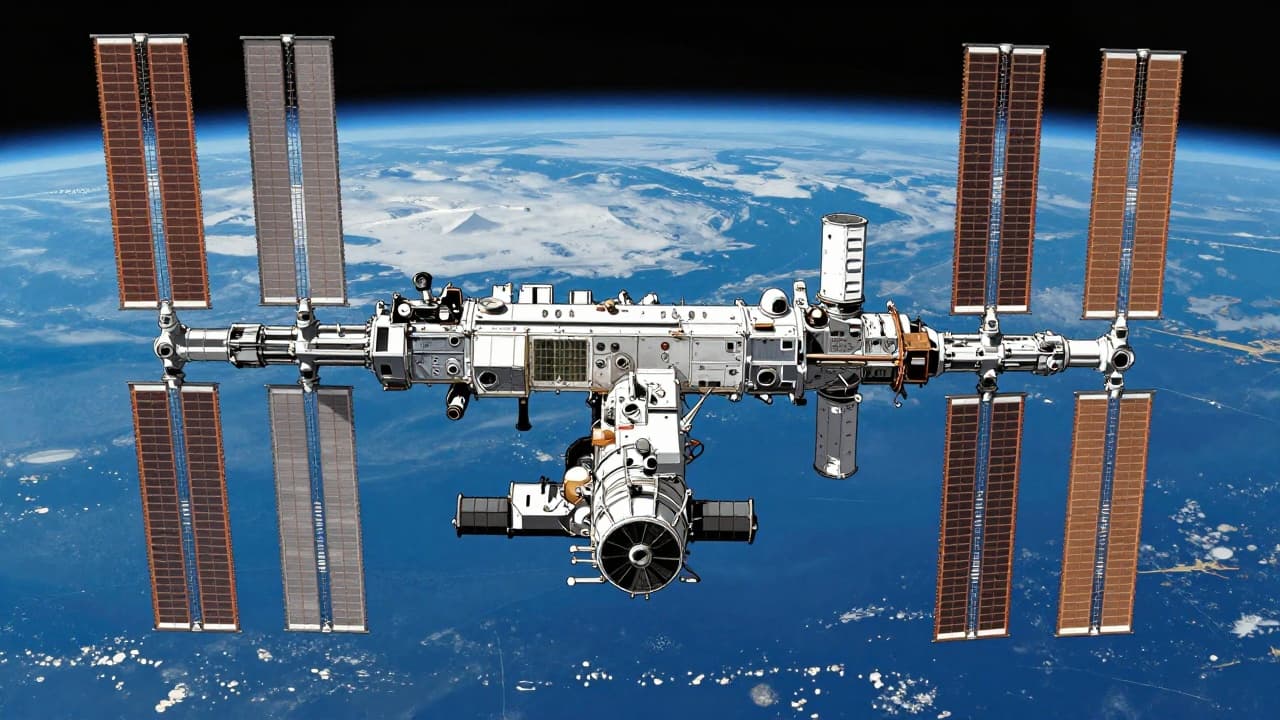
The US space agency has announced a tender to entrust the development and management of future stations to private companies following the retirement of the International Space Station (ISS). The agency is turning to the private sector to ensure its continued presence in low Earth orbit following the deorbiting of the ISS.
NASA announced the call for proposals for the private space sector this week. The call invites private companies to submit plans for the next generation of commercial space stations that will replace the ISS. NASA’s director, Jared Isaacman, stated that the agency remains committed to maintaining its presence in low orbit.
The commercial destinations are expected to provide capabilities for conducting scientific research, developing new technologies, and training crews, as well as preparing for future missions to the Moon and Mars. According to Isaacman, this approach creates new opportunities for the US industry and allows NASA to redirect its resources to more demanding research projects. The agency has been actively collaborating with the private sector through various events and preliminary calls.
Isaacman highlighted the importance of economic sustainability in the model, noting that NASA is seeking reliable plans, technical feasibility, and companies willing to make their own investments and attract additional users to the market. The published documents define the requirements for companies interested in designing, building, testing, certifying, and managing facilities that provide comprehensive accommodation and transport services for crewed flights.
Two or more operators will be selected in the initial phase, each receiving $100 million. This will be followed by a competitive process for the final design, testing, and provision of services for the commercial space station. The deadline for proposals is 8 December, with the contract award expected in the spring of 2027.
The current provider of orbital launch services, SpaceX, faces competition only from Boeing, whose Starliner has been far less successful and is currently unable to launch crews. NASA is now leaving the launch arrangements to the contractors themselves. The agency states that it will provide a budget of $325 million for the launch of a four-person crew and $300 million for a cargo launch to orbit. The contractors are responsible for securing launch services from a partner capable of performing the task.