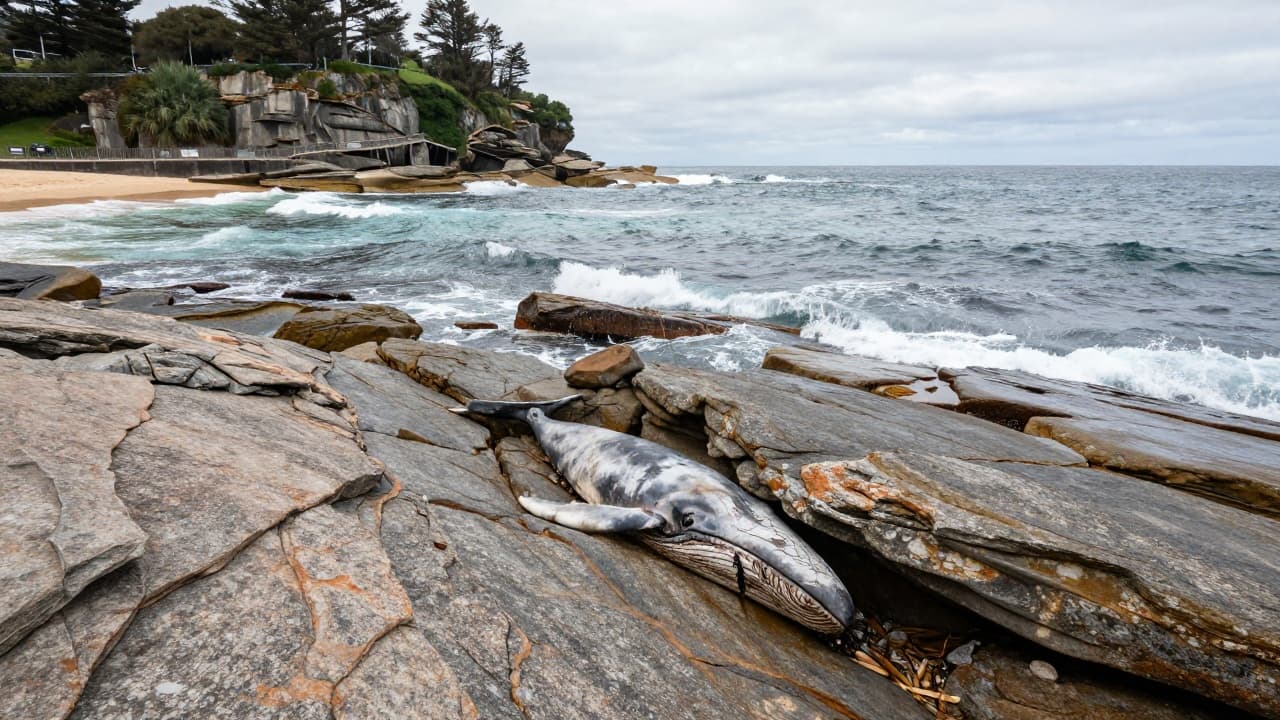
Coogee and Maroubra beaches have been closed as a precautionary measure after a whale carcass washed ashore on the rocks between the two popular swimming and surfing spots in Sydney's eastern suburbs.
The local council said it was working with conservation officers and the New South Wales Department of Primary Industries to remove the whale from a "difficult to access location surrounded by cliffs and a rocky ridge".
"As a precautionary measure, Maroubra and Coogee beaches will remain closed until further notice while lifeguards monitor the situation and work with local stakeholders and authorities to organise the removal of the whale," Randwick Council said.
The council is also considering closing the surrounding area and the walkway along the rocky ridge to manage crowds on the popular coastal promenade. At this stage, the carcass is not being removed, and discussions are ongoing with the Gamay custodians regarding a culturally and ecologically sensitive approach.
Mayor Dr Clare Willington stated that the council would ensure the removal is "culturally respectful" to Aboriginal Australians. "The whale is an important totemic animal for the local Bidjigal people," she said. "This is a natural occurrence and over time nature will take care of the carcass. Our focus is to manage and limit any impact on swimmers and surfers at nearby beaches." The council is urging residents and visitors to avoid the area and follow the instructions of lifeguards and authorities.
Meanwhile, authorities are working to free a large whale that has become stuck in shallow waters near Turners Beach on Tasmania's north-west coast. "Members of the public are asked to avoid the area and not enter the water at the incoming tide due to expected danger," Tasmanian police said.
Curious locals flocked to Lurline Bay all morning to catch a glimpse of the whale. Meeri Pajala, an au pair from Finland living in Sydney, said she had never seen anything like it before. "It almost looks fake," she told Guardian Australia. "That skin looks so strange."
Glenda, a local resident who did not wish to give her full name, said she usually watches whales swimming along the coast and was curious when she heard the news. "I wonder if it is a newborn or a calf," she said. "I thought it would be more intact."
The carcass is relatively small and significantly decomposed, with visible bite marks along the layer of blubber. It was touching the rocks as waves came and went, but became stuck in a crevice due to the low tide. To the surprise of many onlookers, it does not appear to have a smell. Authorities are still determining the species and how the carcass ended up in the bay, but it is believed to have died some time ago.