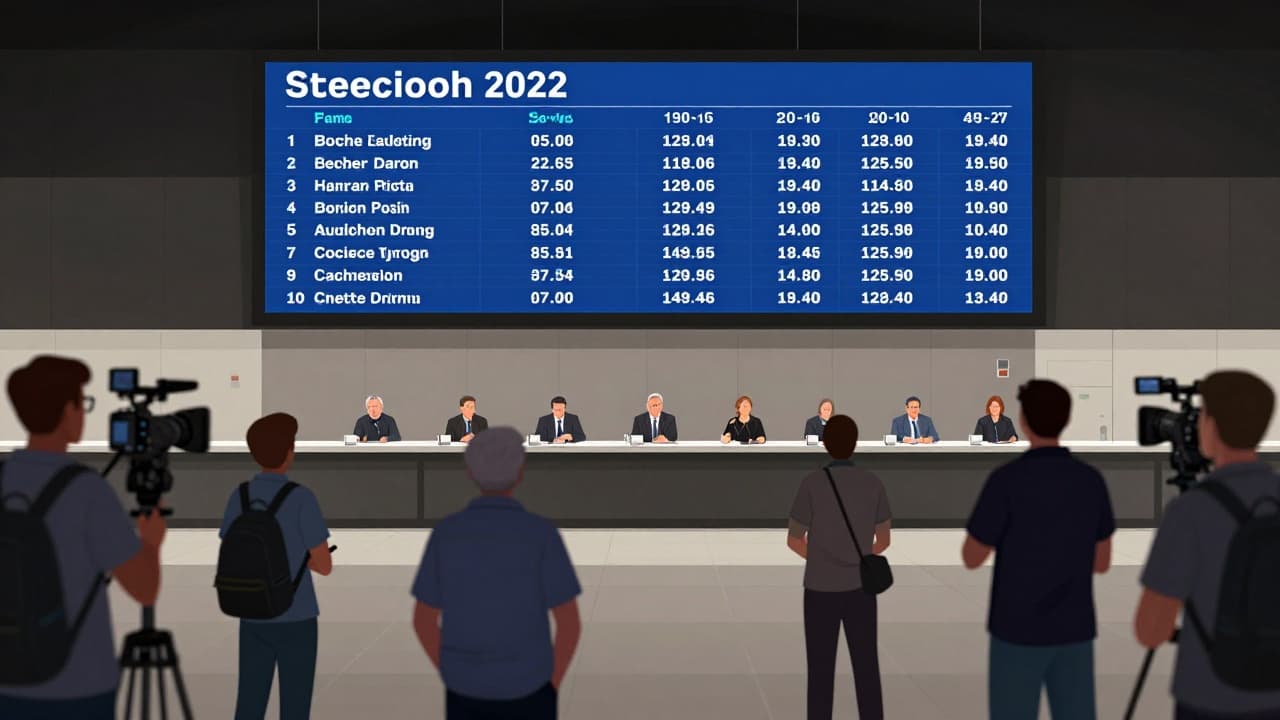
Final results from the general election in New Zealand show the ruling right-wing coalition will need the support of the new centrist party Opportunity to form a government and avoid a repeat election. According to election commission data, the bloc led by the National Party (National) currently holds 65 seats in the 130-seat parliament, while 66 seats are needed for a majority.
Preliminary results from 7 November gave the National Party and its coalition partners – populist New Zealand First and libertarian ACT – a slim two-seat majority, making the outcome too uncertain to declare a winner before the final votes were counted. On Friday the election commission released results for nearly 485,000 "special votes" – those cast from overseas or outside a voter's electorate.
The National Party lost two seats and fell to 40, while the Labour Party held 36 seats. The Greens gained one seat and now have 17, ACT 13, New Zealand First 12, Opportunity seven, and Te Pati Māori five seats. Three electorates changed hands after the special votes: Labour captured Wairarapa from National with a margin of just 81 votes, and Hamilton East from National with 173 votes. The Greens took Wellington Bays from Labour with a margin of 1,610 votes.
If the National Party requests a recount and reclaims at least one of those seats, it could return to power with a slim majority and without needing the Opportunity party. Recount requests must be filed by 3 December, and results could take a further five days. Special votes in previous elections favoured the left and typically cost the right one or two seats.
By Friday, an opinion poll loomed over whether the National Party would be able to govern comfortably with its coalition partners or would be forced to strike a deal with Opportunity – the new centrist party that Prime Minister Christopher Luxon had previously refused to work with. After the election, Luxon softened his stance, saying he intended to find common ground with Opportunity. On Friday afternoon, Luxon said the National Party would now begin formal negotiations with New Zealand First, ACT and Opportunity, but warned the talks would be "challenging" and could take time. "It is far more important than reaching a deal quickly," Luxon said. "New Zealanders will not thank us if we rush a deal that falls apart or if we send them back to the polls."
Opportunity, led by Auckland entrepreneur Qiulae Wong, has long said it would first negotiate with whichever party secures the most seats. After the final results were released, Wong confirmed she would speak with Luxon and that her key conditions – including climate and environmental policy and limits on political donations – remained unchanged. The party would focus on giving New Zealanders a stable government, Wong told reporters, and did not rule out the possibility of returning to the polls. "It is clear that stability matters. But setting out that more optimistic and aspirational vision, where we can come together as New Zealanders and move forward, I think is the priority," she said. Wong said Opportunity's presence in parliament was a "pivotal moment" for the country. "I fully expect that we will be in there and that we will achieve that, regardless of the shape of government."
Wong had previously said her vision of a low-emissions, inclusive New Zealand would guide the final decision. Her five key issues include tackling the supermarket duopoly, limiting political donations, a ten-year cross-party health plan, ending tiered fishing regulations, and strengthening New Zealand's climate commitments. Talks with Opportunity could stumble over the National Party's coalition partner, New Zealand First. On Friday, Wong confirmed she would not enter a deal if New Zealand First leader Winston Peters, a veteran of politics, were to serve as foreign minister – a position he has held three times. "We consider that his behaviour during successive governments is not what we would expect from someone in that position," she said. In other points of tension, New Zealand First and ACT have diametrically opposed climate policies, and ACT is unlikely to support Opportunity's push for political donation reform.
Labour leader Chris Hipkins said he was proud that his party won the largest share of party votes but disappointed that it had failed to deliver a change of government. These are the second elections Hipkins has lost, raising questions about his political future. Hipkins said a decision on his leadership would be made after the government is formed. New Zealand could face weeks of negotiations in what could become the first four-party coalition in the country's history.